

Audio By Carbonatix
President John Dramani Mahama has faced scepticism regarding his promise to run a government with no more than 60 ministers, including regional ministers.
Many Ghanaians question the practicality of such a structure, particularly in light of the bloated governments of the past.
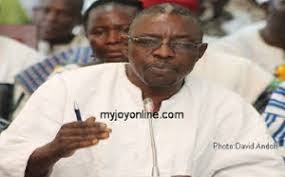
However, Prof Avea Nsoh of the University of Education, Winneba, believes that not only can Mahama meet this target, but he can also govern effectively with even fewer ministers.
In an interview, Prof. Nsoh said that a government with as few as 30 ministers, including deputies, would be more than sufficient to manage Ghana’s affairs.
He emphasised that smaller governments are often more effective, citing examples from developed nations such as the United States, the United Kingdom, and Germany.
Despite their larger populations and more complex economies, these countries maintain lean administrations. Prof. Nsoh added that large governments are often a sign of underdevelopment and unaccountable governance, citing the current administration under President Akufo-Addo as an example of inefficiency.
He recalled that President Akufo-Addo, while in opposition, had criticised the Mahama-led NDC government for having a supposedly large cabinet, only to nearly double the number of ministers upon taking office.
Akufo-Addo’s administration created unnecessary ministries, appointed redundant deputies, and included several special duties ministers in the presidency. According to Prof. Nsoh, this bloated structure not only increased inefficiency but also wasted public funds.
To avoid repeating such mistakes, Prof. Nsoh proposed a streamlined ministerial structure, which would include 16 regional ministers and 14 sector ministers. He suggested merging and realigning existing ministries to reduce overlap and improve efficiency.
For example, he recommended consolidating the Ministries of Defence, the Interior, and National Security into a single ministry; combining Education, Tourism, Culture & Creative Arts, and Chieftaincy into one portfolio; and integrating Health with Sports and Science.
He also called for the merger of the Ministries of Information and Communication into a unified ministry and the consolidation of the Ministries of Energy, Environment, Science, and Lands & Natural Resources.
Prof. Nsoh argued that regional ministers are essential for overseeing Ghana’s decentralised governance structure but noted that deputies for these ministers are unnecessary, particularly following the creation of smaller regions.
He also advocated for the abolition of redundant portfolios, such as special duties ministers, and called for future constitutional reforms to cap the number of ministries and ministers.
For this lean government structure to succeed, Prof. Nsoh emphasised the need for a reorientation of Ghana’s public service. He called for the retraining of the Public Services Commission, Civil Service, and Chief Directors to ensure they can effectively support ministers. He also suggested replacing any ineffective officials, as many qualified professionals are available to step in.
Prof. Nsoh expressed confidence in the new President's ability to deliver on his promise. He acknowledged the challenge Mr Mahama may face in selecting appointees from his party’s extensive network of supporters but noted the President's track record of keeping his word.
With this being Mr Mahama’s final term, the professor believes he is motivated to make a lasting impact.
“John Mahama has the opportunity to set a new standard for governance in Ghana by demonstrating that a lean government can deliver extraordinary results,” he said.
If implemented, the professor’s proposal could mark a significant shift toward more efficient and accountable governance in Ghana, according to him.
Latest Stories
-
I don’t mind being insulted; I have a crocodile skin – President Mahama
9 minutes -
Samson’s Take: Verify the badge – and verify the story
21 minutes -
President Mahama explains why Ghana must rethink regulation of TikTok, other new media platforms
33 minutes -
Rule of law must be protected – GBA condemns EOCO action against Baffour Awuah
2 hours -
950,000 barrels of Sankofa crude head to TOR as GNPC deepens domestic refining
2 hours -
Scales of deception removed – Annoh-Dompreh attacks new cocoa price
2 hours -
Young Positivist Writes : My Experience with GCLP
4 hours -
Strong Day 1 turnout sets tone for Day 2 of Republic Bank-JoyNews Habitat Fair Clinic
4 hours -
Ghana Army warns new soldiers against social media misuse, uniform abuse
4 hours -
AMA calls for science-led action to tackle environmental health risks in Accra
4 hours -
NPP Canada Organizer BigMo urges Diaspora to support Kodua Frimpong
5 hours -
He entered at eight; he is now 16: Ghana’s children growing up in prayer camps
8 hours -
‘Development must not always begin from Accra’ — Anwelle Foundation launched in Jirapa
8 hours -
PKO trio eye victories at Odwira Festival
11 hours -
346 Ghana Navy recruits pass out after 26 weeks of intensive training
11 hours