

Audio By Carbonatix
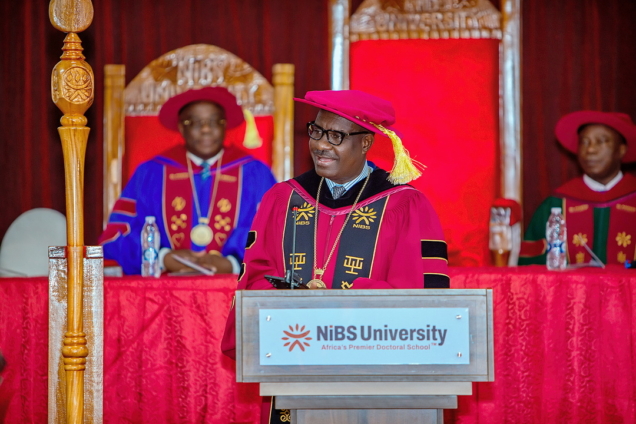
The Chancellor of the Nobel International Business University (NiBS), Dr George Agyekum Donkor, has urged graduates to champion innovation and advance policies that not only address Africa’s most pressing challenges but also safeguard the continent’s most vulnerable populations.
He encouraged graduates to take on leadership roles with a sense of responsibility and to boldly apply the research and training they have acquired in shaping public and business policy—especially in “a world marked by volatility, economic uncertainty, technological shifts, and global realignments.”
Dr Donkor, who also serves as President and Chairman of the Board of Directors of the ECOWAS Bank for Investment and Development (EBID), made these remarks at the inaugural graduation ceremony of NiBS in Accra on Saturday. The event, themed “Leaders of Thought, Architects of Growth,” marked a milestone in African higher education, as the university graduated 58 members of its pioneering cohort of doctoral scholars—each poised to contribute to the continent’s transformation.
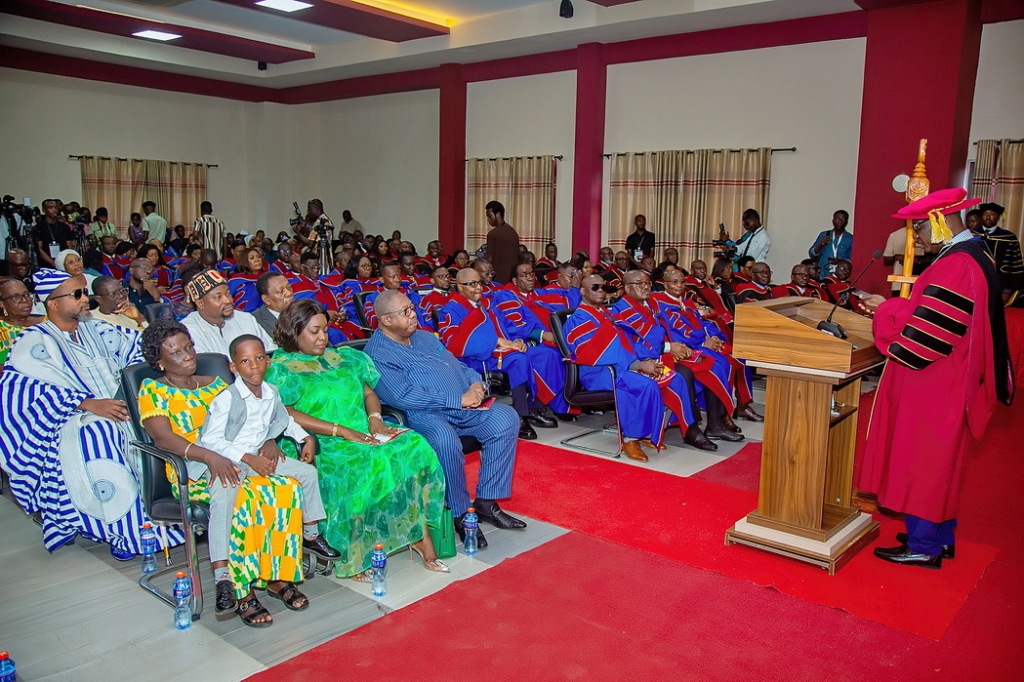
He emphasised that EBID, as an institution deeply invested in Africa’s progress, recognises the critical importance of nurturing homegrown expertise. “When we invest in developing Africa's human potential,” he noted, “we lay the strongest foundation for sustainable growth and regional integration.”
To that end, EBID has channelled millions of dollars into educational development projects across its member states, underscoring the central role that education plays in advancing economic development in the sub-region.
The NiBS graduating class included scholars from twelve African nations, who earned terminal degrees in business innovation, financial technology, and development policy. The ceremony also marked the launch of the NiBS Global Alumni Network, designed to foster collaboration among graduates who are now well-positioned to influence policy, business, and social development across the continent.
About EBID
The ECOWAS Bank for Investment and Development (EBID) is the development finance institution of the Economic Community of West African States (ECOWAS), comprising fifteen member states: Benin, Burkina Faso, Cape Verde, Côte d’Ivoire, The Gambia, Ghana, Guinea, Guinea-Bissau, Liberia, Mali, Niger, Nigeria, Senegal, Sierra Leone, and Togo. Headquartered in Lomé, Togo, the Bank finances development projects across a broad spectrum of sectors including infrastructure, basic amenities, rural development, the environment, industry, and social services. EBID operates through both private and public sector windows, offering financial instruments such as long-, medium-, and short-term loans, equity participation, lines of credit, refinancing, and financial engineering services.
Latest Stories
-
MOBA must reduce reliance on donations to protect Mfantsipim’s future – Patrick Kittoe
54 seconds -
GCB extends Customer Service Week into month-long customer engagement
2 minutes -
Africa risks widening inequality if it fails to build AI expertise – Kweku Awotwi
3 minutes -
Women’s Voices Matter Movement petitions Gender Ministry over women’s rights and development
3 minutes -
Huel ad banned for suggesting its products could replace all meals
15 minutes -
Global InfoAnalytics poll puts John Boadu, Justin Kodua and Titus Glover ahead in NPP executive race
2 hours -
Ghana to establish skills development university with $50m from German support package
2 hours -
Baffour Awuah under EOCO investigation over alleged financial loss and money laundering – Deputy AG
2 hours -
How healthy is Ghana’s health sector?
2 hours -
HACSA Tech4Girls graduates 80 young women with digital and technology skills
2 hours -
Arrest of Manhyia South MP should involve Parliament, not police station – Kpebu
3 hours -
Two Nigerians sentenced to 189 months in US prison over $2.4m cyber fraud
3 hours -
Cristiano Ronaldo leaves Portugal’s training camp after rift with Head Coach
3 hours -
Ghana Energy Awards opens nominations for landmark 10th anniversary edition
3 hours -
Aayalolo contra-flow: Are we treating the symptom instead of the disease?
3 hours