

Audio By Carbonatix
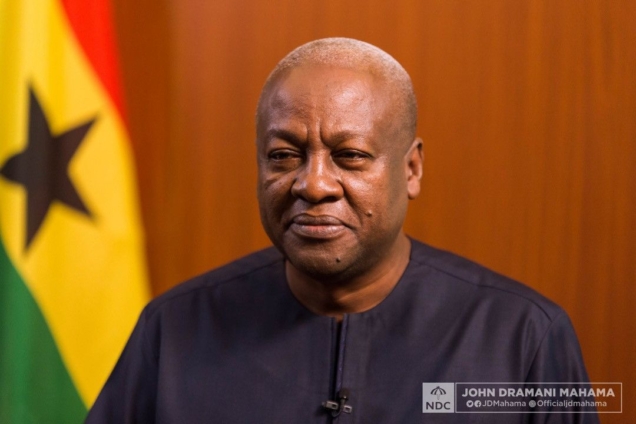
Did you listen to President Mahama’s Meet the Press yesterday? As expected, he had an answer for everyone, but it appears we did not get clear timelines or roadmaps, and the key performance indicators that give answers real weight. Eight months into office, he chose not to hide behind technocrats or spokesmen but to face Ghanaians directly. For that, he deserves credit. In a time when leaders often dodge scrutiny, his willingness to sit in the open is a step worth acknowledging.
But what was the essence of this “Meet the Press”? Did it deepen our understanding of the government’s reset agenda, or did it feel more like a polite exchange of notes?
The President walked us through education reforms: free tertiary for persons with disabilities, PhD scholarships, a research fund to keep Ghanaian ideas at home. Noble. Yet the question remains: how will these initiatives filter down to classrooms still short of textbooks, lecture halls still overcrowded, and teachers still waiting for arrears? The ambition is commendable, but delivery is the real test.
On health, he promised billions for NHIS, hospitals, and infrastructure. He rightly reminded us that U.S. aid cuts must not cripple our system. Still, the hard question lingers: how quickly will a nurse in Bongo or a mother in Damongo feel this increase in their daily reality? Budgets are good, but they must translate into gloves, beds, and medicine.
When it came to the economy, Mahama highlighted inflation falling to around 11.5% and a stronger cedi. Encouraging signs. Yet the measure of stability is not the Bank of Ghana chart but the market woman’s basket. Have food prices eased? Has rent dropped? Have utility bills become manageable? Citizens need assurance that this is not statistical relief but tangible recovery.
The President spoke boldly about corruption: over 200 cases under investigation, from Sky Train to Buffer Stock. This openness matters. But the follow-up question is crucial: will prosecutions reach conclusion, or will these scandals become another addition to Ghana’s graveyard of “pending cases”? Ghanaians are not demanding witch-hunts, but they want to see that thieves in public office, past or present, face consequences.
On galamsey, Mahama stressed that no new mining licenses have been issued in forest reserves and that nine reserves have been reclaimed. The Blue Water Task Forces patrolling rivers show intent. Yet every Ghanaian knows our rivers still run brown. If chiefs, politicians, and enablers remain untouched, then the fight risks becoming another seasonal slogan. The public is waiting for proof that this administration will not compromise.
The 24-Hour Economy, once dismissed as rhetoric, is beginning to take shape. Passport offices, ports, and other institutions are extending hours. That is progress. But here too the questions must be sharper: where are the factories, the industries, the real engines of jobs to power this policy? Ghana cannot industrialize by keeping passport officers awake at midnight.
There were other issues too: tariffs rising under ECG’s weight of losses, Cocobod’s excesses, the Sawla-Tuna-Kalba crisis that claimed over 30 lives, and the ethnic noise-makers on social media sowing division. The President touched each, sometimes with honesty, sometimes with caution. But the press did not push hard enough. Why no direct confrontation on ECG’s 42% revenue loss? Why no probing of Cocobod’s heavy spending while farmers struggle? Why no challenge on timelines for Sawla-Tuna-Kalba reconciliation?
To be fair, Mahama came prepared. His answers were steady, his tone measured, his presence presidential. But the press let him off lightly. They asked, he answered, but they did not interrogate. No question truly unsettled him. That is not his fault; it is the fault of a press corps that chose to pet rather than probe.
So was it a Meet the Press or a Meet and Greet? Eight months in, Ghana deserves tough but responsible journalism, one that applauds progress but insists on answers to the hard questions. The President has shown he is willing to face the people. The media must now show they are willing to hold him accountable.
Because Ghana’s future cannot be built on polite nods. It must be built on scrutiny, courage, and hard truths.
Latest Stories
-
Power restoration fault suspected in Kumasi Central Market fire
3 hours -
The 7-foot giant of Ngleshie Amanfro: Seven-foot Ghanaian Ephraim Saawa dreams of joining the national basketball team
4 hours -
Government promises support for Kumasi Central Market fire victims
4 hours -
Vibes The Movie: Big Ghun’s Ghanaian film earns five nominations at 2026 REFFA
4 hours -
MamaCare CEO warns unresolved conflicts among health workers could undermine maternal and neonatal care
5 hours -
Health professionals urged to translate medical knowledge into practice to save mothers
5 hours -
Conflicts among care providers linked to maternal, neonatal deaths – Expert
6 hours -
GIS marks 10th TIME conference, champions improved teaching practices
6 hours -
BRICS Or Balance? What Ghana’s bid really means
7 hours -
GPRTU wants full TRAFFITECH-GH implementation to start in 2027
7 hours -
Mahama announces plans to import electric wheelchairs for PWDs
7 hours -
KGL U17 Colts 2026: Western beat Prempeh Elite Academy to set up final final with Greater Accra Region
8 hours -
Late Solanke strike salvages 10-man Spurs draw at Man United
8 hours -
Gender Ministry to monitor welfare of Nana Akua Addo’s children amid domestic violence case
8 hours -
Benedict Okyere Yeboah: Ghana’s football problem goes beyond sacking a coach
8 hours