

Audio By Carbonatix
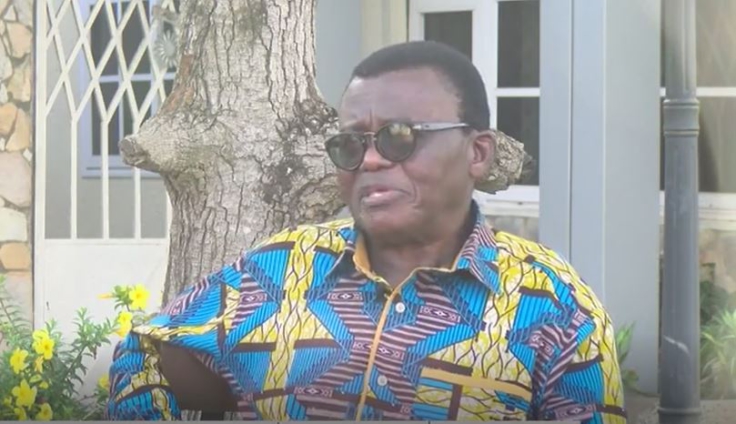
Former United Nations Governance Advisor, Prof Baffour Agyeman-Duah, has expressed concern over the ongoing controversy surrounding the suspension of the Chief Justice, Gertrude Torkonoo, warning that the situation risks causing significant reputational damage to Ghana’s democratic institutions.
On Tuesday, 22nd April, President Mahama suspended the Chief Justice after consulting with the Council of State following petitions calling for her removal from office.
In an interview on Joy FM's Middaynews on Wednesday, April 23, Prof Agyeman-Duah said the matter had been unnecessarily protracted, posing a threat to the country's image as a stable democracy.
“I think this case has been dragged to the extent where we may suffer what you may call reputational damage as a nation,” he cautioned.
Highlighting the foundational principles of democracy, Prof Agyeman-Duah stressed the importance of maintaining the independence of the three arms of government — the executive, judiciary, and the legislature.
Drawing from both international and local historical examples, he noted that even when tensions arise between the executive and the judiciary, democratically elected leaders often exercise restraint and seek constitutional means to address concerns, rather than direct interference.
He cited the case of U.S. President Franklin D. Roosevelt, who in the 1930s faced opposition from a conservative Supreme Court. Despite his frustration, he noted that Roosevelt refrained from punitive action and instead initiated judicial reforms.
Read also: CJ’s suspension: Mahama has performed his duty – Tony Aidoo
"He called them all kinds of unprintable names but never touched any of them. He simply introduced reforms.”
Turning to Ghana’s history, he referenced the late President Kwame Nkrumah’s removal of Chief Justice Sir Arku Korsah following the acquittal of three CPP members in the Kolungugu bombing trial — an act that remains the only instance of a Ghanaian president firing a Chief Justice.
He also recounted how President K.A. Busia responded to a Supreme Court ruling that blocked his attempt to remove civil servants by simply defying the judgment rather than interfering directly with the judiciary.
In more recent history, Prof Agyeman-Duah pointed to former President John Agyekum Kufuor’s handling of the Tsatsu Tsikata case. Rather than dismissing judges, he said former President Kufuor strategically expanded the bench by appointing an additional judge to tilt the balance.
“Presidents in democracies are always careful not to create any impression of subverting the other arm of government,” he stressed.
Latest Stories
-
World Cup visa scandal: Mahama will act on corruption allegations – Abass Nurudeen
1 minute -
Abass Nurudeen accuses Minority of ‘scandal scavenging’ over World Cup visa controversy
3 minutes -
US Embassy recognised NSA, GFA and GTA as separate entities for visa applications – Sports Minister’s aide
9 minutes -
Only 30% of Ghanaian teachers satisfied with their jobs – CAPCOE data reveals
20 minutes -
Communities affected by construction of Akosombo Dam urge government to speed up compensation process
42 minutes -
World Cup visa scandal: Sports Ministry not shielding anyone – Sports Minister’s special aide
1 hour -
World Cup visa scandal: Over 30 people misrepresented as GTA board members to US Embassy – Vincent Assafuah alleges
1 hour -
Fire destroys wooden structure near Yesu Mo Villa at Bush Road
1 hour -
NDC threatens sanctions over oversized campaign posters, gives aspirants 5 days to comply
2 hours -
Star Oil paid GH¢2.7bn in taxes, levies in nine months of 2026
2 hours -
Samson’s Take: The rule of law is cheaper before the bulldozer
2 hours -
GRA blames system failure for delay in issuing receipt over passenger’s customs duty
3 hours -
Livestream: Newsfile discusses World Cup visa scandal, beach demolitions, education strikes, BRICS bid
3 hours -
NC-PTAs welcomes end of teachers’ strike, urges parents to prepare children for Monday
3 hours -
Government procures over 2,000 transformers as Ghana’s electricity access hits 89.13% – Energy Minister
3 hours