

Audio By Carbonatix
QNET has highlighted its strategic partnership with the Economic and Organised Crime Office (EOCO) as a successful model for tackling cross-border human trafficking, migrant smuggling and online fraud, saying sustained collaboration between the private sector and law enforcement has already contributed to the rescue of hundreds of victims and the prosecution of criminal syndicates operating across West Africa.
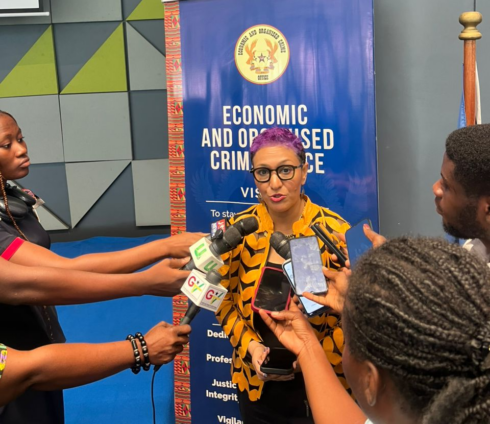
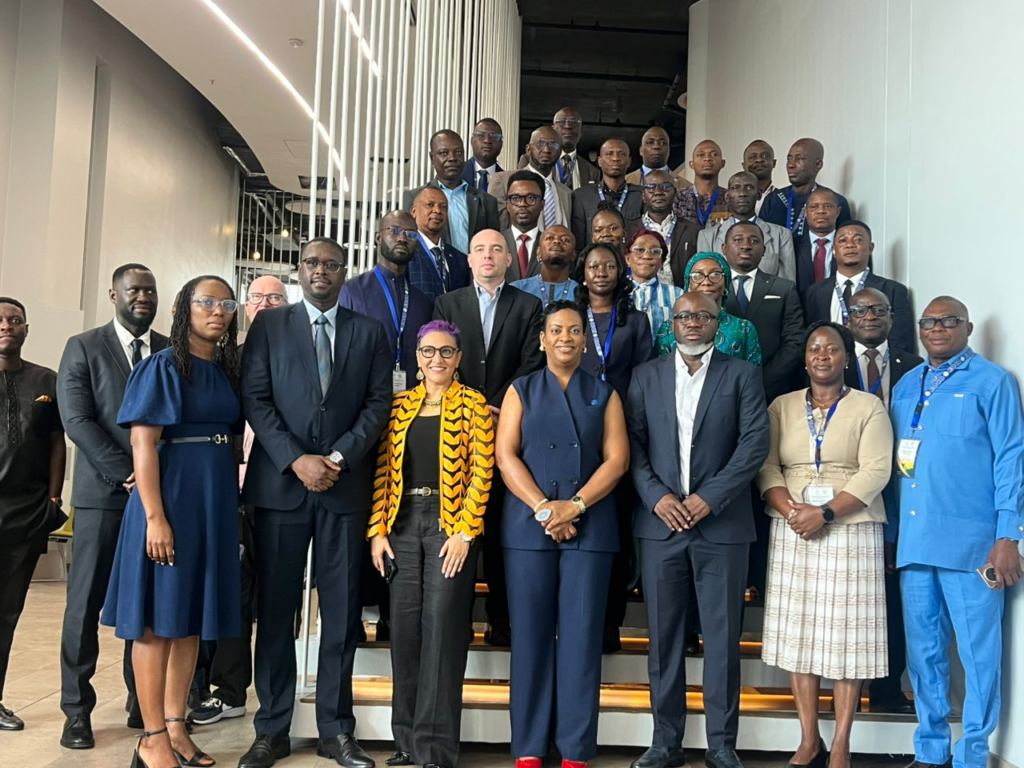
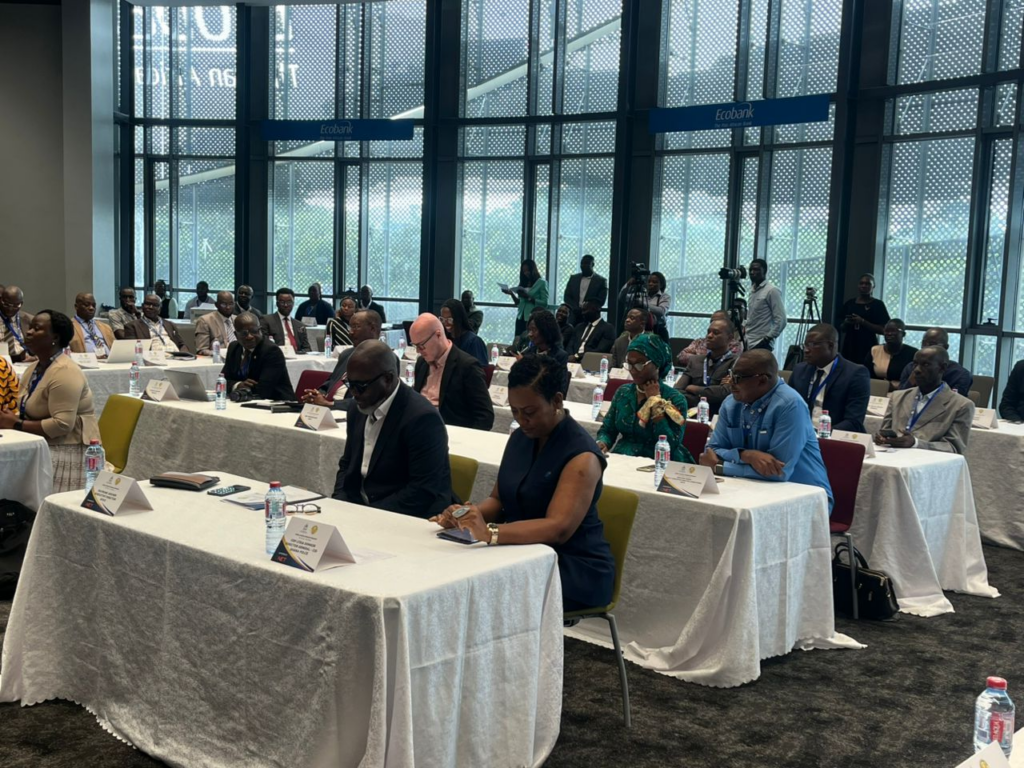
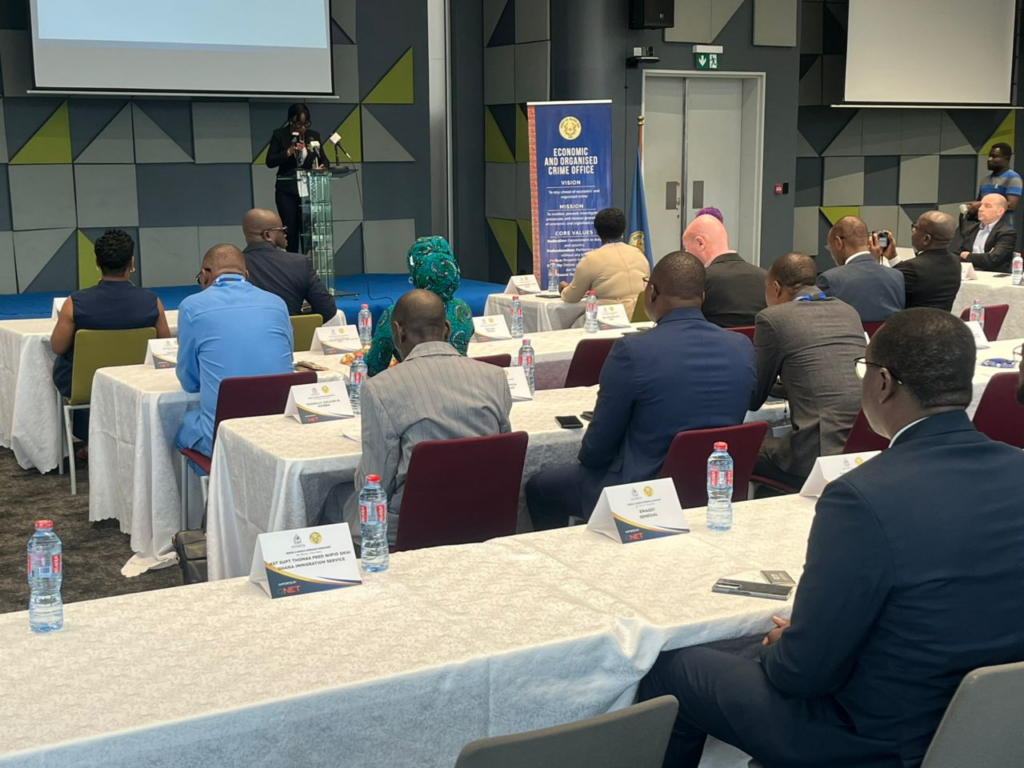
Speaking on the sidelines of the EOCO-INTERPOL Regional Coordination and Case Resolution Workshop on Combating Human Trafficking and Migrant Smuggling at the Ecobank Headquarters in Accra on Monday, the company's Chief Communications Officer, Ramya Chandrasekaran, said the fight against organised crime required stronger public-private partnerships, continuous public education and innovative technology to protect vulnerable communities.
She said West Africa has become one of the regions most affected by criminal syndicates impersonating the QNET brand to deceive job seekers and individuals searching for better economic opportunities.
According to Ms Chandrasekaran, QNET has responded by investing significantly in awareness campaigns designed to educate the public and prevent people from becoming victims of fraud carried out in the company's name.
"In the West Africa region, where we are facing the majority of the problems related to brand impersonation of QNET, we have been implementing public awareness and education campaigns for a number of years," she said.
She explained that these campaigns have been rolled out across several countries, including Ghana, Nigeria, Senegal, Sierra Leone and Burkina Faso, reaching thousands of people through community outreach programmes, media engagements and educational initiatives.
Recognising that many vulnerable people rely on traditional media rather than digital platforms, Ms Chandrasekaran said the company has deliberately partnered with television and radio stations to extend its awareness campaigns beyond the internet.
"We've also done continuous media engagement so that we can reach more members of the public, especially through television and radio. These are for people who are not necessarily on the internet or social media," she noted.
Describing the Memorandum of Understanding (MoU) signed between QNET and EOCO as the company's most significant anti-fraud initiative in the region, Ms Chandrasekaran said the agreement had enabled both institutions to work closely in protecting communities that would otherwise remain beyond the reach of conventional awareness campaigns.
She commended EOCO for embracing the partnership, saying it had demonstrated the value of collaboration between government institutions and responsible private companies in tackling organised crime.
"I think the most important thing that we were able to do is the MoU that we signed with EOCO, and we are very grateful to EOCO for accepting this partnership because it allows us to reach grassroots communities that otherwise we would not have access to," she said.
According to her, intelligence sharing and joint operations undertaken under the partnership have contributed to bringing several criminal perpetrators before the courts while helping rescue victims who had fallen prey to fraudulent recruitment schemes and suspected migrant smuggling operations.
"Some of these operations have resulted in the rescue of more than 300 victims who were victims of fraud and probably migrant smuggling from other countries," she disclosed.
She described the collaboration as evidence that structured cooperation between the public and private sectors can deliver meaningful results in protecting citizens and disrupting organised criminal networks.
Beyond enforcement activities, Ms Chandrasekaran stressed that QNET continues to prioritise education as one of its strongest defences against scams.
She said the company has introduced financial literacy programmes aimed at helping vulnerable individuals recognise fraudulent investment opportunities and understand the tactics commonly used by scammers.
According to her, many victims become targets because they mistake fraudulent schemes for legitimate business opportunities, particularly those promising instant wealth or rapid financial success.
"We have done financial literacy programmes to help vulnerable communities understand how not to fall for scams," she explained.
She added that misconceptions surrounding the QNET business model often make it easier for criminals to exploit unsuspecting people using fake recruitment offers and fabricated investment opportunities that bear no connection to the company.
"People end up falling for all kinds of schemes that have nothing to do with us because they are offered exciting opportunities and believe they are get-rich-quick programmes," she said.
Ms Chandrasekaran maintained that sustained public education remains essential in helping communities distinguish legitimate businesses from fraudulent operations.
While acknowledging the misuse of QNET's brand, Ms Chandrasekaran emphasised that the problem extends far beyond one company.
She noted that numerous internationally recognised corporations have also been forced to issue warnings on their official websites, particularly on recruitment pages, advising applicants never to pay money to third parties claiming to offer employment opportunities.
"This is not just limited to QNET," she said. "Many multinational companies have notices on their official websites warning that they do not ask people to pay money or use facilitators for recruitment."
She argued that organised cybercriminals across Africa continue to exploit vulnerable youth by taking advantage of unemployment, economic hardship and the desire for better livelihoods.
"Scammers all over the continent are targeting vulnerable young people and communities looking for opportunities to improve their lives, and they end up falling victim to these scams," she observed.
Ms Chandrasekaran stressed that while QNET is committed to supporting investigations by sharing relevant intelligence, the responsibility for prosecutions rests entirely with law enforcement agencies.
"We are only a private entity. We do our best to support law enforcement with any ground intelligence that we can share based on the information available to us, but what happens in the justice system is completely up to the law enforcement authorities," she said.
She expressed optimism that the success of the partnership with EOCO would encourage more security institutions across the region to establish similar formal collaborations with responsible private sector organisations.
"Our hope is that by supporting this workshop we can open the doors to more formal collaborations so that security agencies understand that we are here to help," she added.
In addition to awareness campaigns, Ms Chandrasekaran said QNET is investing in technology-driven compliance measures to make it more difficult for fraudsters to misuse the company's platform.
Among the measures introduced is a mandatory Know Your Customer (KYC) verification process requiring every prospective independent representative to provide valid national identification before registration.
She explained that the initiative is intended to prevent individuals from creating fake identities or registering across borders using fraudulent documentation.
"We've implemented mandatory KYC so that only those with valid, legitimate national identification can register in our system," she said.
According to her, in Ghana only residents or citizens with recognised national identification are permitted to register, helping strengthen the integrity of the company's operations while reducing opportunities for abuse.
She added that QNET continues to explore additional technology-based screening systems capable of detecting suspicious activities and preventing criminals from exploiting legitimate business platforms.
Ms Chandrasekaran argued that banning legitimate companies whose brands are impersonated by criminals would not solve the underlying problem of organised fraud.
"There's no point going after QNET and saying we should be banned. Criminals will continue doing what they are doing. They don't care," she said.
Instead, she called for stronger cooperation among governments, law enforcement agencies, regulators and private companies to tackle organised criminal networks more effectively.
She described the EOCO-QNET partnership as proof that intelligence sharing, public education, coordinated enforcement and technological innovation can collectively reduce fraud, protect vulnerable communities and improve public confidence.
Latest Stories
-
How does a Ghanaian team make it to the BAL?
15 minutes -
Ghana’s investment climate presents opportunities for industrial growth, job creation.
16 minutes -
‘I paid thousands to a company for jobs that never came’
29 minutes -
SSNIT intensifies informal sector enrolment drive with Techiman float
53 minutes -
Ghana seeks long-term mining investments that benefit local communities – Armah-Kofi Buah
60 minutes -
GHATOF demands compensation for 85 businesses affected by La Pleasure Beach demolition
1 hour -
Bono Regional Minister calls for investor education to drive economic growth
1 hour -
Ghana’s Ambassador to China, Kojo Bonsu, presents credentials to Nepalese President
1 hour -
Fairtrade Africa’s Cocoa Hubs Project strengthens rural service centres in cocoa-growing communities
1 hour -
MPs are not development officers – Edem Kpotosu
1 hour -
SEC cautions investors against fraudulent investment schemes
1 hour -
Land Ministry urges rCOMSDEP operators to reserve earnings for land reclamation
1 hour -
Commercial drivers give authorities one week to clear traders from lorry terminals, bus stops
1 hour -
Trump calls off livestream of Fort Hood attacker’s execution by firing squad
1 hour -
Nana B denies claims that Kojo Bamba was his driver and bodyguard
2 hours