

Audio By Carbonatix
Automatic speed monitoring systems and enforcement mechanisms are being adopted by road safety engineers to reduce road fatalities on Ghanaian roads.
This is under a renewed commitment of the Building and Road Research Institute of the Council for Scientific and Industrial Research (CSIR-BRRI), in partnership with the Bloomberg Initiative for Global Road Safety (BIGRS).
Traditional methods, such as using radar guns with stationed surveyors, are being phased out in favor of automatic loop detectors and surveillance cameras. These systems can operate continuously, detect speeding violations in real time, and help build a reliable database for tracking offenders.

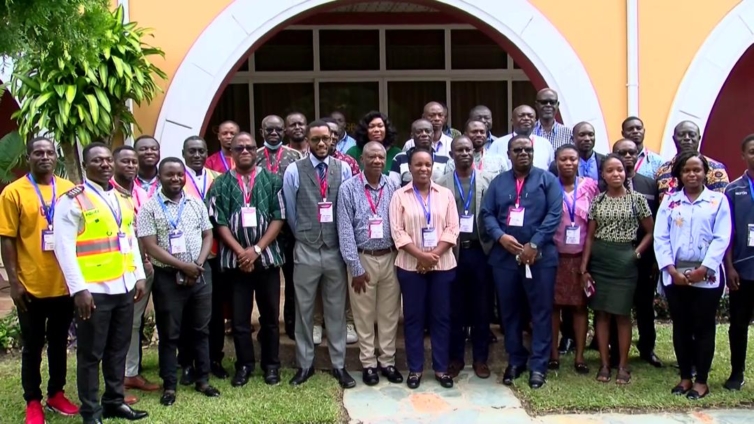
This was highlighted at the Bloomberg Stakeholders Data Use Workshop held in Kumasi, where expert insights shed light on the critical need to tackle over-speeding through technological solutions.
While issues like helmet usage and seatbelt compliance remain important, speeding has emerged as the most pressing threat.
Chief Research Scientist at CSIR-BRRI, Ing. Francis Afukaar stressed "with time, we realized there’s the need to concentrate effort more on speeding than the others, not that they’re not critical, but the speeding is so critical.”

He noted that the BRRI has been monitoring vehicle speeds and behaviors since the Bloomberg initiative launched in Kumasi in 2019.
Over-speeding remains a leading contributor to road traffic deaths in Ghana, especially in the Ashanti Region, which records the highest number of fatalities nationwide.
In 2024 alone, Kumasi accounted for 51% of road traffic deaths in Ghana, with 64% of the victims being pedestrians. The data also revealed that most pedestrian fatalities were caused by saloon cars, SUVs, and pickups.
Recent data indicates that speeding violations have consistently ranged from 30% to 35% since 2023, with a recent spike of 3%. Moreover, speeding is more prevalent during nighttime hours from 6:00 PM to 6:00 AM when fatal accidents tend to occur more frequently.

Dean of the Centre for Scientific and Technological Support (CCST) at CSIR-BRRI, Ing. Prof. Williams Ackaah, emphasized that “we have more people dying during the hours of nighttime, and we’re finding out that it’s because speeds during the nighttime are very high. Also, the response rate is very slow when it comes to rescue services.”
To address this, the Institute is shifting towards automatic enforcement mechanisms due to the practical limitations of manual enforcement.
“The police cannot be everywhere; the number of police officers posted is very low. So we recommend automatic methods and surveillance cameras to support the efforts of the police to enforce the law on excessive speeding at all times,” Prof. Ackaah noted.
The push for automated systems also supports broader goals of lowering speed limits, enhancing road infrastructure, and improving traffic management. All of these, according to the experts, hinge on a systems-based approach that combines data, education, and enforcement.
Global Program Manager at Johns Hopkins International Injury Research Unit, Dr. James Kumwenda, stressed that “education without enforcement is entertainment.”
He emphasised that improving road safety requires collaboration among multiple stakeholders, including driving schools, law enforcement, road engineers, and government agencies.
“We’ve been working in Ghana since 2015, but one thing the data shows is that more needs to be done, and more needs to be done urgently,” he said.
The integration of automatic speed monitoring systems such as loop detectors and surveillance cameras was identified as a vital next step in reducing fatalities on Ghana’s roads.
The experts unanimously agreed that “the lower the vehicle speed, the lower the risk of death.”
Latest Stories
-
NCA announces major voice and data disruption across Northern Ghana due to fibre cuts
28 minutes -
Photos: Housing solutions take centre stage at Day 2 of the 3rd Republic Bank-JoyNews Habitat Fair
1 hour -
Video: Immunity should be exercised without creating classism – Inusah Fuseini on cocaine bust
2 hours -
Ghana Air Force passes out 293 recruits after six months of intensive training
2 hours -
EOCO vrs Baffour Awuah: EOCO should have secured warrant before arrest attempt at court – Inusah Fuseini
2 hours -
Triple fibre cuts disrupt telecom services across Northern, Oti regions – Sam George
2 hours -
Politicisation could undermine parliamentary probe into cocaine seizures – Dr Osae-Kwapong
2 hours -
EOCO chases MP: Can Section 41 cure lacuna in EOCO Act? – Inusah Fuseini asks
2 hours -
GNFS, GWL inspect fire hydrants in Ministries enclave; 23 found faulty
2 hours -
Gov’t directs release of 50,000 bags of grain to ECOWAS
2 hours -
Ghana, Germany deepen cooperation on railways, labour mobility
2 hours -
Huge crowds greet Pope in Paris for open-air Mass
2 hours -
Ghana’s Charles Amofah Elected Vice President of African Bowling Federation
3 hours -
‘I never said I’ll declare a state of emergency’ – President Mahama on galamsey
3 hours -
Bobby Banson condemns EOCO’s attempted arrest of Nana Agyei Baffour Awuah
3 hours