

Audio By Carbonatix
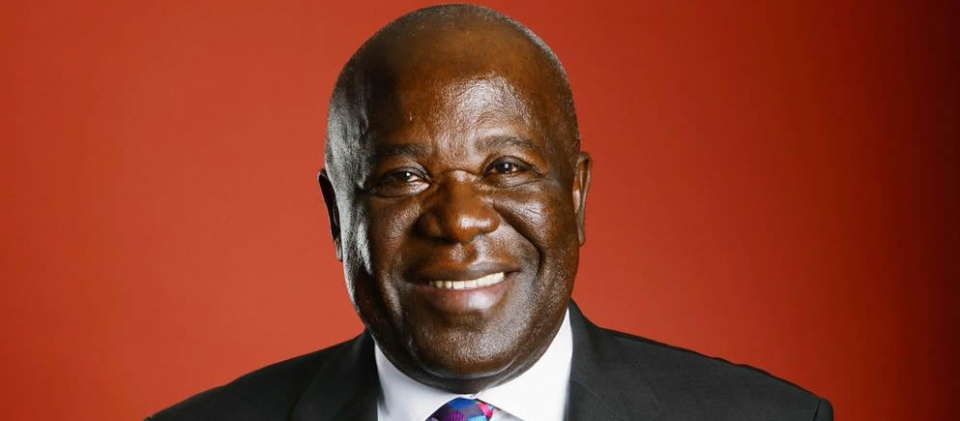
Business titan Sir Sam Jonah has challenged African governments and business leaders, insisting that the continent's colossal natural wealth provides "no excuse" for its persistent underdevelopment when compared to resource-poor nations that prioritise governance.
Speaking at the launch of the Africa Trade Summit 2026 in Accra on Tuesday, November 18, Sir Sam Jonah held up Singapore as the ultimate indictment of African leadership, using precise economic data to underscore his point.
“When Singapore became independent in 1965, it was a swampy island with no natural resources. No gold, no oil, no cocoa, no bauxite. Just people,” Sir Jonah stated.
He contrasted this bare beginning with the current economic powerhouse it has become, a nation projected to have a nominal GDP per capita of over US$94,000 by 2025, one of the highest in the world, rising from a meagre US$500 in 1965.
The mogul insisted that the Asian miracle was not accidental but engineered through deliberate policy, declaring, “Their transformation was not magic; it was management. It was competence. It was continuity of policy.”
The 'Simple Compact': Standards, Integrity, and Institutions
Sir Jonah, who recalled having the honour of meeting Singapore's founding father, Lee Kuan Yew, detailed the foundational governance philosophy that spurred the city-state's dramatic rise.
He outlined the fundamental division of labour that secured investor confidence and rapid industrialisation:
“Lee Kuan Yew... insisted on a simple compact: Government will provide stability, rule of law, clean institutions. Business must provide innovation, jobs and growth.”
According to Sir Jonah, this compact was built on non-negotiable pillars of statecraft, which Africa must adopt wholesale.
“Standards matter. Predictability matters. Integrity matters.”
Today, Singapore, a nation of just 6 million people, operates as a global hub for manufacturing, finance, and trade.
The manufacturing sector, which started with low-tech items, now accounts for nearly 25% of its GDP, focusing on high-tech areas like electronics, biomedical sciences, and aerospace.
The island is recognized globally as the world’s busiest transshipment port, with a stunning trade-to-GDP ratio of approximately 320%.
A Challenge to Africa's Resource-Rich Nations
The comparison served as a stark challenge to the continent, particularly Ghana, which boasts significant exports like gold, cocoa, and crude oil.
The core message was that natural resources are meaningless without the institutional framework to convert them into processed wealth.
“Today, that island of 6 million people is a global hub for manufacturing, finance, and trade,” Sir Jonah observed. “If Singapore, with no resources, could build industries from scratch, what excuse do we have—with all the wealth God has given us?”
Latest Stories
-
I assure Otumfuo, Mahama will join him to commission KNUST Teaching Hospital by end of this year – Haruna Iddrisu
12 minutes -
Gov’t to roll out free special education for persons with disabilities from July 1 – Education Minister
33 minutes -
“We used it to test our officiating officials’ readiness” – Bawah Fuseini after CAA Athletics event
1 hour -
Volleyball emerges as Ghana’s fastest rising sport
1 hour -
National Sports Fund needs strong leadership from the top – Administrator David Wuaku
1 hour -
JoySports Exclusive: Steve McLaren in talks with GFA after expressing interest in Black Stars job
2 hours -
Fire guts auto parts warehouse at Bubuashie, one fire officer injured
2 hours -
I owe my victory to coach Ofori Asare – Allotey after winning WBA Africa Gold Super Flyweight belt
2 hours -
Church of Pentecost supports over 2,000 BECE candidates in Obuasi with career guidance seminar
3 hours -
Brandon Asante and Coventry all but promoted to Premier League despite Sheffield Wednesday draw
4 hours -
GPL 2025/26: Late Kwartemaa strike downs Hearts in Tema
4 hours -
Ghana Faces Sierra Leone Moment as Prosecutorial Powers come under strain
4 hours -
Don’t consume fish or seafood from Tema Shipyard until further notice – FDA warns
4 hours -
Why volunteering might be Africa’s most underrated career accelerator
4 hours -
ActionAid Ghana raises concern over gender gaps in Feed Ghana Programme
4 hours