

Audio By Carbonatix
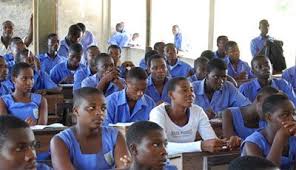
The Mastercard Foundation on Thursday, August 13, released an important new report, Secondary Education in Africa: Preparing Youth for the Future of Work.
Report findings indicate that changes in the nature of work are placing a premium on skills that help young people be adaptable, resilient, and creative problem solvers. Secondary education that provides relevant skills to young workers will help improve productivity, particularly in the informal sector, and will play an important role in driving long-term economic growth and reducing poverty in Africa.
“Digitisation, automation, and technological advancements are already changing the nature of work in Africa. Young people must enter the workforce from secondary education equipped with the right skills.
So, strategic investments into secondary education can be a big part of ensuring young people and their countries emerge from the other side of COVID-19 stronger and more inclusive,” said Mastercard Foundation President and CEO Reeta Roy, as she welcomed audiences to the Secondary Education in Africa Virtual Summit held earlier today to discuss the report findings.
Across the continent, the youth population is growing and is expected to reach 456 million by 2050. This growth, along with improvements in the number of young people enrolling in, and completing, primary education is increasing the demand for secondary education.
Enrolment is expected to double by 2030, representing an additional 46 million students at the secondary level over the next 10 years. This in turn requires an expansion in the education workforce.
Over the next 10 years, an additional 10.8 million teachers will be needed. Ensuring high-quality teachers are in classrooms is one of the most strategic investments a country can make to enable all students to develop the skills they will need for work and as citizens of a global world.
Reflecting on the data and findings within the Secondary Education in Africa report, His Excellency President Paul Kagame of Rwanda underscored the need for cross-sectoral partnerships to achieve the report’s proposed recommendations.
“Secondary school is the critical link that prepares young people to succeed in the workplace. This report sets out some key principles we need to take on board to adapt our secondary education systems for the future. The report emphasizes the importance of constant innovation, driven by data and the spirit of experimentation. This is where collaboration is essential between government, the private sector, and civil society,” he said.
In her keynote address during the Virtual Summit, which was attended by policymakers, educators, and young people, former President Ellen Johnson Sirleaf emphasized the importance of investing in relevant, high-quality, universal secondary education as a lever for advancing inclusion. “There is no greater driver of inclusion than a quality education. And there is nothing that can more quickly devastate hopes for the future than to have it taken away,” she said.
President Sirleaf also reflected on her experiences leading Liberia through the Ebola crisis of 2014, suggesting that prioritizing investments in education would be critical to enabling Africa’s recovery from COVID-19. “After Ebola devastated Liberia, forcing us to close our schools for many months, we realized that we needed to place learning at the centre of the recovery process,” she said. “As we recover from this current crisis, it is my strong belief that collaborative partnership is key to reimagining a secondary education system that is fit for our future,” she added.
The Secondary Education in Africa report was released on the Mastercard Foundation’s website with an accompanying report entitled “Youth Perspectives on Secondary Education in Africa” that features the views and voices of a diverse range of young people.
Among them, is Joseph Opoku, who believes that “many young Africans consider secondary school to be a critical juncture in determining the road ahead,” and that “young people want a secondary education that adequately prepares them for employment and/or entrepreneurship.”
Drawing on a wide range of research conducted by scholars in Africa and globally, the Secondary Education in Africa report offers examples of the positive change and sustained progress that has been made.
It examines factors that facilitate reform and innovation throughout the education system across a range of areas such as curriculum, teacher training, flexible approaches, equitable access, and innovations in financing.
The report supports policymakers, educators, philanthropists, and young people themselves to re-envision secondary education for the future and to consider actionable recommendations for getting there.
Access the full report, Secondary Education in Africa: Preparing Youth for the Future of Work here.
Latest Stories
-
Education Ministry commends Ghanaian teachers on World Teachers’ Day 2026
2 minutes -
NPP can reconcile with aggrieved members who want to return – Nana Akomea
14 minutes -
Tamale Child Deaths: Vehicle owner arrested as IGP deploys homicide team
30 minutes -
From ShattaFest to MoMo Fest: Entertainment takes centre stage in youth engagement
36 minutes -
Nigerian military aircraft crashes, killing 32
41 minutes -
MTN encourages Ghanaians to use MoMo for saving, investing and financial planning
41 minutes -
Absa Bank Ghana names Stephen Ato Frimpong as Board Chair
49 minutes -
Pickford ‘almost caused crash’ with careless driving
51 minutes -
Author and former politician Jeffrey Archer dies aged 86
1 hour -
No education reform can succeed without teachers – Education Ministry
1 hour -
Gauff condemns racist abuse after China Open win
1 hour -
Medvedev disqualified for hitting spectator with ball
2 hours -
Oliseh scores twice in late comeback win for France
2 hours -
Pentagon stops using Anthropic AI tools after blacklisting company, BBC told
2 hours -
From despair to dance: Family of nurse Salomey Baffoe rejoices after GH¢100k bail granted
2 hours