

Audio By Carbonatix
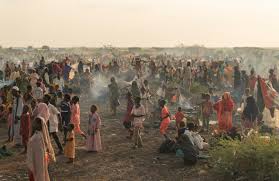
Sudan is facing what the United Nations High Commissioner for Refugees (UNHCR) has described as "the world’s worst displacement crisis", as a brutal civil war continues to wreak havoc across the country.
Since the conflict erupted in April 2023, nearly 13 million people have fled their homes, driven out by relentless aerial bombardments, random shelling, and violent clashes between the Sudanese Armed Forces and the paramilitary Rapid Support Forces (RSF).
The scale of devastation is unprecedented, with civilian infrastructure — including hospitals, schools, and places of worship — being repeatedly targeted. Most recently, the RSF claimed responsibility for downing a military drone over El-Fashir in Darfur, accusing the army of conducting indiscriminate airstrikes in heavily populated areas.
A similar attack on Turra Market in North Darfur earlier this year left over 100 civilians dead, drawing condemnation from local human rights group, Emergency Lawyers, which labelled the incident a war crime and called for accountability.
The UN Human Rights Office continues to receive reports of escalating violence, including airstrikes on towns such as Kabkabiya and Nyala, with scores of civilian casualties. Even Christian churches and evangelical schools have not been spared.
Meanwhile, reports have surfaced linking the Sudanese military to resurgent extremist groups, including factions of the outlawed Muslim Brotherhood. The group, once ousted by Sudan’s 2019 revolution, is alleged to have formed new alliances with the army, attempting to reclaim influence through the ongoing conflict.
Though one such battalion, Al-Baraa Ibn Malik, recently declared its withdrawal from the battlefield, experts have dismissed this as a tactical move designed to manipulate public perception.
Further complicating the crisis are revelations of foreign arms deals. According to an investigation by The Washington Post, the Turkish defence manufacturer Baykar covertly supplied the Sudanese army with at least $120 million worth of drones and missiles in late 2024.
Supported by satellite data and internal communications, the report indicates that these advanced weapons, including the TB2 drones, have been used in recent strikes, intensifying the war’s toll on civilians.
As the humanitarian catastrophe deepens, international observers warn that Sudan’s conflict — marked by shifting alliances, extremist resurgence, and foreign intervention — could destabilise the wider region unless urgent diplomatic and humanitarian interventions are made.
Latest Stories
-
Ghana’s BRICS move requires clear strategy to manage risks – Godfred Bokpin
18 minutes -
Pay teachers realistic income – Duncan Amoah to gov’t
34 minutes -
Bechem to become chicken capital of Ghana – Mahama projects
36 minutes -
Gov’t targets recruitment of 16,500 health professionals in 2026
56 minutes -
Two-week strike will not derail academic calendar – GNAT President
1 hour -
Headmaster detained after BBC investigation into alleged sexual abuse of students
1 hour -
GNAT pushes for clear implementation procedures of teachers’ conditions of service
2 hours -
Recurrent strikes threaten quality of education and academic calendars – Prof Bokpin
2 hours -
‘Cockroach’ group leaders among hundreds detained in Delhi protest
2 hours -
Don’t let speed of information become your judgement – CJ tells new lawyers
2 hours -
World Cup visa scandal: People have leveraged public office to facilitate fraud – Senyo Hosi
3 hours -
Glut! Farmers count losses as prices crash, customers happy
3 hours -
GSA postpones auction of unserviceable vehicles
3 hours -
Man charged with attempted murder after stabbing
3 hours -
World Cup visa scandal: Senyo Hosi says issue goes beyond calls for Sports Minister’s resignation
3 hours