

Audio By Carbonatix
Ecotoxicological Impact of Galamsey: The Entire Ecosystems Affected
The story of galamsey does not end at the riverbank or the tailings pond, its ripples spread silently through entire ecosystems, altering the very balance of life. Every droplet of mercury, every grain of cyanide-laced soil, and every plume of diesel soot sets off a cascade of toxicological effects that move from microbes to mammals, shaping the destiny of forests, rivers, and farmlands long after the last pit is abandoned.
Aquatic Ecosystems and Food Web Disruption
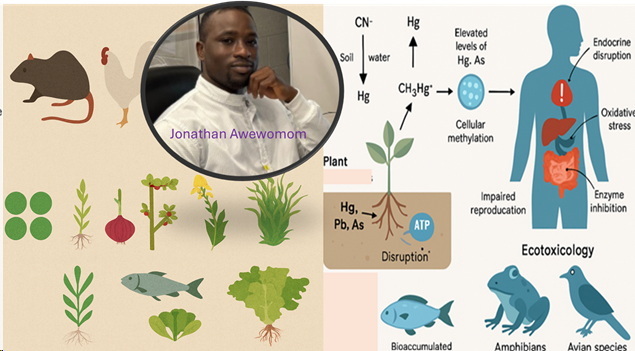
Freshwater systems, the first receivers of galamsey runoff, pay the heaviest price. Aquatic vertebrates such as tilapia and catfish suffer from bioaccumulation of heavy metals, leading to stunted growth, reduced fertility, and population declines. Amphibians, with their permeable skin, absorb waterborne toxins like mercury and cyanide directly, causing developmental deformities and local population crashes. These disruptions at the base of the aquatic food web cascade upward, affecting predatory fish, birds, and mammals that depend on these ecosystems for food, eventually finding their way to the dinner tables of nearby communities.
Terrestrial and Soil Communities
Galamsey does not spare the soil. The microbes that quietly cycle carbon and nitrogen; invisible engines of fertility are silenced by heavy metal contamination. This leads to slower decomposition of organic matter, reduced nitrogen fixation, and declining soil resilience. Plants growing in these soils show inhibited root growth, reduced chlorophyll content, and lower yields, gradually turning once-productive farmlands into wastelands. For rural communities, this means a direct loss of food security and a long-term decline in agricultural potential.
Wildlife and Higher Trophic Levels
Birds and mammals suffer indirectly through the poisoned web of life. Secondary poisoning from consuming contaminated prey leads to endocrine disruption, neurological damage, and reproductive failure. Raptors that rely on fish and amphibians, and mammals such as otters and mongooses, have shown population declines in disturbed areas, shifting local biodiversity and destabilizing predator–prey dynamics. As apex predators vanish or decline, mesopredator populations can boom unchecked, further altering ecosystem balance.
The Plants
Plants are silent record-keepers of galamsey pollution, absorbing contaminants through their roots and leaves. Heavy metals such as mercury, arsenic, and lead disrupt photosynthesis, stunt root growth, and reduce crop yields, gradually degrading soil productivity. Hydrocarbons and cyanide residues can impair seed germination and inhibit enzymatic processes critical for plant development. In Ghana’s mining belts, studies have shown elevated metal levels in staple crops like cassava, maize, and leafy vegetables, posing a direct risk to food security and human health. The loss of plant diversity near galamsey sites further destabilizes ecosystems, reducing pollinator populations and increasing vulnerability to erosion and climate extremes.
Ecosystem Function and Resilience
The ultimate impact of galamsey pollutants is the erosion of ecosystem resilience, the ability of natural systems to recover from disturbance. When microbial processes slow, amphibians disappear, and predators decline, the entire system becomes more fragile, more prone to collapse under additional stressors like climate change or drought. Galamsey thus leaves behind not just a polluted landscape but an ecosystem less able to protect itself and the humans who depend on it.
The Silent Collapse
Galamsey’s most dangerous legacy may not be what we see, but what we lose without noticing. When the frogs no longer sing in the rainy season, when the soil no longer feeds the crops as it once did, when the rivers no longer teem with fish the warning bells have already been ringing for years. These are not just environmental losses; they are signals that Ghana’s natural safety net is fraying. The question is not only how to stop illegal mining, but how to restore the broken links in the chain of life before they are gone forever.
Latest Stories
-
Kwaku Azar writes: A-G vs OSP
13 minutes -
Mfantsipim–Adisadel rivalry built excellence, not division – Sam Jonah
38 minutes -
Vice President launches Mfantsipim’s 150 years of shaping Ghana’s greatest mind
55 minutes -
I assure Otumfuo, Mahama will join him to commission KNUST Teaching Hospital by end of this year – Haruna Iddrisu
2 hours -
Gov’t to roll out free special education for persons with disabilities from July 1 – Education Minister
2 hours -
“We used it to test our officiating officials’ readiness” – Bawah Fuseini after CAA Athletics event
2 hours -
Volleyball emerges as Ghana’s fastest rising sport
3 hours -
National Sports Fund needs strong leadership from the top – Administrator David Wuaku
3 hours -
JoySports Exclusive: Steve McLaren in talks with GFA after expressing interest in Black Stars job
3 hours -
Fire guts auto parts warehouse at Bubuashie, one fire officer injured
3 hours -
I owe my victory to coach Ofori Asare – Allotey after winning WBA Africa Gold Super Flyweight belt
3 hours -
Church of Pentecost supports over 2,000 BECE candidates in Obuasi with career guidance seminar
5 hours -
Brandon Asante and Coventry all but promoted to Premier League despite Sheffield Wednesday draw
5 hours -
GPL 2025/26: Late Kwartemaa strike downs Hearts in Tema
5 hours -
Ghana Faces Sierra Leone Moment as Prosecutorial Powers come under strain
5 hours