

Audio By Carbonatix
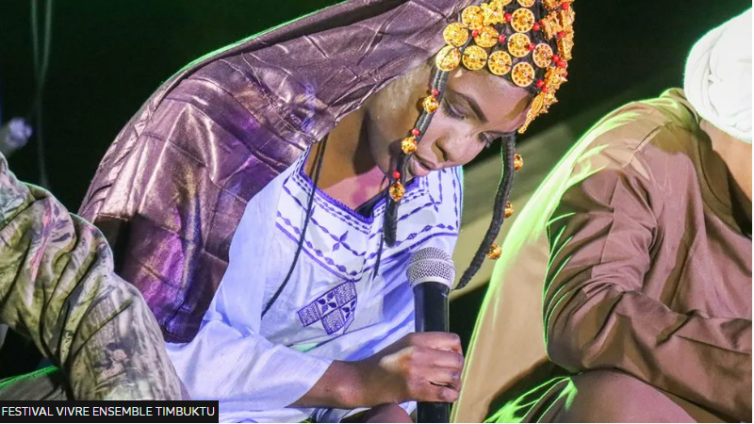
In the shadow of Timbuktu's ivory-coloured Monument To Peace, musicians from across Mali took the stage as the sun set on the sand-coloured houses of the historic city on the edge of the Sahara Desert.
Local community leaders and representatives of the military government opened the city's traditional festival with the usual pomp and ceremony. But this year things were different.
Timbuktu has been under blockade by the al-Qaeda affiliated group Jama'at Nusrat al-Islam wal-Muslimin (JNIM) since late August.
Villages just outside the city have become a battleground between Mali's army and the jihadist fighters.
People in Timbuktu have endured months of sporadic access to supplies that would normally come from neighbouring Algeria and Mauritania, with food and petrol prices skyrocketing.
With such volatile security conditions, in a region under siege, why hold the festival this year?
"It's needed more than ever, because it's something to help lift people's spirits and it brings a lot of support to the local economy," says Salaha Maiga, director of the festival and a member of the National Transitional Council, Mali's interim parliament appointed after the military seized power in 2021.
The Living Together festival has become a major event here since it was first organised eight years ago with support from the UN mission in Mali, Minusma.
Dozens of traders and local artisans showcase their merchandise on colourful rows of stands, selling everything from traditional ornaments to food.
This year, says Mr Maiga, the fair has brought a much-needed respite to local businesses who have struggled due to the blockade.
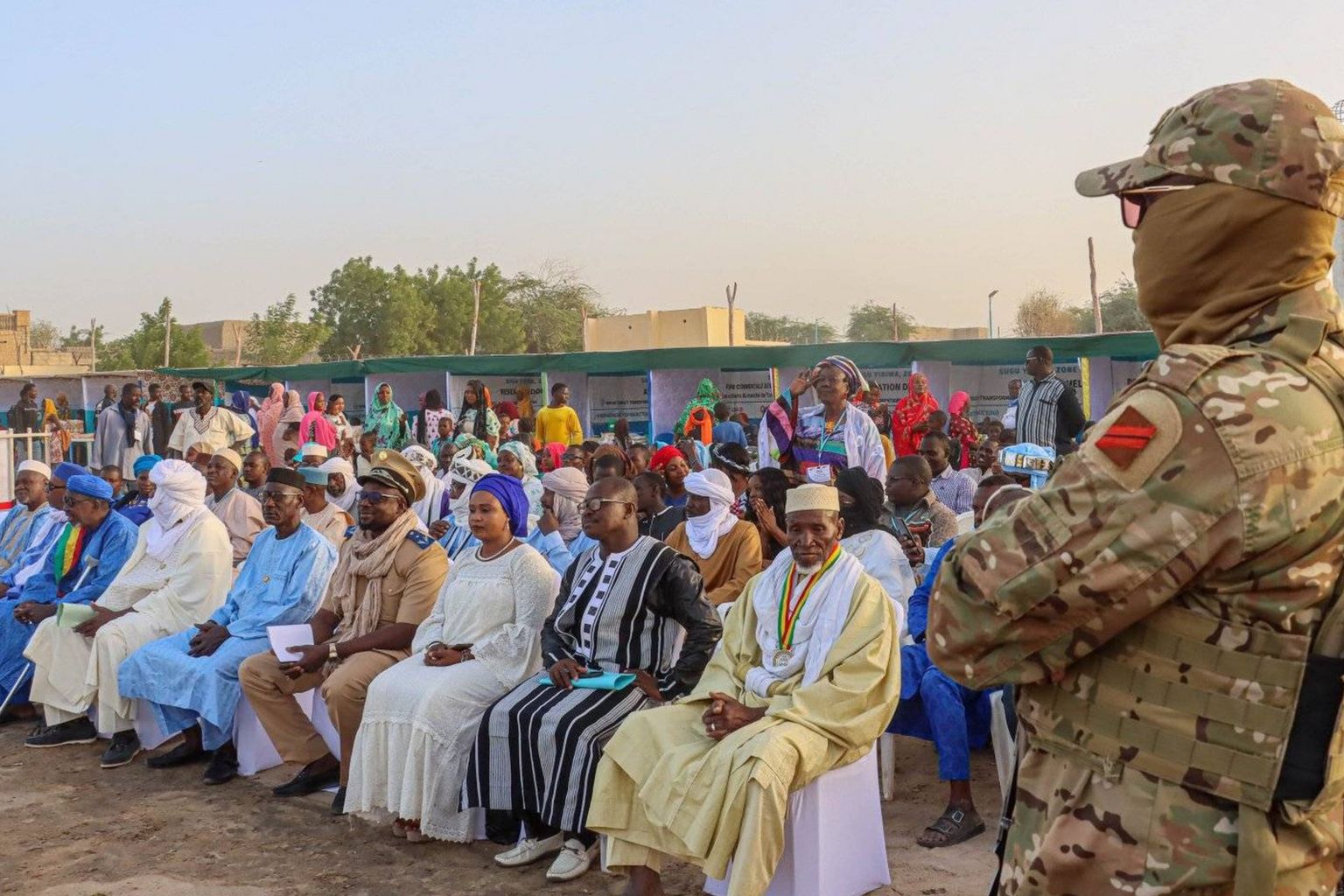
But the main goal of the festival has always been about fostering dialogue. It brings together members of different communities for debates about a range of topics - this time, a special focus was on female entrepreneurship.
Music performances were held in the evenings after the blistering day-time heat has subsided, with singers and bands travelling from all over Mali and even neighbouring countries.
Even though Timbuktu has been - and still is - under curfew, authorities said they wouldn't enforce it for the duration of the event.
"This year we have an even bigger attendance than in the past," Mr Maiga adds, "because since September there's been a stop to normal life."
Normality is something Mali's military junta desperately wants to project, to reassure a population impoverished by the months of blockade and worried about the increasing number of attacks on civilians.
More than 136,000 people, including nearly 74,000 children, live in the city, according to data from the charity Save The Children.
The UN estimates that at least 33,000 people have been displaced around Timbuktu since the crisis began, but the rate of people fleeing has slowed down after 49 civilians were killed in an attack on a boat while trying to leave the city.
Most recently, on 24 November, an attack in the neighbouring town of Niafunké caused dozens of casualties.
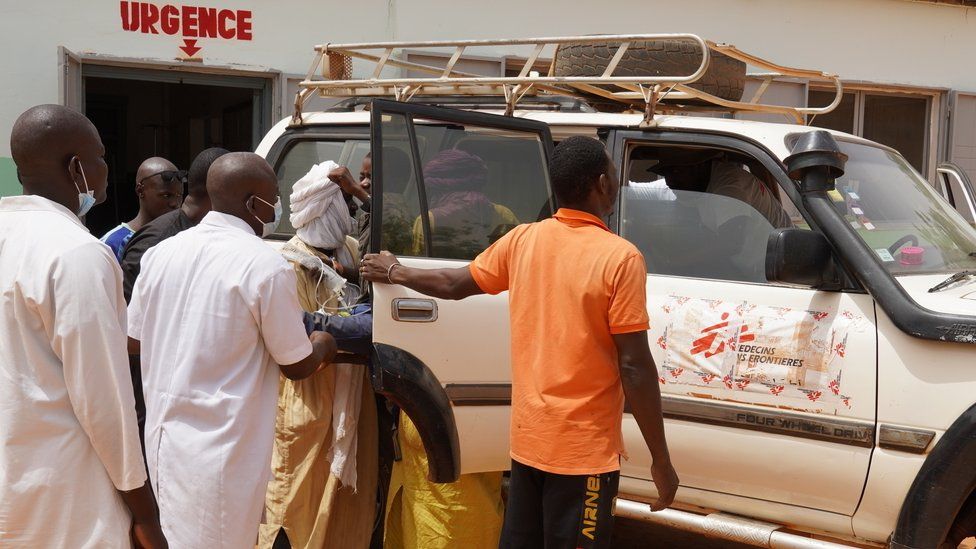
"We received 29 injured people, so we had to deploy a mass casualty plan," says Aissami Abdou, the regional operations coordinator for the medical charity Médecins Sans Frontières (MSF).
The charity is worried that the continuing blockade is preventing them from helping those in need.
"We've had to reduce our movements, we've had to reduce the exposure of the team," Mr Abdou adds.
"The second concern is about the access of the population to healthcare structures. Due to years of conflict, healthcare access was already an issue, and now it's become even more difficult."
In 2012, the region became a flashpoint in the battle between separatist Tuareg forces that wanted to create the independent state of Azawad, jihadist groups affiliated to al-Qaeda and Islamic State, and the Malian government forces.
An alliance of Tuareg separatists and jihadists seized the city and the whole of northern Mali, before being forced out by troops from a French-led alliance.
The UN peacekeeping mission was then set up and some measure of security was restored, although jihadist militias continued to operate in the more remote parts of the country.
Now, French troops and the UN have pulled out on the orders of the military junta.
The UN withdrawal officially ended last week, but as soon as they handed over their military bases in Timbuktu to the army, rebel and jihadist groups resumed their fight, vying to retake control of the north of the country.
"The government is under pressure. It took a huge bet in forcing the UN forces out of the country, claiming they would be able to maintain security," says Ulf Laessing, from the Konrad Adenauer Foundation, a German think-tank.
The junta has called in the Wagner Group to help them fight the insurgency, but the Russian mercenaries have been accused of atrocities and looting.
"A lot of people who live in areas where Wagner is active, they fear them," Mr Laessing says. "There were even village heads that have asked authorities not to allow Wagner to go on patrols on their own.
"If civilians get killed or their properties are being looted by Wagner mercenaries, then there's a good chance that these people will join jihadists or at least become hostile towards the government."
To ensure that the Timbuktu festival took place this year as scheduled, a military plane flew in all the logistical equipment needed and set up a heavy security cordon around and inside the city.
"Timbuktu is just rather symbolic," Mr Laessing explains. "This festival gives them some kind of legitimacy, it gives a sense of normalcy, that everything is under control, the government doesn't need the UN and they're able to ensure the wellbeing of citizens."
Thanks to the mediation of local community chiefs, the jihadists agreed to ease the blockade of Timbuktu and let food trucks in. For a couple of weeks, optimism returned to the city and flights from the capital Bamako resumed.
But on the first day of the festival, the group issued a statement accusing the army of exploiting the lifting of the blockade and Wagner mercenaries of committing atrocities.
The siege was reinstated.
On that day, I messaged Mr Maiga again to ask him if he still intended to carry on with the festival as planned. His short answer was: "Yes".
"Our main goal is to fight for unity," he told me in a voice message. "We do all we can to facilitate dialogue and exchanges, and we continue to do it whatever the circumstances, whatever the challenges."
"We show our resilience as a steady and proud community."
Latest Stories
-
Kwaku Azar writes: A-G vs OSP
10 minutes -
Mfantsipim–Adisadel rivalry built excellence, not division – Sam Jonah
34 minutes -
Vice President launches Mfantsipim’s 150 years of shaping Ghana’s greatest mind
51 minutes -
I assure Otumfuo, Mahama will join him to commission KNUST Teaching Hospital by end of this year – Haruna Iddrisu
2 hours -
Gov’t to roll out free special education for persons with disabilities from July 1 – Education Minister
2 hours -
“We used it to test our officiating officials’ readiness” – Bawah Fuseini after CAA Athletics event
2 hours -
Volleyball emerges as Ghana’s fastest rising sport
2 hours -
National Sports Fund needs strong leadership from the top – Administrator David Wuaku
3 hours -
JoySports Exclusive: Steve McLaren in talks with GFA after expressing interest in Black Stars job
3 hours -
Fire guts auto parts warehouse at Bubuashie, one fire officer injured
3 hours -
I owe my victory to coach Ofori Asare – Allotey after winning WBA Africa Gold Super Flyweight belt
3 hours -
Church of Pentecost supports over 2,000 BECE candidates in Obuasi with career guidance seminar
5 hours -
Brandon Asante and Coventry all but promoted to Premier League despite Sheffield Wednesday draw
5 hours -
GPL 2025/26: Late Kwartemaa strike downs Hearts in Tema
5 hours -
Ghana Faces Sierra Leone Moment as Prosecutorial Powers come under strain
5 hours