

Audio By Carbonatix
The Vice Chancellor of the University of Mines and Technology (UMaT), Prof. Richard Kwasi Amankwah, has announced the university’s commitment to training 1,000 coders this academic year in support of the government’s digitalisation agenda.
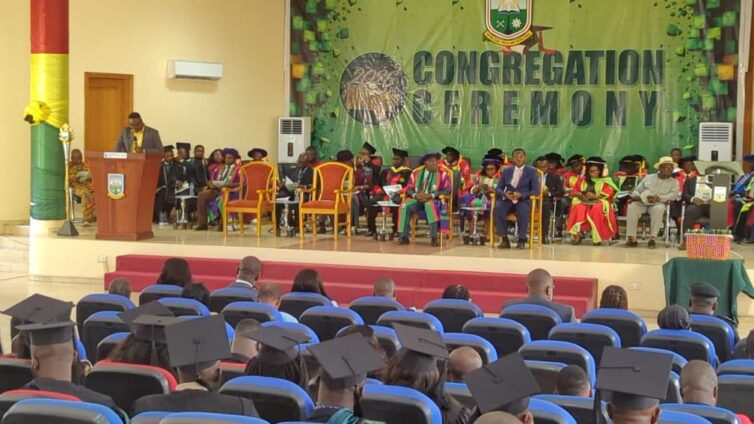
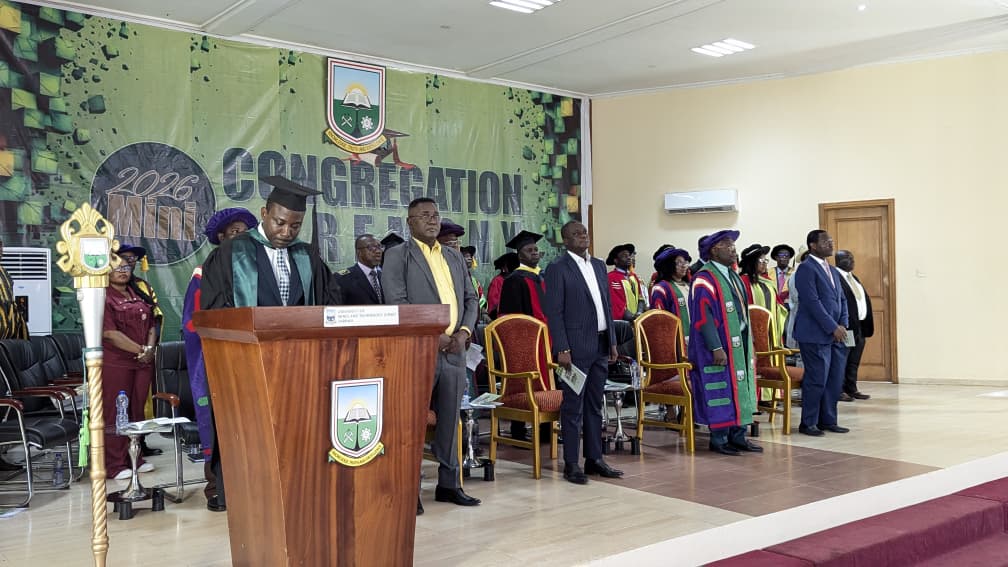
Speaking at the university’s 2026 Mini Congregation Ceremony in Tarkwa, Prof. Amankwah said the initiative aligned with President John Mahama’s vision of training one million coders to advance Ghana’s digital economy.
According to him, the Ministry of Communication, Digital Technology and Innovations has donated 200 laptops to the university and also provided 2,000 slots for students and staff to obtain Google certifications to enhance their digital skills and remote working opportunities.
He also disclosed that the university had collaborated with the Western Regional Coordinating Council on innovative projects, including the use of drones to monitor river pollution and the conversion of waste plastics into diesel for possible use at the Aboadze Thermal Power Plant.
The Vice Chancellor further revealed that UMaT recently trained 24 professionals from MIDROC Gold Mine in Ethiopia in Mining Engineering, Minerals Processing, Exploration Geology, and Mining Geology to help bridge skills gaps in the mining sector.
He added that the Government of Gabon was also considering sponsoring about 20 students to pursue engineering programmes at UMaT, with an additional 30 students expected to enrol in the university’s pre-engineering programme.
Prof. Amankwah praised businessman Ibrahim Mahama for contributing about GH¢4 million worth of manpower and equipment through Engineers and Planners to help expand the accident-prone Government Hill road corridor leading to the university.
He also acknowledged support from AngloGold Ashanti and the Ghana Chamber of Mines for scholarships, research grants, and infrastructure development on campus.
Touching on sports achievements, the Vice Chancellor said UMaT won its first-ever medals at the Ghana University Sports Association Games after more than 20 years of participation, securing a silver medal in tug of war and two bronze medals in table tennis and long jump competitions.
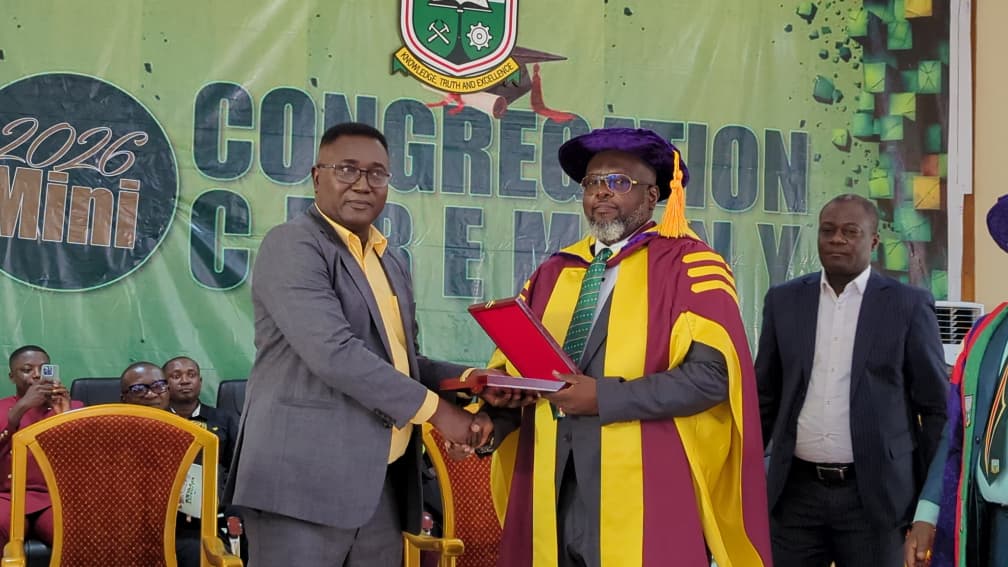
At the congregation, a total of 95 students graduated at various levels, including five PhD graduands, 18 Master’s degree recipients, 21 postgraduate diploma students, and 47 Bachelor of Science students in engineering programmes. Three distinguished Ghanaians were also honoured with honorary doctorate degrees.
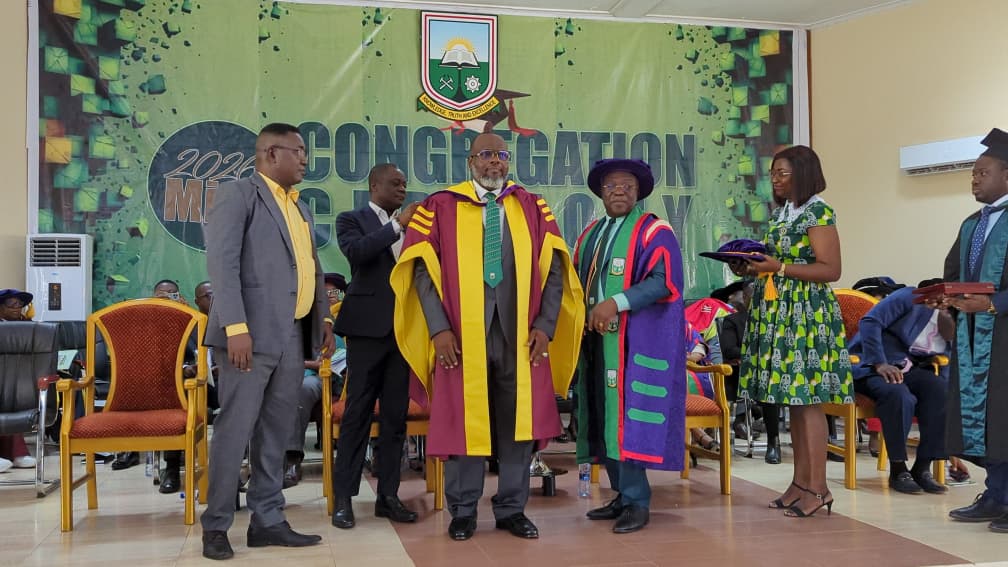
Prof. Amankwah, who described the ceremony as his last congregation as Vice Chancellor, expressed gratitude to staff and students for their support during his six-year tenure and congratulated Prof. Bernard Kumi-Boateng on his appointment as the university’s next Vice Chancellor.
Latest Stories
-
MTN set to deploy 5G services after winning spectrum licenses worth US$202m
2 hours -
NPP national elections: 3,000–4,000 police to handle security, traffic in Kumasi – Karbo
4 hours -
Atta Akyea fumes as Manhyia MP is to spend another night in EOCO custody
4 hours -
SSNIT says La Beach clearance was to protect hotel investments, beaches to remain public
5 hours -
APSU congratulates St Augustine’s College after back-to-back National Investment Quiz wins
5 hours -
Renewed flood intervention at Mallam Junction raises hopes among residents, businesses
6 hours -
St Augustine’s College retain National Investment Quiz title after nail-biting grand finale
6 hours -
Education infrastructure investment will drive Banda’s development – Ahmed Ibrahim
6 hours -
Teacher unions strike: Gov’t presents fresh proposals as talks end inconclusively
7 hours -
51,000 teachers’ promotion arrears to be validated for October payment – Education Minister
8 hours -
Kwabena Boamah appointed Board Chair for Impact Investing Ghana
8 hours -
Striking teacher unions to meet Fair Wages and Salaries Commission on October 6
8 hours -
EOCO working with AG to arraign Nana Baffour Awuah before weekend court
8 hours -
Duraplast reassures customers after fire, announces October 5 reopening
8 hours -
Call off strike, gov’t will not renege on promotion arrears pledge – Haruna Iddrisu to teacher unions
8 hours