

Audio By Carbonatix
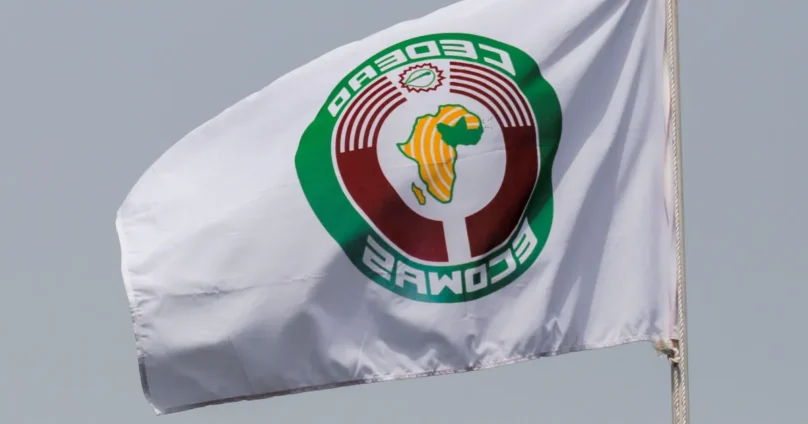
The Economic Community of West African States (ECOWAS) has expressed "deep concern" over the rapidly escalating military hostilities in the Gulf region, warning that the conflict could trigger a devastating collapse of global energy and food supply chains.
In a formal statement issued on Saturday, 28th February 2026, ECOWAS—currently under the chairmanship of H.E. Dr. Julius Maada Bio, President of Sierra Leone—aligned itself with the African Union Commission in calling for an immediate de-escalation of violence.
It follows attacks by US and Israel on Iran, with retaliatory action that has affected several Gulf states hosting US military bases.
The bloc warned that the intensification of military action risks widening instability across the Middle East, with "serious consequences" for international peace and the global economy.
The regional body highlighted that Africa is particularly vulnerable to the ripple effects of the conflict.
With the Strait of Hormuz—a critical corridor for global oil and liquefied natural gas (LNG)—facing disruption, ECOWAS noted the direct threat to trade and the survival of vulnerable regions.
“The intensification of military action risks widening instability in the Middle East, with serious consequences for international peace and security in general and for global energy markets, trade, and food supply chains, especially for Africa and other vulnerable regions,” the statement noted.
ECOWAS urged all warring parties to exercise "maximum restraint" and return to the principles of international law. The leadership emphasised that any resolution must respect sovereignty, territorial integrity, and the United Nations Charter.
Key demands from the ECOWAS statement included:
- Paramount Protection: The safety of civilian lives and critical infrastructure must be prioritised above military objectives.
- Renewed Diplomacy: A call for urgent dialogue within established international and regional frameworks to restore stability.
- Multilateralism: Reaffirming West Africa's commitment to the peaceful resolution of disputes rather than armed confrontation.
The Abuja-based Commission fully endorsed the African Union's previous declarations on the development, presenting a united African front against the rising global tensions.
The statement, signed in Abuja, serves as a significant diplomatic signal that West African leaders are bracing for the economic shocks of the Middle Eastern crisis, particularly regarding fuel costs and imported food prices that have already shown signs of volatility in early 2026.
Latest Stories
-
Several injured as Saudi capital airport reportedly hit again
6 seconds -
Christa Pike discharged from hospital and returned to prison, her lawyers say
2 minutes -
Ghana’s BRICS move requires clear strategy to manage risks – Godfred Bokpin
2 hours -
Pay teachers realistic income – Duncan Amoah to gov’t
2 hours -
Bechem to become chicken capital of Ghana – Mahama projects
2 hours -
Gov’t targets recruitment of 16,500 health professionals in 2026
2 hours -
Two-week strike will not derail academic calendar – GNAT President
3 hours -
Headmaster detained after BBC investigation into alleged sexual abuse of students
3 hours -
GNAT pushes for clear implementation procedures of teachers’ conditions of service
3 hours -
Recurrent strikes threaten quality of education and academic calendars – Prof Bokpin
3 hours -
‘Cockroach’ group leaders among hundreds detained in Delhi protest
3 hours -
Don’t let speed of information become your judgement – CJ tells new lawyers
4 hours -
World Cup visa scandal: People have leveraged public office to facilitate fraud – Senyo Hosi
4 hours -
Glut! Farmers count losses as prices crash, customers happy
5 hours -
GSA postpones auction of unserviceable vehicles
5 hours