

Audio By Carbonatix
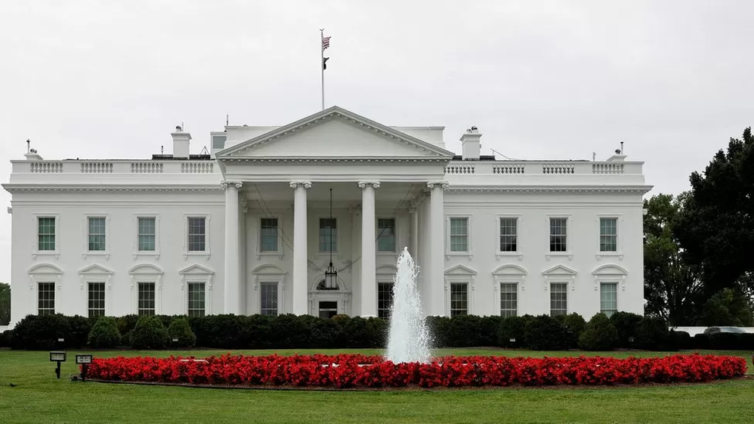
The US Secret Service has closed its investigation into the discovery of cocaine in the White House.
It said it had attempted to determine a suspect through fingerprints, DNA traces, and video evidence, but had not been able to do so.
The cocaine was discovered earlier this month in a vestibule leading to the lobby of the West Executive Avenue entrance to the White House.
President Joe Biden and his family were at Camp David in Maryland at the time.
The small plastic bag used to contain the drugs was found in an area which can be accessed by members of the public, and where mobile phones and other personal devices are stored before entering the White House.
After it was first discovered, safety closures were put in place so it could be determined that the substance "was not a chemical or radiological material that threatened the security of the White House", the Secret Service said in a statement.
Tests of the material determined it was cocaine, and further analysis was carried out on the composition of the substance. Advanced fingertip and DNA analysis on its packaging were also carried out by the FBI's crime laboratory.

Meanwhile, the Secret Service continued to investigate how the substance arrived in the White House, reviewing security systems in the day leading up to the discovery of the cocaine.
It produced "an index of several hundred individuals" who "may have accessed" the area where the drug was found.
On Wednesday, the Secret Service received the forensic evidence back from the FBI. This showed it did not have enough DNA evidence for comparison, and had not developed "latent fingerprints".
"Therefore, the Secret Service is not able to compare evidence against the known pool of individuals," it said in a statement.
It added that the surveillance footage had also not been of use, and it would mean trying to single out someone from "hundreds of individuals" who passed through the vestibule - without having any physical evidence to do so.
The Secret Service added that it it "takes its mission to protect US leaders, facilities, and events seriously" and it is "constantly adapting to meet the needs of the current and future security environment".
Cocaine is a Schedule II drug under the Controlled Substances Act, meaning it has a high potential for abuse, according to the US Drug Enforcement Administration.
Latest Stories
-
Ghana must close gaps that allow drug trafficking – Dr Pelpuo
8 minutes -
Emmanuel Osei: President Mahama, dissolve GFA and save our soul
21 minutes -
Uganda Airlines to launch direct Accra-Entebbe flights from October 27
23 minutes -
Ghana records surge in 2025 tourism receipts as Ahafo Region honors top industry players
25 minutes -
I don’t have an official car, I use my own – Pelpuo
36 minutes -
Maiden Black Star Fashion Week to highlight Ghana’s national fashion platform
36 minutes -
GPRTU has entrusted vehicle inspection responsibility to station masters – GPRTU member
36 minutes -
President Mahama to open housing finance conference in Accra on October 7
44 minutes -
Cocaine probe: Speaker is right in dismissing Minority’s motion of parliamentary inquiry – Dr Pelpuo
44 minutes -
Academic City presents cybersecurity white paper to Communications Minister
45 minutes -
Pelpuo calls for independent commission to oversee Ghana’s public sector remuneration
45 minutes -
Bekwai MP to engage Assembly over traders displaced by market redevelopment
47 minutes -
Accra-Abidjan flight relaunch will boost trade, investment and regional integration – Ambassador Alhassan Abu
48 minutes -
Mahama tasked me to identify initiatives that fit Reset Agenda – Pelpuo
49 minutes -
Makola and Abossey Okai named in crime index as fake goods trade grows
52 minutes