

Audio By Carbonatix
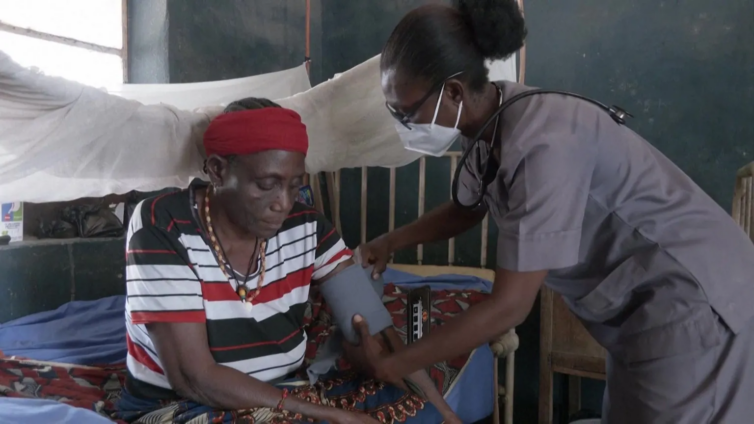
People affected by leprosy in Nigeria should be able to get hold of vital drugs to treat the disease for the first time in a year from this weekend, the World Health Organisation has said.
The country, which reports more than 2,000 new cases a year, ran out of supplies partly because drugs were held up after new regulations were introduced.
The WHO said it had asked Nigeria to briefly lift its new testing policy and it expects the drugs to arrive from India on Sunday.
Leprosy is curable with a combination of different antibiotics, but if left untreated, the patients' health can deteriorate with sores and nerve damage that cause deformities.
The treatment can last between six and 12 months.
But because of the lack of drugs in Nigeria, patients have been sent home from hospitals. As the drugs suppress transmission,n this increases the risk of the disease spreading.
Dr Samimu Msheliza, a public health expert and medical advisor at the Nigerian branch of the Leprosy Mission, highlighted the urgent need for medication.
"We have thousands of newly diagnosed leprosy patients across various cities who are just waiting for this drug," he told the BBC.
"The quicker we have [the drugs], the better, because currently these people are suffering, their transmission is ongoing because they are not being treated," Dr Msheliza said.
The Reuters news agency spoke to one woman at a hospital in Nasarawa state, who said her condition had got much worse since she was not able to get hold of the combination of drugs.
All Awwal Musa's fingers were clawed and her legs discharged pus. "Before last year, my wounds were getting healed but now they are getting worse. The pain is worse," Ms Musa is quoted as saying.
The nerve damage may be irreversible.
Nigeria's drug authority introduced new regulations for medicines aimed at tackling the importation of counterfeit and sub-standard drugs.
In recent years, several medicines have been recalled for failing to meet safety standards.
But the new measures have had an impact on the availability of crucial treatments, including those for leprosy.
Latest Stories
-
Bagbin adjourns Parliament indefinitely
17 minutes -
African Most Beautiful USA Queen to host Community Zumba Dance session in Accra
17 minutes -
Cocaine probe: Speaker got it wrong by blocking parliamentary inquiry – Minority Leader
30 minutes -
FoSCel foundation calls for end to stigma and stereotyping against people living with sickle cell disease
41 minutes -
Auditor-General to track audit recommendations as GH¢280.5m in surcharges remains unpaid
42 minutes -
Walewale MP withdraws ‘rude’ comment on Bagbin’s Parliament recall, apologises
59 minutes -
FoSCel founder urges curriculum reform to strengthen sickle cell education in Ghana
1 hour -
United States launches America.Gov for public services 5 years after Dr. Bawumia launched Ghana’s version Ghana.Gov
1 hour -
Cocaine probe: Majority used super majority with Speaker’s support to weaken Parliament – Afenyo-Markin
1 hour -
UGMC Research Director calls for deliberate pathway from research to patient care
2 hours -
IEAG calls on FDA to resolve delays in import code issuance
2 hours -
UGMC research must translate laboratory findings into healthcare solutions – Prof Evelyn Yayra Bonney
2 hours -
Court remands 3 over alleged gold concentrate robbery
2 hours -
Two bodies stuck at St. Anne’s mortuary after refrigeration engines break down
2 hours -
‘We will not let this matter rest’ – Afenyo-Markin after Bagbin rejects narcotics probe
2 hours