

Audio By Carbonatix
As Ghana prepares for its 41st National Farmers' Day celebration, the government has doubled down on its commitment to make agriculture the cornerstone of the nation's economic revival, signaling a transformative shift in how the country approaches food security and economic growth.
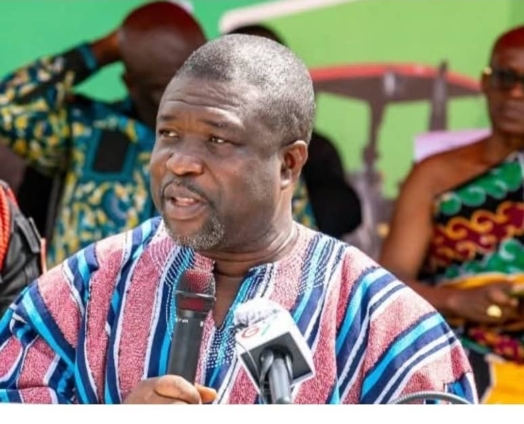
Speaking at the opening ceremony in Ho, Volta Regional Minister James Gunu stated that President John Dramani Mahama's administration views agriculture not merely as a sector to support, but as the primary engine driving the country's economic resetting agenda. The strategy centers on three critical pillars: productivity, innovation, and resilience.
"Farmers, fishers, processors, and value-chain actors are the backbone of our economy," Mr Gunu stated, underscoring the government's recognition that Ghana's economic future is inextricably linked to the success of those who work the land and waters.
This year's National Farmers' Day, scheduled for December 5 in the Volta Region, is themed "Feed Ghana, Eat Ghana, Secure the Future."
The Volta Region has emerged as a powerhouse in national food production, leading in rice cultivation, aquaculture, cassava processing, vegetable farming, and animal husbandry.
The region's success story is central to the broader Volta Economic Corridor initiative, an ambitious project aimed at revolutionizing agriculture, agro-processing, logistics, and export capacity.
"Hosting this event here reflects our region's growing contribution to national food production," Mr Gunu explained, highlighting how the corridor is transforming the agricultural landscape and creating new opportunities for farmers and agribusinesses alike.
The celebration also shines a spotlight on Ghana's fisheries and aquaculture sector, which the Minister Emelia Arthur described as "a cornerstone of the country's food system." With fish providing nearly 60 per cent of the animal protein consumed by Ghanaians, the sector feeds millions of families daily.
The Minister, represented by Chief Director Marian Kpakpa, acknowledged the harsh realities facing fisher communities, including escalating costs, the devastating impacts of climate change, and significant post-harvest losses that diminish both income and food availability.
"Despite these challenges, our fishers remain determined and continue to innovate," Mrs Arthur noted, praising their resilience and professional dignity.
In response, the government has launched comprehensive reforms, including strengthening the Fisheries Management Act, expanding aquaculture zones, improving premixed fuel governance, and investing in modern landing site infrastructure.
Paramount Chief of the Battor Traditional Area, Togbega Patamia Dzekle VII, who chaired the event, issued a timely reminder that agricultural success cannot come at the expense of the environment.
He called for comprehensive mechanisms to protect against environmental degradation, emphasizing that sustainable practices are essential for long-term food security.
This message resonated with the government's stated commitment to climate-smart agriculture and sustainable fishery management.
"The future of our food system depends on the responsible stewardship of our natural resources," Mrs Arthur affirmed, pledging continued collaboration with farming communities.
The event drew a diverse cross-section of stakeholders, municipal and district chief executives, heads of decentralized agencies, students, and major players across the agricultural value chain—all united in recognition of agriculture's pivotal role in Ghana's economic transformation.
Latest Stories
-
Tarkwa court jails labourer for three years over GH¢123,000 theft
38 minutes -
GAEC must retain nuclear scientists for Ghana’s nuclear ambitions – Minister
1 hour -
Man reportedly mistaken for game and shot by hunter dead in forest
1 hour -
19-year-old mason jailed 15 years for defiling seven-year-old pupil
1 hour -
Ghana’s banking sector assets rise 20.47% to GH¢500.2bn – BoG Governor
1 hour -
22 injured as Sprinter bus overturns at Sege after tyre burst
1 hour -
UN housing expert urges Ghana to strengthen Rent Control Department amid housing affordability concerns
2 hours -
Delta-BCI partnership reaches 166,000 people with breast cancer education
2 hours -
Power restoration fault suspected in Kumasi Central Market fire
7 hours -
The 7-foot giant of Ngleshie Amanfro: Seven-foot Ghanaian Ephraim Saawa dreams of joining the national basketball team
7 hours -
Government promises support for Kumasi Central Market fire victims
8 hours -
Vibes The Movie: Big Ghun’s Ghanaian film earns five nominations at 2026 REFFA
8 hours -
‘I’m a fulfilled man’—Justice Korbieh on missing out on Supreme Court despite two nominations
8 hours -
MamaCare CEO warns unresolved conflicts among health workers could undermine maternal and neonatal care
9 hours -
Health professionals urged to translate medical knowledge into practice to save mothers
9 hours