

Audio By Carbonatix
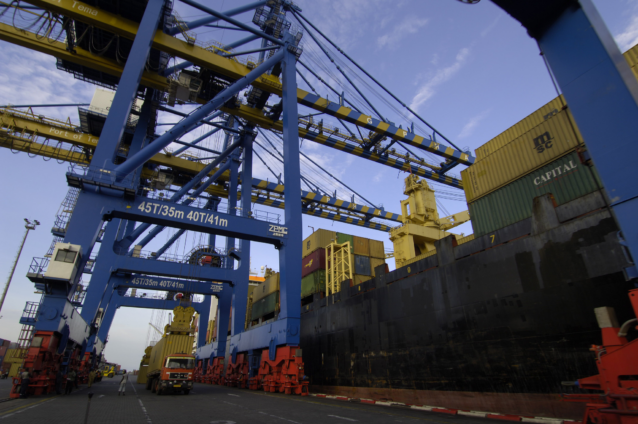
Ghana's ports are on strike. Freight forwarders have downed tools at Tema. Traders are suspending imports. Duty payments have been frozen. And at the centre of this disruption is not a corrupt official, not a cartel, not a policy reversal — but an algorithm. The Publican AI system has ignited one of the most consequential debates about artificial intelligence governance that any African nation has yet faced. The conversation we are having — or failing to have — will determine not just whether Ghana's ports function smoothly, but whether Africa's engagement with AI technology serves African interests or merely replicates the extraction patterns of centuries past.
Let me be precise about what I am arguing. I am not saying AI should not be used in customs administration. The $75 billion gap between what Ghana imported between 2020 and 2025 and what was declared at the border is real, documented, and scandalous. Ghana has been bleeding revenue for years, and the case for deploying intelligence technology to close that gap is legitimate and urgent.
What I am saying is this: the manner in which AI is being implemented at Ghana's ports reveals a dangerous pattern that goes far beyond one contract with a Cyprus-registered company. It exposes a fundamental failure to ask the question that should precede every AI deployment on this continent:
Does this system understand us?
The Black Box at the Border
The central complaint from traders, freight forwarders, and industry associations is not that AI is being used. It is that the AI's decisions cannot be questioned, explained, or appealed. Under the original March 10 directive, customs officers were prohibited from applying values below those generated by the system. The machine's output became the law.
This is not how AI is supposed to work. This is not even how AI works in the countries that built it. When India deployed its Turant Customs system, and when Brazil rolled out its SISAM machine-learning platform with identical ambitions, both nations quickly ran into the same legal and operational wall: the WTO Customs Valuation Agreement, which Ghana is bound by, establishes that the primary basis for taxation must be the transaction value — the actual price paid by the buyer. A machine-generated benchmark cannot legally override an invoice. Both India and Brazil ultimately repositioned their AI systems as risk-flagging tools rather than binding valuation authorities. Ghana is being asked to learn this lesson through a strike rather than through foresight.
But the legal violation, serious as it is, is only the surface of the problem.
The Data It Was Trained On Is Not Our Data
Here is the question that no one in the Ministry of Finance appears to have asked: What was Publican AI trained on, and does that training data reflect Ghanaian trade realities?
AI systems learn from historical data. They build their understanding of 'normal' and 'suspicious' from the patterns embedded in the datasets they were fed. If Publican was trained primarily on global trade flows from Europe, North America, and East Asia — as most commercial trade intelligence platforms are — then its baseline understanding of what a container of Ghanaian-imported goods should cost is derived from contexts that may bear little resemblance to our own.
The algorithm does not know what a bale of second-hand clothing costs when sourced from a Kantamanto supplier's network. It does not understand the pricing dynamics of tomatoes imported from Burkina Faso.
Consider what our trade context actually looks like. Ghana's import market is characterised by a high volume of small and medium traders who source goods through informal networks — traders who go to Dubai, China, and Türkiye, negotiate face-to-face, and bring goods back at prices that reflect personal relationships, bulk informal discounts, and corridor-specific pricing that no global database captures. We have secondhand goods markets that are not included in the Global North's trade data. We have regional ECOWAS flows that operate under different valuation norms. We have agricultural inputs priced according to seasonal and regional dynamics that a system trained on Rotterdam port data will systematically misread.
When Publican flags 24.7 per cent of all import declarations as below internationally accepted values, the critical question is: internationally accepted by whom? By a dataset compiled in Cyprus by a company incorporated in December 2024 with a share capital of EUR 1,545?
This is not a flaw that can be patched with a software update. It is a structural problem rooted in the question of whose intelligence we are deploying.
The Deeper Crisis: We Are Outsourcing Our Economic Sovereignty
Let us speak plainly about what the Truedare contract represents. A company registered in Cyprus in December 2024 — with no verifiable track record in AI, customs technology, or trade systems, capitalised at EUR 1,545 — was awarded the contract to sit at the centre of Ghana's customs architecture. Analysts have estimated that Ghana could be paying between GH₵2.8 billion and GH₵3.95 billion annually to this vendor, and between GH₵14 billion and GH₵28 billion over the life of the contract. The full financial terms remain hidden from the public.
Meanwhile, experts have pointed out that the Integrated Customs Management System (ICUMS), which Ghana has operated since 2020, already contains the AI audit modules and risk profiling capabilities being advertised as new. The architecture exists. The intelligence modules exist. The missing piece was not a foreign vendor. It was the political will to configure and use what we already own.
'No additional cost to the state' is a phrase that Ghanaians are now entitled to treat with the highest level of scepticism.
This pattern extends beyond Ghana. Across Africa, AI systems designed and trained in the Global North are being deployed in African contexts with minimal adaptation, no local governance frameworks, and financial structures that ensure the revenue flows outward. The technology arrives. The data flows out. The sovereignty stays behind.
What Sovereign AI Governance Looks Like
The problem is not AI. The problem is ungoverned, decontextualised, unaccountable AI. Let me describe what responsible AI deployment in Ghana's customs system should look like.
First: AI as a risk flag, not a verdict. The correct architecture positions AI as the first filter, not the final judge. When Publican identifies a declaration that falls below benchmark values, the appropriate response is to elevate the case for human review — not to override the invoice automatically. The burden of proof shifts to the importer to provide banking records and supporting documentation. If they can, the transaction value stands. This is how every major trading nation that has deployed AI in customs has eventually structured its system.
Second: Training data must reflect African trade realities. Any AI system deployed in Ghanaian customs must be trained on Ghanaian customs data — historical ICUMS records, actual corridor pricing, ECOWAS trade flows, and regional market data. It must be continuously calibrated against the lived realities of Ghanaian trade, not retrofitted from a European commercial database. This is the minimum condition for the system to produce accurate results rather than systematic overvaluations.
Third: An African Governance Layer is not optional. This is the dimension that Western AI systems categorically lack, and it is the dimension that Ghana — and Africa broadly — must insist upon. Most AI governance frameworks emerging from the EU, the United States, and multilateral bodies are built on assumptions rooted in Western institutional contexts: a robust regulatory state, an independent judiciary, and mature consumer protection frameworks. These assumptions do not map cleanly onto African institutional realities.
An African Governance Layer for AI in customs must include: a formal mechanism for community and trader input into the system's calibration; a transparent, accessible digital appeals process in local languages; an African data sovereignty clause prohibiting the training data generated by Ghanaian customs transactions from being used to improve a foreign vendor's global product without explicit consent; an independent technical oversight body with African expertise; and regular public reporting on how the system's decisions are affecting different categories of traders — with specific attention to the small and medium traders who constitute the backbone of Ghana's import economy.
Fourth: Build local capability, not dependency. Ghana succeeded in building its own mobile money interoperability system at a cost of approximately USD 4 million — compared to a projected USD 1.2 billion from external vendors. Rwanda, Singapore, India, South Korea, and the UAE have built world-class customs intelligence systems using local expertise embedded in local realities. The benchmark exists. The question is whether Ghana's leaders will pursue it.
The African Governance Layer: What It Must Contain
Let me be specific. Any AI system deployed in sovereign African economic functions — whether at customs, tax administration, financial regulation, or public service delivery — must be subject to an African Governance Layer that addresses the following dimensions, which Western frameworks omit:
Cultural and Contextual Calibration: The system must be audited against local trade patterns before deployment, not after complaints arise. In Ghana, this means calibrating against the values of secondhand goods in Kantamanto, livestock prices in Bolgatanga, electronics corridor rates in Makola, and ECOWAS regional agricultural flows. This is not exotic data — it is the data of Ghana's actual economy.
Community Accountability: Unlike European GDPR frameworks that focus on individual data rights, an African governance model must incorporate community accountability — recognising that in our trading context, the unit affected by algorithmic decisions is often a trading association, a corridor community, or a market women's group, not an isolated individual consumer.
Epistemic Sovereignty: The data generated by Ghana's customs transactions is Ghanaian sovereign data. It must not be transmitted to foreign servers to train a commercial AI product without explicit parliamentary approval and revenue-sharing arrangements that benefit Ghana. When our import declarations train Truedare's algorithms, we are creating value for a Cyprus company. That value belongs to Ghana.
Intergenerational Trade Knowledge: Ghana's trading traditions carry centuries of knowledge about pricing, provenance, trust networks, and corridor relationships. This indigenous trade intelligence — what a veteran Tema clearing agent knows after thirty years on the docks — is not currently captured in any database. Responsible AI deployment must find mechanisms to incorporate this knowledge rather than simply override it.
A Word to Ghana's Media and Policymakers
The Business and Financial Times, JoyOnline, Graphic Business, and Ghana's broader financial press have a responsibility to push this debate beyond the surface controversy about strike action and import delays. The questions that need sustained investigation are these:
What does the Truedare contract actually say? Who owns the revenue-sharing model, and for how many years? Was ICUMS's existing AI capability formally assessed before Parliament approved a new vendor? Who trained the Publican system, on what data, and validated by whom? What percentage of the 24.7 per cent of flagged declarations were subsequently vindicated on appeal? And most importantly: what is Ghana's plan to build its own sovereign AI capability — one trained on our data, governed by our institutions, calibrated to our trade context, and accountable to our traders?
Parliament approved this contract in November 2025 on representations that the system would come at no cost to the state. If Joseph Cudjoe's analysis is correct — and the financial logic is compelling — the actual cost may be among the largest commitments Ghana has made to a foreign private entity in recent memory. The public deserves to know.
Conclusion: The Algorithm Must Learn From Us
Artificial intelligence is not neutral. Every AI system embeds the assumptions, priorities, and blind spots of the context in which it was built and the data on which it was trained. A system built in Europe, trained on European trade flows, and calibrated against European benchmarks will see African trade through a European lens. It will systematically misread our informal networks, our corridor-specific pricing, our seasonal agricultural flows, and our small-trader economics — not out of malice, but out of a structurally embedded ignorance in its architecture.
Ghana has an opportunity right now — not despite this crisis, but because of it — to establish the standard for how Africa should engage with AI in sovereign economic functions.
That standard must insist that AI systems deployed on African soil, in African economic contexts, governing African trade, must be trained on African data, governed by African institutions, and held accountable by African communities.
The algorithm must learn from us. Not the other way around.
The Tema Port strike is not just a trade dispute. It is a referendum on whose intelligence governs Africa's economic future. Ghana should make the right choice — not just for the traders waiting at the port today, but for every African nation watching how this plays out.
*******
The author, Dr David King Boison, is a Maritime & Port Expert, AI Consultant, Senior Research Fellow at CIMAG, and CEO of Knowledge Web Centre. He can be reached via email at kingdavboison@gmail.com and via cell phone at +233207696296
Latest Stories
-
Labour Minister wants SOEs to help shape new public pay system
1 hour -
IPEC will ensure Equity and Sustainability in SOEs Compensation
2 hours -
White House bars CNN from travelling with Trump on Air Force One
3 hours -
Fennis wins second consecutive ITF J60 title in Accra
3 hours -
Spain beat England in thriller after Kane penalty miss
3 hours -
GPL 2026/27: Zaidan’s late goal ends Hearts of Oak unbeaten start
3 hours -
CEOs demand clarity on pay harmonisation, board autonomy as FWSC engages SOEs bosses over IPEC transition
3 hours -
2026 Women’s Super Cup: FC Savannah, Epiphany Warriors maintain top spots ahead of final group games
3 hours -
‘Is EOCO responsible for determining lawyers’ fees?’ – Baffour Awuah
3 hours -
David Beckles claims second J60 Accra title
3 hours -
No France cocaine suspect linked to Mahama, Vice President’s security details – NACOC
4 hours -
Anwelle Foundation launched in Jirapa to tackle poverty, youth unemployment
4 hours -
Joy Sports Editor Fentuo Tahiru Fentuo to moderate inaugural Music Meets Football Summit in Zambia
4 hours -
Court premises too volatile for Baffour Awuah’s attempted arrest by EOCO – Inusah Fuseini
4 hours -
Drug bust: Under no circumstances will NACOC leadership be compromised – Twum-Barimah
4 hours