

Audio By Carbonatix
By the memories that it holds are still raw in the minds of those who know its cold story.
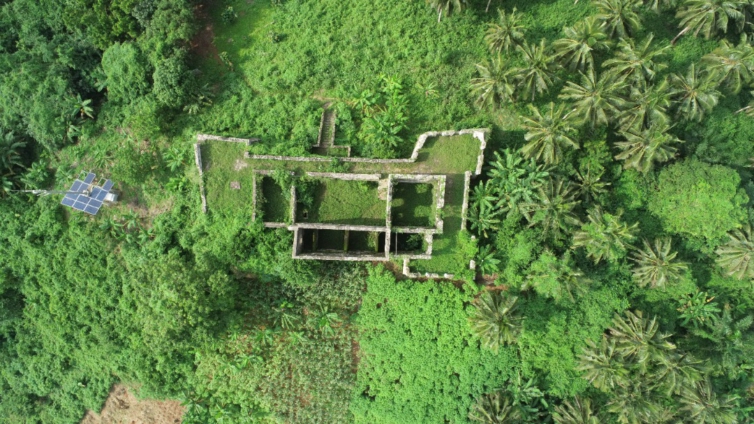
Fort St Batenstein, the Dutch word for “profit fort” was the nerve centre of a grand Dutch invasion plan in the West of Gold Coast way before the British who would eventually colonize the entire country would arrive.
Built in 1656, it had several forts to the west like Metal Cross in Dixcove, Fredericksburg in Prince’ Town and St Anthony and then Komenda and St George in Elmina to the east.
Its location- only a walking distance from Owusua (Busua) where Badu Bonso, the revered king of the Ahanta people then lived and had his palace- was meant to be strategic.
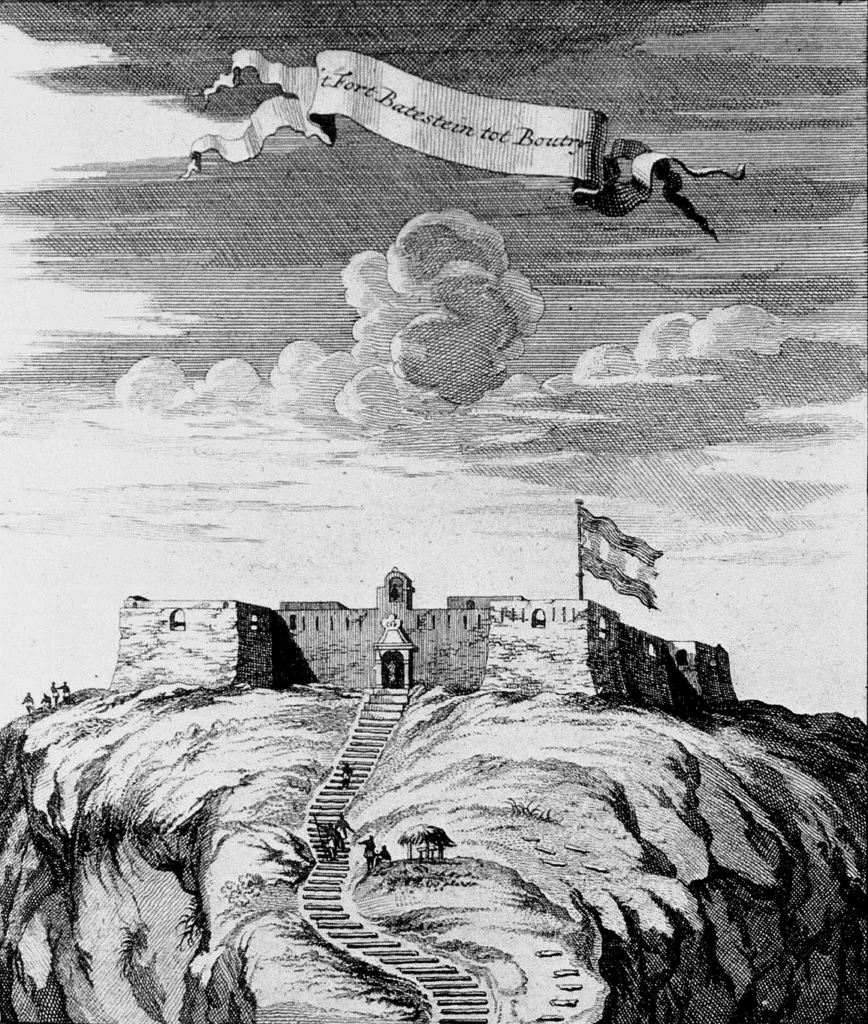
Fort Batenstein in 1709
“He was a dreaded fighter and no one knew the source of his fighting spirit,” says Steven Arthur, a great grandson of Badu Bonso, who I asked to tell me about the man who was the second known king of Ahanta.
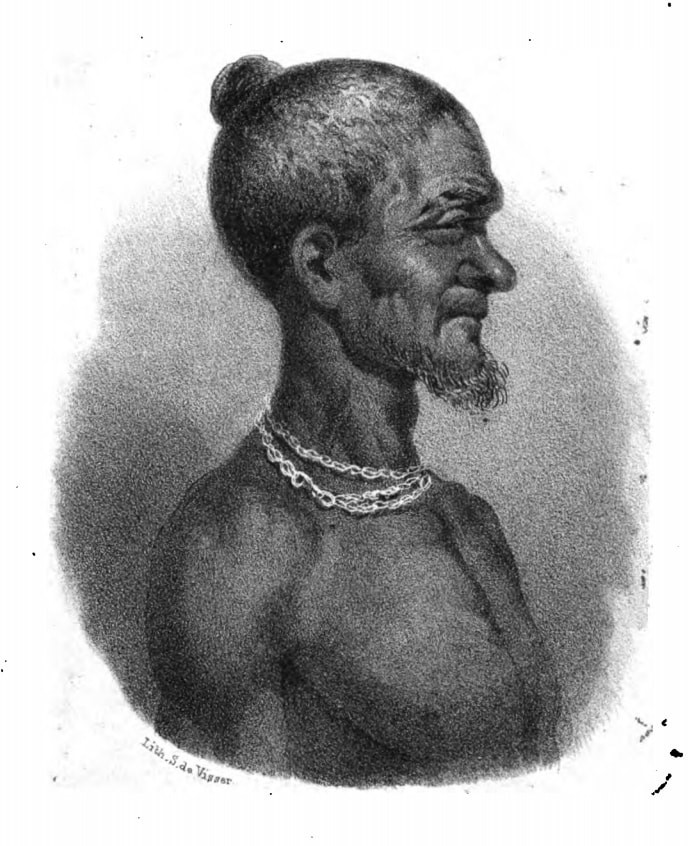
A painting of Badu Bonso made by a Dutch lieutenant, 1838
Steven is now the Assembly Member of Butre, the town where Fort St Batenstein is located. “This fort holds a special place in my heart. It’s like a child who didn’t meet his father and is told this is where your father was killed…that is how I feel anytime I come here,” he says.
According to Dutch records, it was inside Fort St Batenstein, in August ….that Badu Bonso was killed. There’s no documented account of how Badu Bonso died but Ghanaian oral tradition claims he took his own life.
Before that, he had killed hundreds of Dutch soldiers in several battles for the heart and soul of the then west coast.
“The Dutch had signed a treaty in 1656 with the Ahanta people to colonize them for the ensuing 200 years. Within that time, they were free to trade in slaves. After the treaty ended in 1856, the Dutch still wanted to continue their rule. Badu Bonso stood up against that,” says Daniel Kwofie who has studied many accounts of this history extensively.
News of Badu Bonso’s notoriety for killing Dutch officers in Gold Coast had gone all the way to the royal family in in the Netherlands at the time and that was the single most potent threat to the Dutch project in West Africa at the time.
Several historical accounts say a deliberate plot to kill him and have his head brought to Holland was hatched from the highest level of Dutch government then.
“We are told that Badu Bonso was betrayed by his own sub-chiefs who had been bribed to give up the source of prowess of their king then. That led to his capture and beheading in 1838,” says Kwofie.
Badu Bonso’s last straw that broke the camel’s back was when he killed Tonneboeyer, then Dutch Governor stationed in Elmina.
Several accounts including those from Holland say Tonneboeyer was a young rascal whose impetuous acts caused much trouble, in Elmina itself and with some neighbouring states as well.
“He walked into a trap set by Bonsu's men on Takoradi beach. In reprisal, the Dutch sent a military expedition to the Gold Coast. There was no battle, as the Ahanta handed Bonsu over for a reward of 10 ounces of gold. After a rather summary trial, Bonsu was sentenced to death and hanged.
After the execution, his head was cut off and taken to the Netherlands, to the Anatomy Museum in Leiden,” says Dr. Ineke Van Kessel, Dutch Historian and journalist.
After nearly 200 years, the head of Badu Bonso was returned to Ghana in 2009 after Ex-President John Kuffour had begged for it two years earlier.
Squabbles between local Ahanta chiefs over what should happen to the head has left the head locked up at the 37 Military Hospital where it was first deposited upon return.
“We want to rewrite this history. We feel pained by the past but those of us living today want to let the rest of the world know about this story and we can start by telling the story,” says Steven.
Latest Stories
-
UN housing expert urges Ghana to strengthen Rent Control Department amid housing affordability concerns
6 minutes -
Delta-BCI partnership reaches 166,000 people with breast cancer education
15 minutes -
Power restoration fault suspected in Kumasi Central Market fire
5 hours -
The 7-foot giant of Ngleshie Amanfro: Seven-foot Ghanaian Ephraim Saawa dreams of joining the national basketball team
6 hours -
Government promises support for Kumasi Central Market fire victims
6 hours -
Vibes The Movie: Big Ghun’s Ghanaian film earns five nominations at 2026 REFFA
7 hours -
‘I’m a fulfilled man’—Justice Korbieh on missing out on Supreme Court despite two nominations
7 hours -
MamaCare CEO warns unresolved conflicts among health workers could undermine maternal and neonatal care
7 hours -
Health professionals urged to translate medical knowledge into practice to save mothers
7 hours -
Retired judge Justice Francis Korbieh charges 1,568 new lawyers to uphold integrity
9 hours -
Conflicts among care providers linked to maternal, neonatal deaths – Expert
9 hours -
GIS marks 10th TIME conference, champions improved teaching practices
9 hours -
BRICS Or Balance? What Ghana’s bid really means
9 hours -
Adamus Resources launches breast cancer awareness campaign in Nzema
9 hours -
GPRTU wants full TRAFFITECH-GH implementation to start in 2027
10 hours