

Audio By Carbonatix
Doctors have begun seeing a sharp rise in the number of premature births in some areas of Ukraine, as the conflict enters its second month.
Prenatal clinics in both Kharkiv and Lviv have told the BBC that the rate of preterm births has doubled or tripled in the past few weeks, as a result of stress and medical issues linked to the war.
Polina was born in Kharkiv's regional perinatal clinic weighing just 630g (1.4lbs). The average weight for a full-term baby girl is five times that.
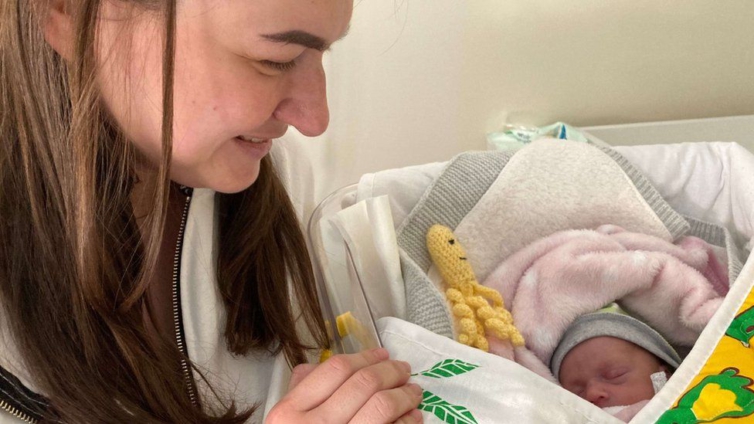
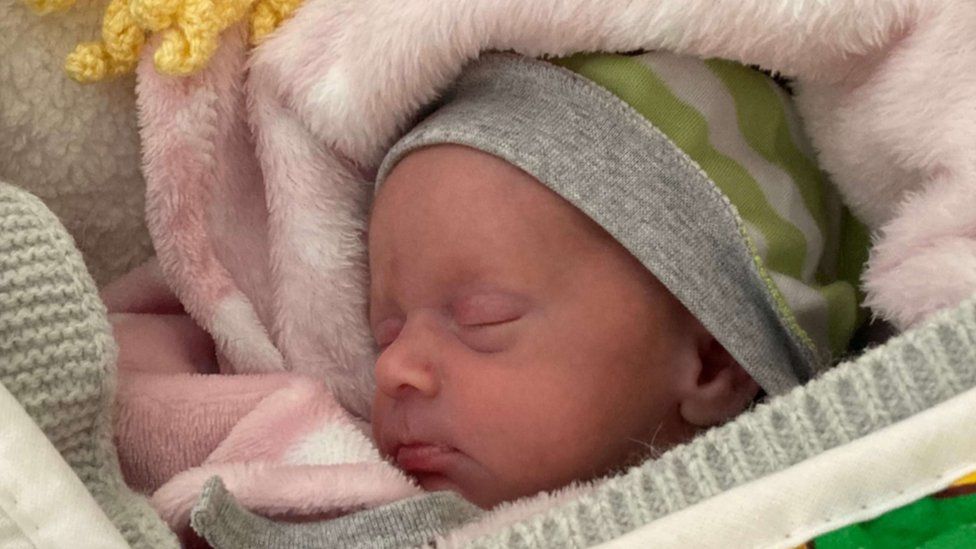
Viktoria, 800g (1.7lbs), was born in Lviv's perinatal hospital in early March along with her twin sister Veronika, after her mother fled from Kyiv. She's just passed her first kilogram.
These two little girls, one a refugee, the other struggling for life in a city bombarded by Russian forces, reveal the gruelling choices facing mothers and doctors here.
Iryna Kondratova, the medical director in charge of Polina's care, told me premature births had jumped to three times their normal rate at her Kharkiv clinic, and now account for 50% of all deliveries.
"Infections, lack of medical help, bad nutrition: war creates a risk of premature birth," Dr Kondratova says. "Our premature birth rate was already high, because we had a lot of patients from Donetsk and Luhansk.
"In conflict zones, women spend a lot of time in crowded basements, where infections are active. And it's also harder for women to reach medical help if they need it."
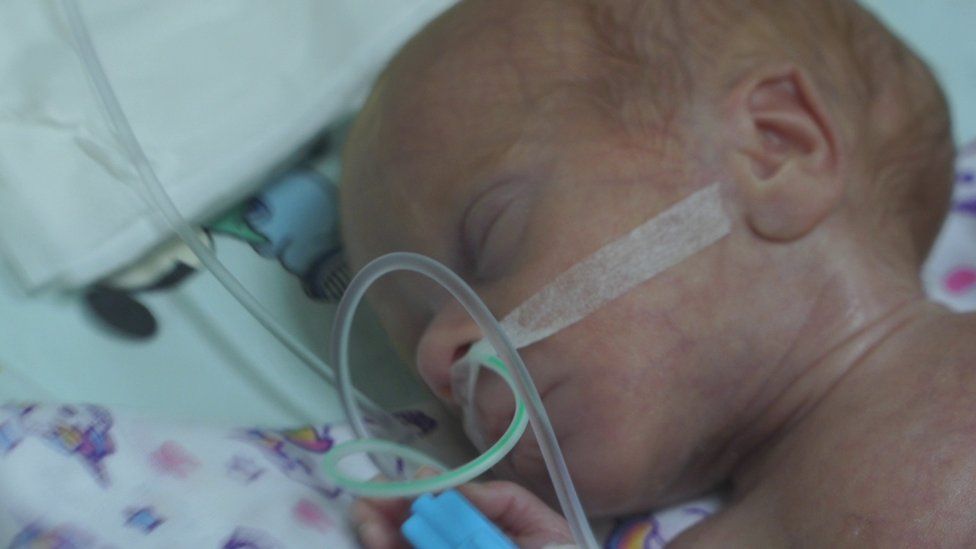
While the percentage of premature births in her clinic has risen, Iryna says the total number of her patients has shrunk, as women flee the fighting in Kharkiv.
Across the country in Lviv, away from the front lines, they've seen an influx.
Viktoria's mother, Iryna Zelena, fled to Lviv from Kyiv just before she gave birth. "We left because of mass shelling," she says. "We'd been in a shelter all that time."
She believes the stress of spending the first days of the war in a bunker contributed to her delivering Viktoria - and her twin sister Veronika - more than seven weeks early.
Down the corridor, in the pre-natal unit, Olga Bogadiza is six months pregnant and also expecting twins. She fled from Kyiv too, desperate to find somewhere safe to have her babies, away from the shelling and curfews.
It took three days to reach Lviv, she says, and during all that time she couldn't eat or drink from fear.
"Have you heard of the saying, 'animal fear'?" she asks me. "It's not like the fear of pain, or giving birth - it's fear that makes your skin hurt. You're so scared you can't eat or think. When I arrived in Lviv, the doctor said I had lost 3.5kg (7.7lbs), and that my babies' lives were in danger because their development had stopped."
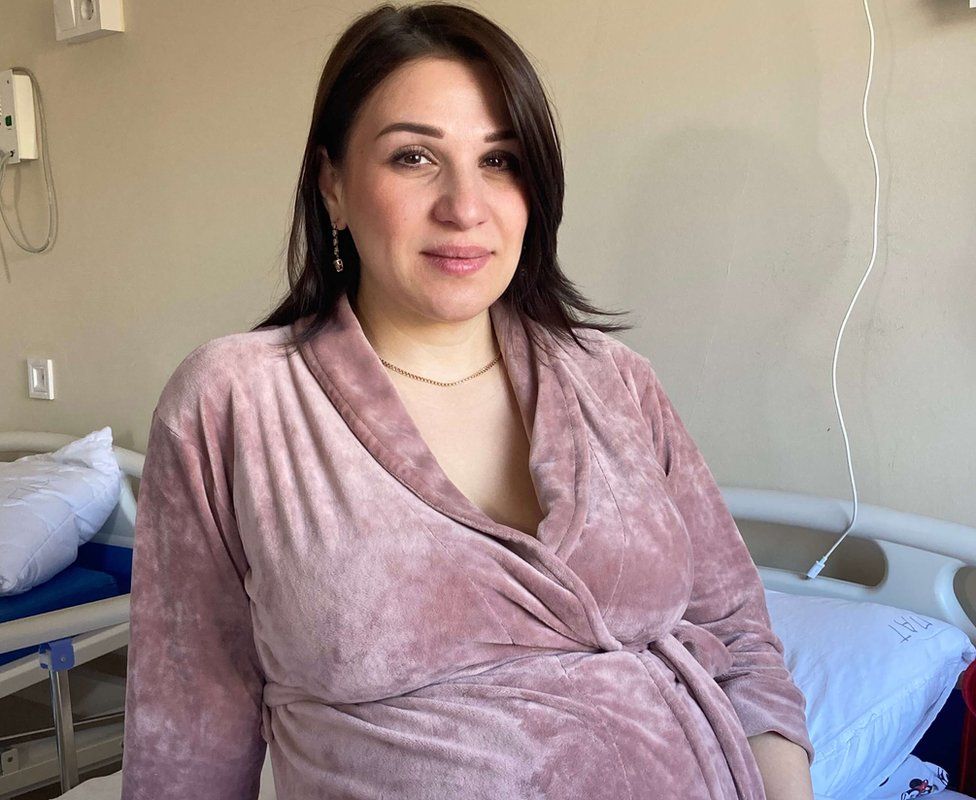
Her twins have now started growing again. Her five-year-old son asks her on every visit when his brothers will come.
Olga is Russian, her husband Ukrainian. Their children are a refuge of love to cling to with their countries at war.
But as Russian missiles slammed into targets in Lviv, the challenge of caring for fragile babies like Viktoria and Polina was brought home.
In Kharkiv, Dr Kondratova says staff had made the decision to stay on the intensive care ward with the smallest babies, even after air-raid warnings.
"You can't take a child of 600g to the basement," she said. "It would be a one-way trip. So we stay with the children and live through the bombings with them."
For Viktoria's mother, Iryna, the air-raid sirens pose a difficult dilemma.
Viktoria's sister, Veronika, has already left intensive care and is staying with her mother on the general ward. When the siren sounds, Iryna takes her down to the bomb shelter - but has to leave Viktoria behind in her incubator, because she's too fragile to move.
"Emotionally, it's really hard," Iryna said. "It's like tearing my heart in two. One baby comes with me, the other stays with the doctors. I'm always thinking, 'is everything ok? How does she feel?' But in this situation, we just have to be strong."
The hospital in Lviv - a city once seen as a safe haven from the conflict - has already sandbagged some windows, but it is also now building a special underground bunker to house its most fragile patients in incubators.
Hospitals have been a target in this war, and staff here are worried.
Within this conflict that has gripped the world, babies like Viktoria and Polina are waging their own fight for survival.
Iryna strokes her daughter's hand inside the incubator.
"She's Ukrainian," Iryna says, "and she's going to win."
Latest Stories
-
Police restore calm at Larteh following Odwira festival disturbance
11 minutes -
‘All the camps will dissolve’ – Bawumia demands one NPP for 2028
13 minutes -
There is no time to waste – Bawumia orders NPP to begin 2028 work
21 minutes -
Sarkodie visits MobileMoney Fintech LTD
23 minutes -
John Boadu unveils new NPP strategy to win back youth and modernise party
29 minutes -
Hawa Koomson elected NPP National Women’s Organiser
32 minutes -
John Boadu begins NPP rebuild from grassroots ahead of 2028 election
33 minutes -
Titus Glover wins NPP National Organiser race on second attempt
36 minutes -
Winning 2028 election won’t be easy; we must work harder – Bawumia
37 minutes -
You’ll be part of 2028 campaign; there’s enough work for all of us – Bawumia to NPP aspirants
45 minutes -
John Boadu moves to unite NPP after heated leadership contest
46 minutes -
Today is not a day of victory but a day of responsibility and great unity – John Boadu
48 minutes -
Let us choose unity over division – John Boadu to NPP
50 minutes -
Our task is to build a renewed NPP – John Boadu
53 minutes -
Teamwork, discipline will drive NPP’s 2028 victory – Justin Kodua after retaining General Secretary position
1 hour