

Audio By Carbonatix
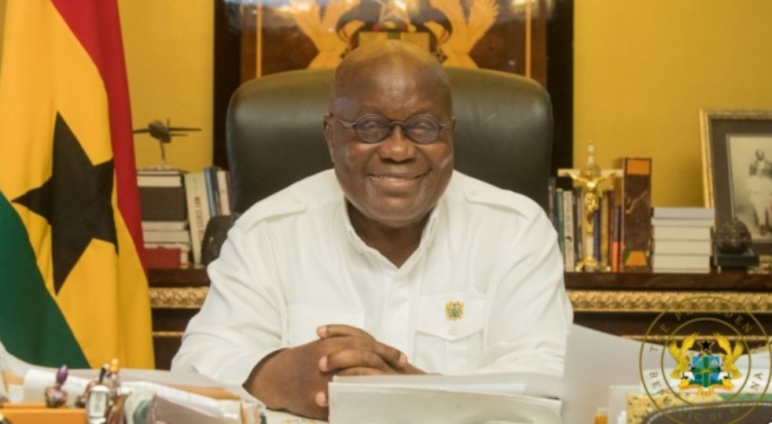
President Akufo-Addo, says democracy, under the 4th Republic, has been good for Ghana, as it has banished the spectre of instability that disfigured much of Ghana’s early existence.
Addressing the nation on Thursday, 28th April, 2022, in commemoration of the 30th anniversary of the holding of the Referendum that approved the 1992 Constitution, President Akufo-Addo noted that, prior to 1992, Ghana had sampled almost every form of governance known to man.
According to the President, “we experienced, from these events, a weakening of the sense of self-confidence and progress of the Ghanaian, which was evidenced by the fact that components of the Human Development Index, i.e., life expectancy rates, access to education and per capita income indicators, at the time, were not commensurate with our vast potential.”
However, with Ghanaians expressing widespread will to have the decade-long ban imposed on party political activities lifted, he stated that PNDC military government, led by Flt Lt J.J Rawlings, set up the National Consultative Assembly in May, 1991, and tasked the body to prepare a draft Constitution for the country.
Three million, four hundred and eight thousand, one hundred and nineteen Ghanaians voted “Yes” in the Referendum, representing 92.59% of the vote, to return our nation to democratic rule, as opposed to 272,855 voting “No”, representing 7.41%.
“The Constitution, overwhelmingly approved in the Referendum, set up a liberal, democratic state, founded on the separation of powers, with exclusive power in the Judiciary to superintend and enforce the Constitution, and protect the fundamental human rights of the citizenry.
"The coming into effect of the 1992 Constitution was promulgated with immense, popular backing, and, on 7th January 1993, His Excellency Jerry John Rawlings, Chairman of the erstwhile PNDC, was sworn into office as the 1st President of the 4th Republic,” he said.
The President continued, “We have, since then, experienced the longest, uninterrupted period of stable, constitutional governance in our history, banishing the spectre of instability, that had disfigured much of our nation’s early existence, and the benefits are showing. We have, over the last 30 years, witnessed sustained growth in every facet of national life. There have been considerable improvements in the Human Development Index – simply put, democracy has been good for us.”
As a result, President Akufo-Addo indicated that democracy, equality of opportunity and respect for human rights and the rule of law, ideals which have stood the test of time in most of the world, have now found firm anchor in Ghana’s body politic.
“We have had five Presidents in the history of the 4th Republic, with peaceful transfers of power from a governing to an opposition party on three separate occasions. Even when there was disagreement with the outcome of an election, it was the Supreme Court, on two occasions, rather than the streets, that validated its result. We are, arguably, the most stable democracy in West Africa,” he added.
Thirty years since the Referendum of 28th April 1992, the President noted that “there are no short-cuts for the progress and prosperity of our country. Only hard work, creativity, innovation, a sense of enterprise and unity in the nation can produce the accelerated economic development that we all yearn for and deserve”.
Renew faith in democracy
On the occasion of the 30th anniversary of the Referendum, the President urged Ghanaians to renew their trust in democracy, and bear in mind at all times, the oft-cited statement, that “the price of liberty is eternal vigilance.”
“I say so because there are some, who for their own parochial and selfish interests, would want to see a return to the dark days of authoritarian rule, simply because, with no respect for the Ghanaian people, they are either unwilling to subject themselves or their vision to the open scrutiny of the Ghanaian people, or because they know they will be rejected by the Ghanaian people and, thus, seek a shortcut to office and power. Let us strengthen our resolve to resist such persons for our own common good,” he said.
He added that, despite all the gains made in the 4th Republic, Ghanaians must acknowledge that the country has not reached the potential she should have.
“The biggest challenge we face continues to be eradicating poverty. We still have challenges in the performance of our public services; we face threats, traditional and contemporary, to our nation’s security and social stability, in the form of chieftaincy conflicts, land disputes, ethnic conflicts, cyber security issues, youth unemployment, economic hardships, and corruption in our public life,” he added.
He stressed, nonetheless that, “the basic commitment to resolving these challenges, within the framework of due process and democratic institutions, must remain unshaken. And, I am confident that, God-willing, we will overcome these challenges.”
Latest Stories
-
Walter Mosley visits W.E.B. Du Bois Centre in Accra: A New York Secretary’s homecoming story on where Du Bois spent his final years.
2 hours -
MTN set to deploy 5G services after winning spectrum licenses worth US$202m
4 hours -
NPP national elections: 3,000–4,000 police to handle security, traffic in Kumasi – Karbo
6 hours -
Atta Akyea fumes as Manhyia MP is to spend another night in EOCO custody
7 hours -
SSNIT says La Beach clearance was to protect hotel investments, beaches to remain public
8 hours -
APSU congratulates St Augustine’s College after back-to-back National Investment Quiz wins
8 hours -
Renewed flood intervention at Mallam Junction raises hopes among residents, businesses
8 hours -
St Augustine’s College retain National Investment Quiz title after nail-biting grand finale
9 hours -
Education infrastructure investment will drive Banda’s development – Ahmed Ibrahim
9 hours -
Teacher unions strike: Gov’t presents fresh proposals as talks end inconclusively
9 hours -
51,000 teachers’ promotion arrears to be validated for October payment – Education Minister
10 hours -
Kwabena Boamah appointed Board Chair for Impact Investing Ghana
10 hours -
Striking teacher unions to meet Fair Wages and Salaries Commission on October 6
10 hours -
EOCO working with AG to arraign Nana Baffour Awuah before weekend court
10 hours -
Duraplast reassures customers after fire, announces October 5 reopening
10 hours