

Audio By Carbonatix
Blue-circular economy looks at the recycling of resources embedded in wastewater and solid waste streams to reduce overdependence on limited resources for sustainable development.
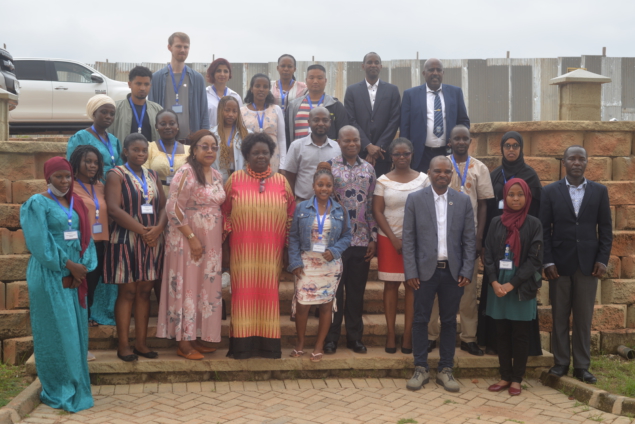
The Norwegian University of Science and Technology (NTNU) and The Regional Water and Environmental Sanitation Centre Kumasi (RWESCK) ALL4WASH summer school is supported by the Norwegian Partnership Programme for Global Academic Cooperation (NORPART) spearheaded by NTNU.
The summer school aim at strengthening capacities in blue-circular economy in the global north and south.
It is under the theme: “Unlocking the opportunities of Blue-Circular Economy for sustainable communities of the future.”
It brought together students from Norway in the global north with students from Mali, South Africa, Ethiopia, Uganda, Tanzania and Ghana in the global south to come up with solutions for environmental problems.
Prof. Esi Awuah of the department of civil engineering urged product developers to make products that can be recycled.
She urged the Environmental Protection Agency to come out with policies to guide product manufacturing.
“I think that every product developer must have cradle to cradle. How do you start?
“How do you end and how do you come back so that we don’t waste resources.
“And then policies should be put in place particularly the EPA that guides us on our projects so that if you are going to have a project you should look at the concept of blue circular economy.
“What will happen if I finish with the production of the product? If you are producing plastic bottles, how do you collect it back rather than leaving it aloof to become someone’s headache,” she said.
Director of RWESCK, Prof. Sampson Oduro-Kwarteng said that waste resources can be reprocessed to reduce production cost and boost businesses.
“Waste is a resource that can be diverted into different uses to minimize cost of production and to promote businesses,” he said.
Prof. Razak Seidu of the Norwegian University of Science and Technology and the All4WASH project leader stressed the need for the training of a new generation of water and environmental engineers that are equipped with the requisite knowledge and skills to tackle emerging global problems considering the sustainable development goals (SDGs).
“More importantly, we have to train a new generation of water and environmental engineers who have a deeper understanding of blue-circular economy approaches to be active participants in the knowledge economy of the water and sanitation sector in order to address the challenges we are confronted with,” he said.
Latest Stories
-
UTAG-UG threatens strike on October 19 over unpaid allowance
1 minute -
Let The Constitution direct Chieftaincy to deliver “All Development Is Local”
1 hour -
John Jinapor outlines renewable energy, nuclear power priorities for 2027
2 hours -
Ghana explores centre of excellence for hearing, communication and cochlear implant care
3 hours -
Schizophrenia-related disorders lead mental health cases recorded in Ghana
3 hours -
Dutch authorities enlist Ghana in hunt for fugitive drug lord Bolle Jos
3 hours -
Ghana housing finance conference adopts communiqué to improve affordable housing access
8 hours -
Special Initiatives Minister urges Wa Technical Institute to enrol more girls as EU-backed solar training lab opens
8 hours -
In the matter of my first year at the Bar
8 hours -
ActionAid Ghana calls for an end to child marriage, greater investment in girls’ rights
8 hours -
Newsfile to tackle World Cup visa scandal, beach demolitions, education strikes, BRICS bid
9 hours -
UK-Ghana Trade & Investment Summit: Trade Resource Centre to help businesses maximise UK-Ghana trade opportunities
9 hours -
Embassy of Denmark celebrates World Maritime Day
9 hours -
Linking LEAP to productive inclusion could cut extreme poverty by 2030 – UNICEF
10 hours -
Trade Ministry backs use of creative arts to rehabilitate prison inmates
10 hours