

Audio By Carbonatix
Huawei Digital Power this week launched its full range of FusionSolar Smart PV and Energy Storage System (ESS) solutions in the Sub-Saharan African market at the Solar Show Africa 2022.
Renewables will be crucial if the region is to meet its development goals and ensure that all of its people have access to electricity.
Africa has the biggest potential for solar energy around the world, with a long-term output of 4.51 kWh/kWp per day.
However, at present, Sub-Saharan Africa accounts for 77% of the global population without electricity access, and that proportion has increased since the start of the COVID-19 pandemic.
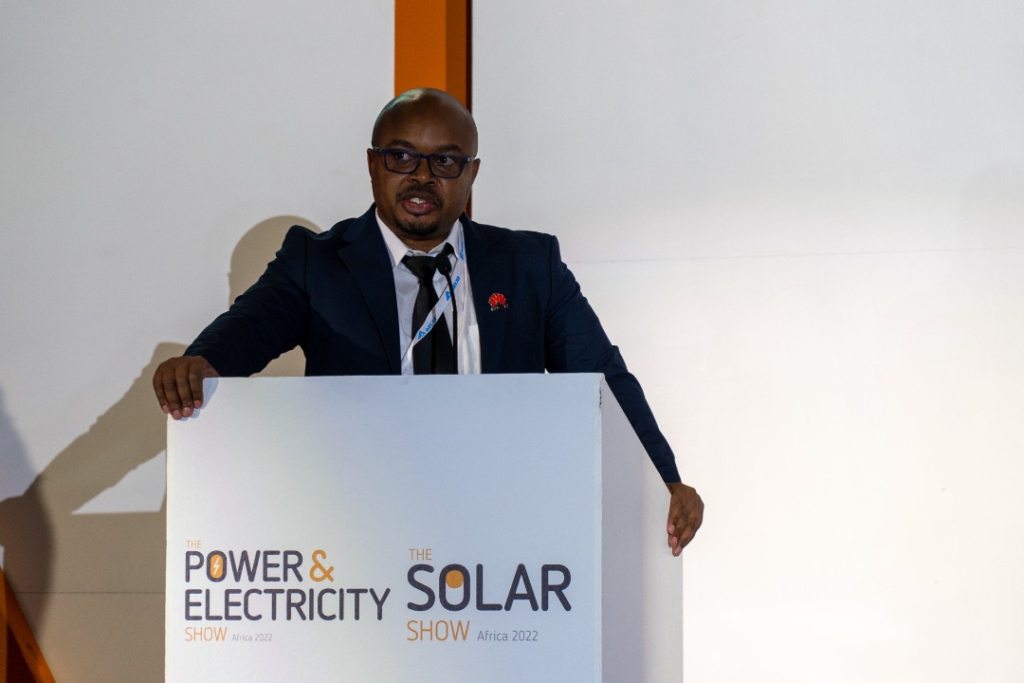
“We know that Sub-Saharan Africa is ideally poised to take advantage of renewable energy and solar in particular,” says Victor Koyier, Vice Director of Huawei Smart PV Sub-Saharan Africa.
“But we also know that digital technologies are key to unlocking its potential. We believe that our full suite of Huawei FusionSolar Smart PV and ESS solutions will help stakeholders at the utility, C&I, and residential scenarios by ensuring that solar systems are more affordable, more effective, and easier to maintain.”
The solutions Huawei launched in Africa include FusionSolar Smart PV Solution 6.0+, which enables a PV system to be adapted to various grid scenarios, especially in a weak grid environment; Residential Smart PV Solution and Commercial & Industrial Smart PV Solution offer an all-around clean energy experience to homes and businesses respectively with optimised electricity costs, active safety, smart operation and maintenance (O&M) and intelligent assistance for an enhanced experience.
“These solutions are ideally poised to help advance the adoption of renewables at all scales across the region. Take active safety features, for example, the industry-leading AFCI technology enables precise fault detection and emergency disconnection, which drastically improves the system's safety.
"We can also increase power generation by over 2% under the same conditions and increase installation volume by up to 30% while using the power optimizers in C&I and residential scenarios, which can be directly translated to further electricity cost reduction.
“By bringing the knowledge that we’ve accumulated in the ICT space to the power sector, we can help make the supply and management of energy smart,” Kovier concludes.
Latest Stories
-
Real-Time VAT on cross-border digital services – not a new tax and does not violate double taxation principle
28 minutes -
Digitalisation, AI key to Ghana’s tourism transformation – GHATOF
40 minutes -
Stronger GTA-private sector partnership needed to grow tourism – GHATOF
50 minutes -
Amazon eyes Ghana for broadband expansion after talks with Mahama
2 hours -
National Investment Quiz 2026: Six schools qualify for quarter-finals
2 hours -
‘Do not let Russia pay for its madness with lives of your people’ – Zelensky to Ghana, 46 other countries
2 hours -
6,079 promotion cases fully processed and paid – CAGD says amid nationwide teachers’ strike
2 hours -
Teacher unions to meet government Monday over nationwide strike
3 hours -
Photo story: Republic Bank-JoyNews Habitat Fair clinic wraps up after three days of housing solutions, expert engagement
3 hours -
National Peace Council urges investment in youth to sustain Ghana’s peace
3 hours -
Afenyo-Markin urges youth to speak up against injustice
3 hours -
CAF annuls Edo Queens victory, orders WAFU B final to resume from extra time
4 hours -
Interior Minister urges traditional authorities to enforce anti-bushfire bye-laws
4 hours -
3rd Republic Bank-JoyNews Habitat Fair Clinic ends on a high note after three days of strong patronage
4 hours -
Ten climbers missing after avalanche hits Himalayan base camp
4 hours