

Audio By Carbonatix
A member of the National Peace Council’s Governing Board, Joana Opare, has underscored the critical role of elections as reflections of societal values and priorities.
She emphasized that it was essential for citizens to engage in actions that promote peace and stability ahead of the forthcoming general elections.
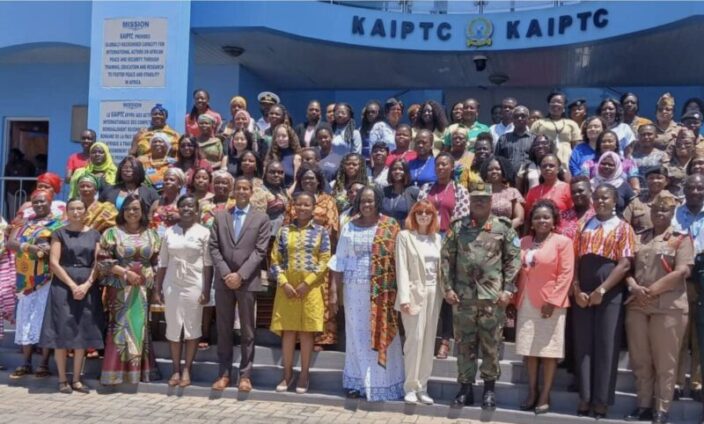
Speaking at the National Women Peace and Security Conference in Accra, Mrs. Opare stressed that elections were not solely about selecting leaders, but also a reflection of values, a demonstration of unity, and a peace pledge.
She advocated for a more collaborative and empathetic approach to politics, emphasising respect, dialogue, and understanding for fewer electoral conflicts.
The conference was on the theme: “Cultivating the Culture of Peace for Ghana 2024 General Elections: The Role of Women.”
It was organised by the Foundation for Security Development in Africa (FOSDA).
Mrs. Opare reiterated the importance of prioritizing the well-being of children, men, and society during elections.
She urged all parties to take proactive steps to protect women from electoral violence and keep them safe at polling stations and during campaign activities
Madam Abena Anim-Adjei, a Youth Engagement Coordinator at Plan International Ghana, noted that women have historically played a crucial role in peacebuilding and conflict resolution.
Despite their significant contributions, they continue to encounter numerous barriers, such as limited access to resources and insufficient opportunities, which hinder their ability to engage fully in decision-making processes.
Madam Anim-Adjei underscored the need to adopt more inclusive strategies that empower women and amplify their voices to ensure their full participation in peacebuilding and electoral processes.
She recommended that all institutions adopt a Gender Mainstreaming approach to empower women as agents of peace during elections.
This would help amplify women’s voices, ensure their protection, and celebrate their contributions to peacebuilding efforts.
Andrew Maharaj, Charge d’Affaires at the Canadian High Commission, said statistics had indicated a strong correlation between gender equality, respect for rights, and state stability.
He noted that when gender equality was lacking and rights were not upheld, countries were twice as likely to experience instability and three times more likely to succumb to corruption.
“When women are not included, it makes it likely for a state to backslide and struggle to develop. Hence, Canada is proud to support the initiative to support Ghana to advance women in peace and security,” he said.
He stated that women remain underrepresented in decision-making processes and urged the government, civil society organizations (CSOs), and development partners to create an environment where women feel safe and empowered to contribute to peace and security efforts.
Dr Afua Ansere, Senior Gender Specialist at UN Women, emphasized the rising tension and potential for violence against women during elections and highlighted the critical need for protective measures for them.
She said that the upcoming elections presented a unique opportunity to empower women as agents of change, saying that the UN would collaborate with the Gender Ministry, civil society organizations, and international partners to foster dialogue and mobilize women for significant roles in the electoral process.
Dr Ansere said UN Women planned to train individuals and establish a Gender and Development Situation Room, bringing together women’s groups such as Abantu for Development, NETRIGHT, and WiLDAF, to monitor, mediate, and ensure peace in the lead-up to, during, and after elections.
Mrs. Theodora Williams-Anti, Executive Director of FOSDA, stressed the need to dismantle structural barriers that hinder women’s participation in politics.
She condemned the derogatory insults suggesting that women trade their bodies for political positions and urged a shift in focus towards their capabilities and potential contributions.
Mrs Williams-Anti called on the public to support women candidates in the upcoming elections, insisting that failing to do so could jeopardize the current 14.5 per cent representation of women in Parliament.
Latest Stories
-
Peru cracks down on illegal gold mining in Amazon reserve with military show of force
2 hours -
NPP polls: Makafui Woanya re-elected as Volta Regional Chairman
2 hours -
NPP polls: List of newly elected NPP regional chairmen
2 hours -
MTN launches Bright Scholars Alumni Network to harness opportunity
3 hours -
Akyem Abuakwa Traditional Council demands apology from Akyemansa DCE over chieftaincy interference
3 hours -
Rescuers search for survivors of powerful Indonesia earthquake
3 hours -
Ghana Prisons Service on manhunt for 29-year-old escapee
3 hours -
Researchers warn Ghana’s coastal erosion could worsen
3 hours -
Morocco detains dozens of migrants trying to cross into Ceuta, reports say
4 hours -
AKSA power deal: Dafeamekpor says Ghana must confront its accountability deficit
4 hours -
AKSA power deal: Baffour Awuah says alleged bribery exposes serious failures in Ghana’s systems
4 hours -
Algeria claim first-ever podium finish after penalty shootout win over hosts Morocco
5 hours -
NPP struggled even in traditional strongholds in 2024 – Annoh-Dompreh
5 hours -
NPP must elect strong parliamentary candidates to reclaim Greater Accra seats – Patrick Boamah
5 hours -
Abdul Rahman retains Upper West NPP chairmanship despite Nandom protest
5 hours