

Audio By Carbonatix
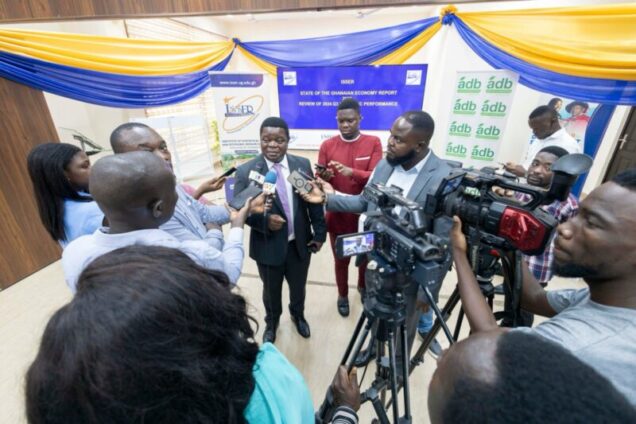
The prospect of a 24-hour economy has sparked debate in Ghana, with the head of the Institute of Statistical, Social, and Economic Research (ISSER), Professor Peter Quartey, cautioning that the country may not yet be ready to operate round the clock.
Speaking on the proposal, he questioned whether a 24-hour economy could genuinely drive higher GDP and job creation, or if it would be better pursued as a long-term development goal.
“Will a 24-hour economy serve as the solution or is it premature? What about incorporating it into a long-term development plan?” asked Professor Quartey, highlighting the complex issues surrounding the proposal.
According to Professor Quartey, several structural and logistical hurdles may impede the immediate feasibility of a 24-hour economy.
“The argument is, will a 24-hour economy bring higher GDP and jobs, or is it rather a goal we should aim for in the long term?” he remarked. ISSER’s stance suggests that the discussion needs to be rooted in a realistic assessment of Ghana’s current infrastructure and workforce readiness, rather than being driven solely by manifesto promises.
Professor Quartey laid out several key challenges that could undermine the success of a 24-hour economy in Ghana:
1.  Energy Supply: “Limited energy supply to power all sectors in 24 hours, especially manufacturing,” Prof noted, could hinder industries’ ability to operate continuously, especially at competitive levels within the sub-region.
2.  Security: With extended hours, ensuring the safety of night workers would require “adequate security personnel to protect those working late into the night,” he pointed out. This would need significant investment in security infrastructure.
3.  Market Demand and Competitiveness: Quartey questioned whether sufficient demand exists to sustain 24-hour operations, especially in sectors like manufacturing. “Will there be demand if factories operate 24 hours?” he asked, adding that Ghana’s industries must also be competitive regionally.
4.  Infrastructure: The professor raised doubts about the availability of essential infrastructure, including water and road networks, to support continuous operations. “Do we have adequate infrastructure?” he asked, pointing out that without necessary improvements, a 24-hour economy could strain existing systems.
Aligning manifesto promises with a pragmatic, long-term development strategy is essential, Quartey concluded. He urged policymakers to carefully evaluate the nation’s infrastructure and security readiness, energy capacity, and market demands before committing to a 24-hour economy. “This approach needs to be grounded in a robust, long-term plan if we are to realize sustainable economic growth,” he said.
The ISSER report underscores the importance of strategic planning, suggesting that while a 24-hour economy might hold promise for the future, Ghana’s current challenges must be addressed to avoid overburdening its developing systems.
Latest Stories
-
‘The future is bright’ – Gyan backs Black Princesses squad after U-20 World Cup exit
6 seconds -
We should treat AI has an opportunity rather than a threat – ALX Enterprise
8 minutes -
Malta and Ghana set sights on practical AI partnership
11 minutes -
2026 U-20 WWC: ‘Not all wishes come true’ – Gyan inspires Black Princesses after elimination
16 minutes -
‘I am not a magician’ – Zdravko Logarušić on Nations FC exit from Africa
30 minutes -
Three nights. 28 titles. Ultimate history made
40 minutes -
Ghanaian delegates at IYF 2026 could become bridges for stronger Russia ties – John Aggrey
44 minutes -
Nigeria: Over 30 dead, 50 hospitalised after consuming alcoholic substance in Ondo State
47 minutes -
UK lawmakers demand new law to address AI threat to human rights
56 minutes -
WAFU B U-17 Girls Cup: Black Maidens depart Accra for tournament in Yamoussokro
56 minutes -
Sweden’s center-left bloc narrowly ahead as election remains too close to call
1 hour -
GPL 2026/27: ‘We won ugly’ – Kotoko head coach unimpressed after Lions victory
1 hour -
7 out of 10 human trafficking cases in Ghana never reach prosecution — JoyNews Research
1 hour -
Music, football to converge at Music Meets Football Summit 2026 in Lusaka
2 hours -
Putin invites young global leaders to partner with Russia in shaping future world order
2 hours