


Audio By Carbonatix
In a recent interview with a leading international industrial journalist, Professor Douglas Boateng, a globally renowned industrial engineer, industrialist, Pan-Africanist, chartered director, and social entrepreneur, as well as the Chair of the Minerals Income Investment Fund (MIIF) and Labadi Beach Hotel, highlighted the transformative potential of Ghana’s salt industry.
While gold, cocoa, and oil have traditionally been the pillars of the nation’s economy, Professor Boateng emphasized that salt; a resource often overlooked, holds the promise to revolutionize Ghana’s economic landscape. It could drive industrialisation, generate sustainable jobs, and empower communities while creating high-value allied industries.
“Salt is not just a mineral. It is a foundation for transformation and an opportunity to industrialise our economy,” Professor Boateng remarked. “With strategic development, salt can create jobs for our youth, empower women, and position Ghana as a leader in the global chemical industry.”
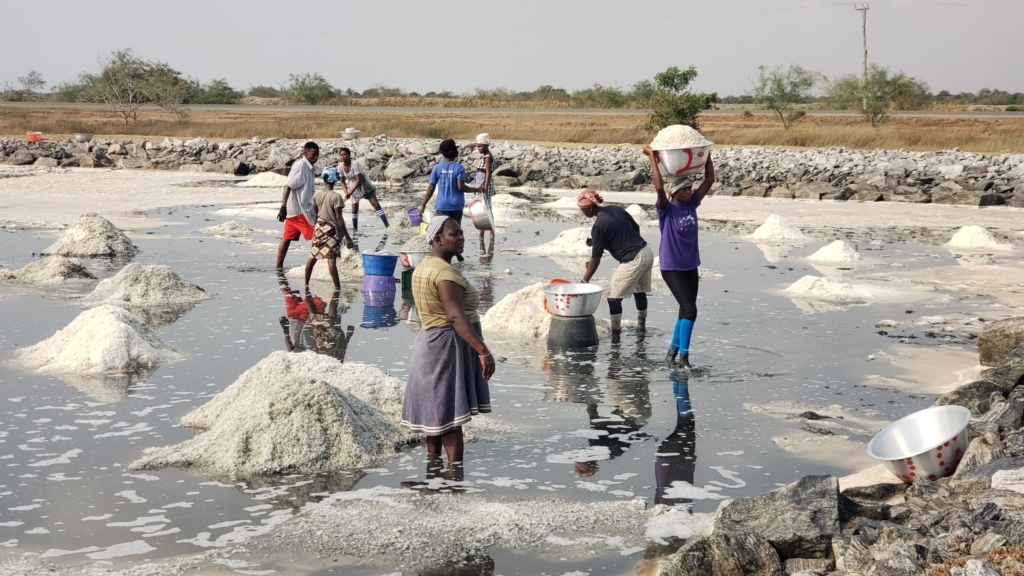
He explained the critical role of salt in producing essential chemicals such as chlorine, caustic soda, and soda ash, which are vital for industries like pharmaceuticals, plastics, detergents, and agriculture. With Ghana’s abundant reserves and strategic location, salt offers a unique chance to diversify the economy, reduce reliance on volatile commodities, and secure long-term growth.
“Salt is not just about extraction. It’s about unlocking its potential through value addition,” he added. “Processing salt into high-value products can provide opportunities for skilled workers, unskilled labourers, and entire communities. From chemical engineers to local entrepreneurs, the ripple effects are immense.”
Professor Boateng underscored the benefits for women and youth, who often face barriers to inclusion in traditional industries. “Imagine women leading salt-processing enterprises or young people gaining stable employment in industries powered by our salt reserves. With the right leadership, investment, and governance, this vision can become a reality,” he stated.
MIIF’s investment in Electrochem Ghana Ltd. has already laid the groundwork for this transformative industry. However, Professor Boateng stressed that further investments are essential.
“This is a national opportunity. The question is whether we will take ownership of our resources or allow external interests to dominate. To secure long-term dividends for future generations, we must act decisively,” he cautioned.
Drawing on global examples, he pointed to India’s thriving chemical industry, built on the strategic use of its salt reserves.
“India transformed its salt into billions of dollars in export revenue while creating millions of jobs. Ghana has the potential to do even more by leveraging our natural advantages and investing in innovation and infrastructure.”
Discussing MIIF’s strategy, he explained, “The Fund is focusing on salt production areas, including the Central Region, to expand Ghana’s capacity. With coordinated governance and investment, this industry could add tens of billions of dollars to the economy by 2040, while serving as a catalyst for industrialisation and value creation.”
Professor Boateng outlined the steps needed for success. These include building processing plants, improving transportation networks, and creating storage facilities.
Training programmes must equip Ghanaians with the skills to work in salt extraction and value-added industries. Empowering women and youth to lead these enterprises is critical. Attracting capital and expertise through public-private partnerships is also essential, alongside policies that ensure sustainable growth.
In his summary remarks, Professor Boateng shared a thought-provoking reflection:
“Salt is more than a resource; it is a symbol of what Ghana can achieve when we think beyond the immediate. It is a seed. If we plant it wisely, nurture it with vision and unity, it will grow into a tree of prosperity. Its branches will offer shade to generations yet unborn.”
“Let us seize this moment. Let us invest in what matters. When a nation believes in its potential, the possibilities are endless. The future does not wait; it belongs to those who prepare for it. Salt can be the cornerstone of Ghana’s industrialisation journey; but only if we have the courage to act today,” he said.
Latest Stories
-
Recurrent strikes threaten quality of education and academic calendars – Prof Bokpin
3 minutes -
‘Cockroach’ group leaders among hundreds detained in Delhi protest
7 minutes -
Don’t let speed of information become your judgement – CJ tells new lawyers
45 minutes -
World Cup visa scandal: People have leveraged public office to facilitate fraud – Senyo Hosi
50 minutes -
Glut! Farmers count losses as prices crash, customers happy
1 hour -
GSA postpones auction of unserviceable vehicles
1 hour -
Man charged with attempted murder after stabbing
2 hours -
World Cup visa scandal: Senyo Hosi says issue goes beyond calls for Sports Minister’s resignation
2 hours -
Yaw Ampofo Ankrah hasn’t taken or received any money to facilitate visas – Lawyer insists
2 hours -
World Cup visa scandal: Senyo Hosi urges focus on constitutional accountability
2 hours -
La Beach demolition: Senyo Hosi condemns lack of consultation
2 hours -
Russian glide bomb attack on Zaporizhzhia kills at least 15 people
2 hours -
Jinapor warns underperforming energy sector CEOs of consequences, says no protection for failure
2 hours -
Fire destroys head of tipper truck on Lower Volta Bridge
2 hours -
Palmer signs new Chelsea contract until 2034
2 hours