

Audio By Carbonatix
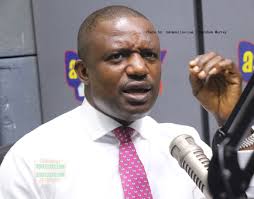
The Minister for Energy and Green Transition, Mr John Jinapor, has insisted that the newly introduced GH₵1 energy levy is not intended to pay off legacy debt but is a necessary measure to sustain Ghana’s electricity supply amid rising costs of procuring liquid fuels.
Speaking on Joy FM on Wednesday, June 4, Mr Jinapor stressed that without the levy, the energy sector would face severe funding shortfalls, threatening power stability for consumers nationwide.
Mr Jinapor emphasised that governance is not merely about making decisions but about optimising situations and doing what is believed to be the best course of action.
He added that nobody enjoys imposing taxes or levies on the people of Ghana.
“We have been working very hard since assuming office, but to be clear, this levy is not intended to pay off legacy debt,” he explained.
“We have studied the energy sector thoroughly and analysed the system. The fundamental truth is that the liquid fuels we currently purchase are not part of the tariff structure,” he added.
He further explained that even if the Electricity Company of Ghana (ECG) were to collect 100% of electricity payments today, none of that money would go towards procuring liquid fuel.
“Meanwhile, this year alone, we require over one billion US dollars to procure liquid fuels,” he revealed.
Mr Jinapor noted that increasing gas consumption or production would be the ideal solution, but the gas infrastructure takes an average of 18 months to two years to put in place — assuming work started today.
"This should have happened years ago."
He acknowledged the support of the Finance Minister, who has been helping, albeit with considerable difficulty, to procure liquid fuel.
“In terms of available options, we could increase electricity tariffs, rely fully on the Finance Minister to find non-existent funds, or share the burden through a reduction in fuel prices,” he said.
Mr Jinapor reminded listeners that when their administration took office, fuel was approximately GH¢16 per litre.
“So even with this one cedi levy, and although we agree that consumers will pay about 50 cedis extra, you will still be saving between 100 to 150 cedis compared to when we assumed office,” he continued.
He acknowledged that ideally, they would have wished to pass all the benefits onto Ghanaians, but this would have required a 40 to 50 per cent increase in electricity tariffs.
“Governance is a balancing act, and we are appealing to Ghanaians to understand that we have already provided a reduction from 16 to about 13 cedis — roughly a three cedi decrease.”
Mr Jinapor concluded by stating that maintaining the levy at one cedi will help sustain electricity productivity, while efforts continue to increase gas consumption, reduce losses, and improve efficiency.
Latest Stories
-
Ecobank Junior Saver Big Pitch to reward 10 winners with GH¢2,000 each
31 seconds -
AMA demolishes unauthorised pigsty obstructing Agbogbloshie waste evacuation exercise
48 seconds -
I was filled with disbelief – Akosua Achia Sarpong Esq. shares her first reaction
2 minutes -
Snake Village: A look at Volta Region’s hidden snake village and its tourism potential (Video)
9 minutes -
Election Watch Ghana calls for constitutional reforms to strengthen Electoral Commission independence
11 minutes -
NACOC, Postal and Courier Services Regulatory Commission intensify efforts to curb drug trafficking
13 minutes -
Ga Mantse chairs committee to drive Accra Green and Clean City Initiative
14 minutes -
Drivers threaten to remove traders from lorry stations over TrafficTech concerns
17 minutes -
AI could create 10 to 20 times more jobs despite current recruitment slowdown – Hubtel CEO
20 minutes -
Sexual abuse in schools persists because perpetrators are not held accountable – Dr Nyarkoa
27 minutes -
Chief Justice has designated Achimota Court to handle petroleum diversion cases – NPA CEO
30 minutes -
Philip Nai and friends gear up for bigger seventh Christmas outreach
32 minutes -
GSA strengthens electricity meter testing to protect consumers and improve energy reliability
33 minutes -
‘Dismissed or suspended? Ghanaians deserve clarity’ – NPP demands clarity on Ampofo Ankrah’s fate
36 minutes -
Teach consent and sexual boundaries from pre-school to prevent abuse – Gender advocate
42 minutes