

Audio By Carbonatix
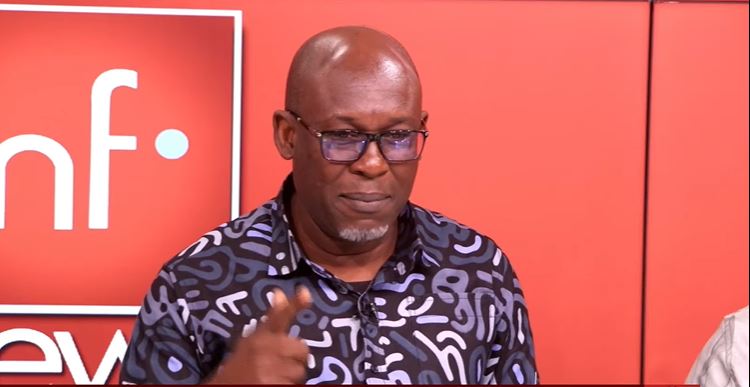
Ghana’s latest economic blueprint, President John Dramani Mahama’s "24-Hour Economy", has been met with scepticism from Kofi Bentil, Vice President of IMANI Africa.
Speaking on JoyFM's Newsfile on Saturday, July 5, Mr Bentil characterised the policy as largely a rehash of past initiatives, warning that without a fundamental shift in implementation, it risks becoming another costly exercise in "branding" that ultimately achieves little while creating new avenues for "waste and stealing".
Mr Bentil contended that many national policies originate as bombastic pronouncements on political platforms, later hastily formalised into glossy documents once they gain public traction.
"When they say it on a political platform, they don't really say it after thinking; they say it because the moment requires them to say something bombastic, but after they say it and it catches, then they are forced to implement it," he stated.
This process, he argued, typically results in "a lot of branding with a lot of glossy magazines and then by the time you finish, nothing is achieved."
While acknowledging that "governance is hard" and every government must demonstrate progress, Mr Bentil asserted that the "24-Hour Economy" is essentially "more of the same".
He projected a dismal outcome if the policy proceeds as currently outlined, predicting, "If it goes the way they've represented it in the glossy magazine 24-hour, we will end up achieving less than 30%."
Mr Bentil introduced the concept of "the excuse republic", arguing that Ghana consistently creates a cycle of justifications for its developmental shortcomings.
"We have already given the excuse for underdevelopment. It's in the documents and that's what we say we all learn in primary school because of import, we import more than – that's the excuse, you know, republic."
He further elaborated on this cycle: "When we create the excuse for the underdevelopment, then we give excuses for fanciful ideas because we are not importing; we'll do import substitution and we'll build factories and we'll do this 1D1F – many of the things said there are here and if you trace it backwards, like Prof [Bokpin] said, you see them there. So, excuse for fanciful ideas which we don't achieve."
The most scathing criticism was reserved for the financial implications and institutional setup.
"And then we make excuses for waste and stealing," Bentil declared. He highlighted the proposed GH¢4 billion budget for the "24-Hour Economy", dismissing it as woefully inadequate for the scale of transformation envisioned.
"Any analyst will tell you that if you look at some of the things that they've talked about, 4 billion is not going to cut it at all."
He pointed to the common practice of starting with pilot projects, such as the proposed 50 pilot firms for the 24-Hour Economy.
"That's the excuse for waste and stealing. So they will access $300 million or so. Okay. They will. Did you see people go and dig dugouts and call them dumps under 1D1F? That's the excuse for waste and stealing," Mr Bentil recounted, alluding to past controversies where government funds were allegedly mismanaged or syphoned through poorly executed projects, like some under the One District One Factory (1D1F) initiative, which reportedly absorbed over GH¢541 million and involved 169 enterprises, many of which are still struggling.
Bentil also lambasted the pervasive tendency to create new institutions and pass new laws for every new policy. He fiercely opposed the idea of a new "24-Hour Economic Authority".
"We have enough laws in this country to deal with everything that we want to do without setting up new laws. Every time we just set up institutions, you know what? Ghana has a large government. Yeah. And I'm talking about from district level to regional level and it's extreme. They suck up 80% of all the revenue we make and they're supposed to be taking care of me. I'm telling you more than 50% of the citizens in Ghana live and do not detect much government intervention in their daily lives," he asserted, emphasising the inefficiency of Ghana's bloated public sector.
He contrasted this approach with IMF-supported programmes, which typically avoid creating parallel structures. "IMF we call them adult supervision. Yes. Okay. They come; they do the things we must do, which we know how to do. As long as they are providing adult supervision and keeping their thumbs on us, we do all of them. We always pass. We get out with flying colours. But you know what we do? They create parallel systems that bypass the IMF."
He warned that this cycle ultimately leads to public probes and accountability issues when projects fail to deliver.
Mr Bentil challenged the government to focus on making existing initiatives, like the 1D1F programme, successful rather than launching new ones.
He highlighted IMANI's "showstoppers" framework from 2010, identifying critical foundational elements like water, energy, roads, and telecommunications as indispensable for any meaningful development.
"If you don't have water… nothing will happen. All industries need water. If you don't have energy, nothing will happen. If you don't have good roads and telecommunications, nothing will happen."
He concluded by arguing that a substantial investment in these core infrastructure areas would yield far greater returns than creating new authorities or embarking on fragmented initiatives.
"Take the 6 billion… give yourself say we're going to do roads. We're going to do water and we're going to strengthen our energy so that every rain doesn't lead to light. That alone for the four years will help us. The rest will be taken care of and you don't need to set up an authority."
Mr Bentil's remarks serve as a potent warning against repeating past mistakes and a call for disciplined, foundational development.
Latest Stories
-
30 NDC aspirants file nominations in Upper West as regional election approaches
13 minutes -
UPSA launches laptop assembly plant, requiring new students to assemble their own devices
19 minutes -
UCC sociologist calls for action on gender inequality to end child marriage
20 minutes -
LSN questions Ghana’s proposed five-year presidential term and DCE election reforms
21 minutes -
AFCON 2027Q: Bjorkegren to lead Black Stars for Somalia doubleheader with Tanko and Attram as assistants
23 minutes -
AMA completes road repairs on Kwame Nkrumah Avenue
29 minutes -
Law Students’ Network warns executive dominance could undermine constitutional review
31 minutes -
Mahama to meet relevant stakeholders over concerns about the new Customs Act
39 minutes -
CHASS demands a 20% increase in SHS funding and payment of outstanding debts
41 minutes -
Investigation launched after male body found in County Cork
43 minutes -
We have been scammed by NDC, government is only doing PR – Abanga Fuseini
43 minutes -
Tamale Teaching Hospital records 44 new breast cancer cases in six months
45 minutes -
GES declares October 30 CPD day for private school teachers; learners to observe holiday
45 minutes -
South Korea to support Ghana’s forts and castles restoration with $4.5m over five years
46 minutes -
School headscarf ban sparks rare protests in Azerbaijan and row with Turkey
55 minutes