

Audio By Carbonatix
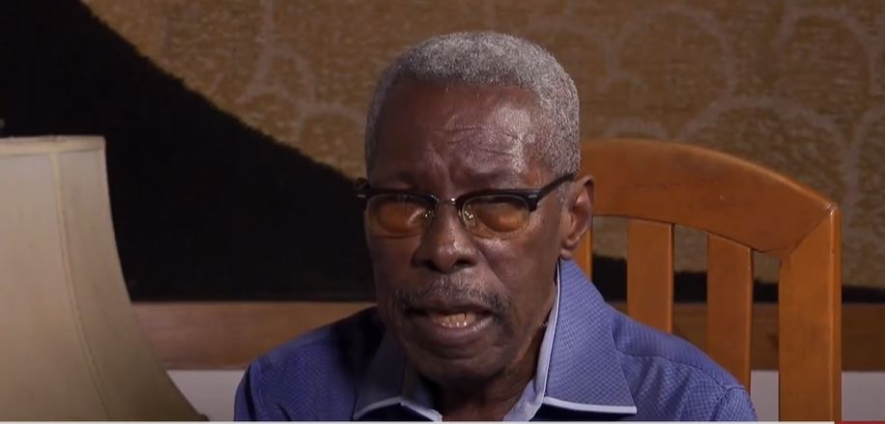
Former Senior Presidential Aide Dr Tony Aidoo has expressed deep frustration with Ghana’s handling of corruption, blaming both government inaction and the performance of the Office of the Special Prosecutor (OSP) for the ongoing problems.
Dr Aidoo expressed frustration over the ineffectiveness of the OSP and advised the anti-graft body to adopt a different approach in the fight against corruption in an exclusive interview on the Thursday, July 17 edition of JoyNews.
“So far, you’ve had the Attorney General in quest for transparency, coming out to reveal steps that he is taking to bring certain persons to book. But so far, we haven’t seen any prosecution yet, and I don’t trust the Special Prosecutor. He talks big, he talks small, and he doesn’t know what he is doing.”
He continued, “He is a shame; is he protecting them? Look at the mess he made with the Cecilia Dapaah case. He has never succeeded in any prosecution on corruption, so what are we paying him for?”
He criticised the OSP’s failure to build solid cases, suggesting this is why prosecutions are not going anywhere.
“If you build up your case, the judges will not ignore your evidence. But if you fail to present convincing evidence, then that is what you are going to get from the judgment. I don’t think he is building his cases well; he talks too much.”
“I will advise him to talk less and do more,” he said.
The Office of the Special Prosecutor (OSP) in Ghana is a specialised, independent anti-corruption agency established by an Act of Parliament, the Office of the Special Prosecutor Act, 2017 (Act 959).
The OSP is fortified with specialised powers, including intelligence gathering, surveillance, counter-surveillance, and police functions, making it a comprehensive anti-graft agency. Its vision is to render corruption costly and unattractive in all its forms in both the public and private sectors through sustained repression and suppression.
It was created as a flagship institution to specifically address the shortcomings of existing anti-corruption bodies and provide a more robust and comprehensive approach to combating corruption in the country.
The OSP has a multi-faceted mandate with four primary functions:
- Investigation: The OSP is tasked with investigating specific cases of alleged or suspected corruption and corruption-related offences. This includes cases involving:
- Public officers and persons entrusted with prominent public functions in Ghana or abroad.
- Politically Exposed Persons (PEPs), such as senior political party officials, government officials, judicial officials, and military officials.
- Executives of state-owned companies.
- Private sector actors involved in corruption. The OSP can initiate investigations on its own or act on referrals from Parliament, the Auditor-General, CHRAJ, EOCO, other public bodies, or complaints from private entities and individuals.
- Prosecution: The OSP is mandated to prosecute offenders involved in corruption and corruption-related offences. While its prosecutorial power is derived from the Attorney General, it is secured by law and exercised without specific reference to the Attorney General, ensuring its operational independence in this regard. This makes it unique among Ghana's anti-corruption agencies.
- Asset Recovery and Management: The OSP is empowered to trace, freeze, confiscate, and manage the proceeds of corruption and corruption-related offences. This function aims to disgorge illicit and unexplained wealth, making corruption less attractive.
- Prevention: The OSP is also required to take steps to prevent corruption. This includes engaging in public awareness campaigns, advocating for policy reforms, and collaborating with other anti-corruption institutions and civil society organisations to promote transparency, accountability, and probity.
Some achievements of the OSP
Since its establishment, the OSP has faced significant challenges, including initial setup delays, resource constraints, and legal challenges to its powers.
However, it has made several notable achievements and impacts:
- Prosecutions and Convictions: The OSP has initiated several prosecutions against high-profile individuals implicated in corruption and corruption-related offences. As of reports from 2025, the OSP has achieved seven convictions in cases it has prosecuted.
- Asset Recovery and Savings:
- The OSP has successfully recovered over GHS 4 million in proceeds of corruption.
- Through its vigilant and pre-emptive measures, it has achieved savings of over GHS 135 million by preventing corrupt activities.
- It has also been involved in suspending transactions totalling over GHS 283 million where corruption was suspected.
- High-Profile Investigations and Referrals: The OSP has undertaken investigations into several high-profile cases involving politically exposed persons and significant public funds. While not all have resulted in convictions, the OSP's investigations have brought public scrutiny to:
- The case involving former Minister for Sanitation Cecilia Abena Dapaah, though the OSP referred it to EOCO for suspected money laundering after its initial probe found no direct evidence of corruption.
- Revenue Assurance Contracts, including examining agreements between Strategic Mobilisation Ghana Limited (SML) and the Ghana Revenue Authority (GRA).
- The National Cathedral Project, scrutinising procurement processes and financial transactions.
- Ambulance Procurement contracts.
- Allegations related to illegal mining, including charges filed against Charles Bissue, former Secretary of the Inter-Ministerial Committee on Illegal Mining (IMCIM).
- Investigations into the banking and financial sector crisis that led to the collapse of some banks and financial institutions.
- Cases of alleged vote-buying and vote-selling during elections.
- Preventive Measures and Public Sensitisation:
- The OSP has actively engaged in corruption prevention through initiatives like the "Youth Against Corruption Initiative", sensitising over 6 million people. This programme aims to instil values of honesty, integrity, and accountability in young people.
- It has advocated for reforms, such as calling for sweeping changes to Ghana's political party financing laws to ensure electoral integrity.
- The OSP has also partnered with civil society organisations and media houses to train journalists on reporting corruption cases, enhancing public understanding and oversight.
- Inter-Agency Collaboration: The OSP has actively sought to deepen collaboration with other anti-corruption institutions like the Commission on Human Rights and Administrative Justice (CHRAJ), the Financial Intelligence Centre, and the Auditor-General, recognising that a unified approach is crucial to closing loopholes for corrupt individuals.
The OSP continues to be a central institution in Ghana's fight against corruption, constantly working to establish a deterrent effect and promote greater accountability in the public and private sectors.
Latest Stories
-
Kurt Okraku doesn’t like criticism, but Ghana football is beyond him – Nana Baffour Awuah
6 minutes -
Ghana’s Liquidity Paradox: Why capital is not reaching productive businesses
14 minutes -
Ghana football has collapsed under Kurt Okraku – Manhyia South MP
22 minutes -
Mr John Blankson Adu Otu
53 minutes -
Prof. D. K. Yeboah-Amankwah
57 minutes -
AFCON 2027Q: Queiroz ‘proud’ of Black Stars performance despite defeat to Cote d’Ivoire
1 hour -
Your next home could be here: 3rd JoyNews Republic Bank Habitat Clinic opens at Junction Mall today
1 hour -
GCAA assures safety won’t be sacrificed to attract more airlines
1 hour -
AFCON 2027Q: Queiroz furious with ‘joke’ penalty awarded Cote d’Ivoire in Black Stars defeat
1 hour -
GCAA backs more domestic airlines to drive down airfares
2 hours -
SHC launches nationwide audit, gives occupants 21 days to regularise property interests
2 hours -
Manhyia South MP describes EOCO arrest attempt as ‘provocation’
2 hours -
Appiagyei appeals to Lordina Mahama, Jane Naana over detention of Ghana Jollof accused
2 hours -
New regional hospitals will bring specialist care closer to Oti, Savannah and Western North – Health Ministry
2 hours -
Yellow Card appoints former Monzo finance leader Ross Everett as Group CFO
2 hours