

Audio By Carbonatix
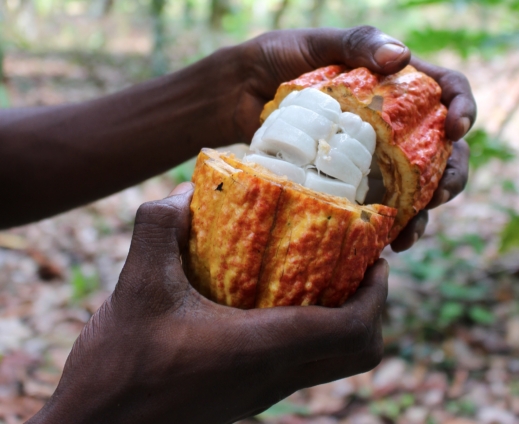
Ecuador is on course to produce more than 650,000 metric tons of cocoa in the 2026/27 season and could surpass Ghana as the world's second largest grower of the chocolate ingredient, the chairman of the country's cocoa exporters association said.
Anecacao's Ivan Ontaneda told Reuters via email that thanks to soaring world cocoa prices , farmers - backed by the public and private sector - are investing more and more in their plots and getting increased yields.
Cocoa prices more than doubled last year, reaching record highs above $12,000 a ton following failed harvests and disease in West African producers Ivory Coast and Ghana, which supply about half of the world's cocoa.
An increase in production in South America, where Ecuador is the leading grower, has helped to fill the supply gap, and prices have fallen by about a third this year. They remain, however, at historically elevated levels.
Farmers in Ecuador get around 90% of the world price, according to Ontaneda. In the Ivory Coast and Ghana, by contrast, farmers receive about 60-70% of the world price at best.
"Ecuador’s production has shown steady growth (for) years. Ghana's production has been volatile," said Ontaneda.
A Reuters poll released earlier this month forecast that Ghana, which is battling illegal gold mining on cocoa farms and struggling to rein in the spread of swollen shoot disease, will produce just 600,000 tons of cocoa in 2025/26.
Cocoa in Ecuador is grown in agroforestry systems that support biodiversity and are crucial to preventing the spread of disease common in monoculture farming, as seen in West Africa. These systems include growing cocoa alongside shade trees, plantains, coffee and fruit trees.
Cocoa farms in Ecuador are currently yielding an annual 800 kg per hectare, Ontaneda noted, adding the country is expected to produce more than 570,000 tons in the 2025/26 season and expects to reach 800,000 tons by the end of the decade.
The average cocoa yield in West African countries, including Ghana, is just under 500 kg per hectare, according to industry data.
Latest Stories
-
MTN set to deploy 5G services after winning spectrum licenses worth US$202m
2 hours -
NPP national elections: 3,000–4,000 police to handle security, traffic in Kumasi – Karbo
4 hours -
Atta Akyea fumes as Manhyia MP is to spend another night in EOCO custody
4 hours -
SSNIT says La Beach clearance was to protect hotel investments, beaches to remain public
5 hours -
APSU congratulates St Augustine’s College after back-to-back National Investment Quiz wins
5 hours -
Renewed flood intervention at Mallam Junction raises hopes among residents, businesses
6 hours -
St Augustine’s College retain National Investment Quiz title after nail-biting grand finale
6 hours -
Education infrastructure investment will drive Banda’s development – Ahmed Ibrahim
6 hours -
Teacher unions strike: Gov’t presents fresh proposals as talks end inconclusively
7 hours -
51,000 teachers’ promotion arrears to be validated for October payment – Education Minister
7 hours -
Kwabena Boamah appointed Board Chair for Impact Investing Ghana
7 hours -
Striking teacher unions to meet Fair Wages and Salaries Commission on October 6
8 hours -
EOCO working with AG to arraign Nana Baffour Awuah before weekend court
8 hours -
Duraplast reassures customers after fire, announces October 5 reopening
8 hours -
Call off strike, gov’t will not renege on promotion arrears pledge – Haruna Iddrisu to teacher unions
8 hours