

Audio By Carbonatix
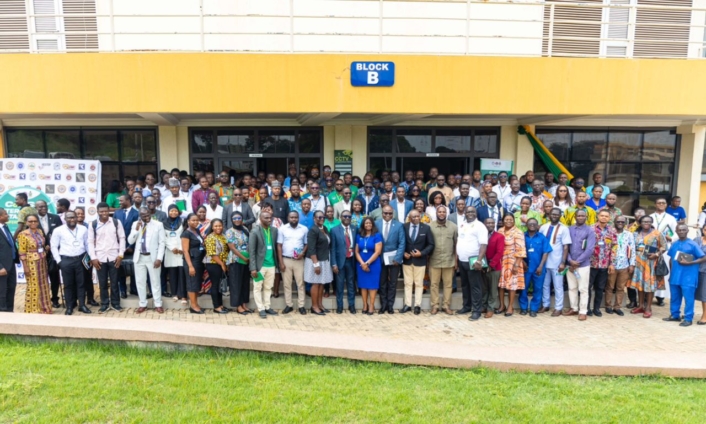
The College of Humanities and Social Sciences (CoHSS) of the Kwame Nkrumah University of Science and Technology (KNUST) has held a two-day International Sustainability Conference aimed at promoting research and dialogue on sustainable development within Ghana and beyond.
The conference, under the theme “Sustainability through Social Inclusion, Business Innovations and Environmental Governance: African Perspectives and Global Trends,” brought together academics, policymakers, business leaders, and students to discuss practical approaches to advancing Ghana’s sustainability agenda.
Delivering the opening address on behalf of the Vice-Chancellor, the Pro Vice-Chancellor, Professor David Asamoah, said the conference reflected the university’s mission of linking knowledge with action to address pressing national challenges.
“This conference exemplifies that wisdom in action. By exploring sustainability through the lenses of social inclusion, business innovation, and environmental governance, we seek to untie the complex knots that hinder Africa’s progress toward a just, inclusive, and ecologically balanced future,” he said.
He added that sustainability must be considered a core development issue rather than a secondary concern.
“Sustainability is not merely an environmental concern; it is a developmental imperative. Through the exchange of ideas at this conference, we reaffirm our commitment to knowledge creation that contributes meaningfully to the sustainable transformation of Ghana and beyond,” he stated.
The Provost of the College of Humanities and Social Sciences, Professor Charles Ofosu Marfo, emphasised the importance of interdisciplinary collaboration in tackling issues such as inequality, climate change, and shifting economic conditions.
“In an era marked by growing inequality, environmental challenges, and shifting economic landscapes, it is imperative that we as Africans and global citizens rethink development.”
“At KNUST, particularly within this college, we are committed to fostering interdisciplinary research. This conference provides a platform for critical engagements and solution-driven discussions that can inform sustainable development pathways,” he explained.
He encouraged participants to “think boldly, contribute openly, and collaborate meaningfully” to ensure that discussions translate into actionable outcomes.
Delivering a practical perspective, Evans Nana Akuoko Hokey, Chief Executive Officer and Senior Partner at UG Consult and Acting Country Leader for Enactus Ghana, made it known that the key outcomes of the discussions would be compiled into a single document for policymakers and relevant agencies.
“After this conference, the summary will be codified into a single document and shared with policymakers. We believe that this practical document can help activate and implement sustainability strategies across various sectors to change the narrative of development in Ghana,” he announced.
Addressing questions on why a humanities and social sciences college would host a conference on sustainability, Mr Hokey said the college has demonstrated leadership in practical sustainability initiatives.
“We are all responsible for our actions, so the College of Humanities and Social Sciences is not different. Students from this college recently represented Ghana at the Enactus World Cup in Bangkok, presenting practical solutions on climate change, environmental waste, and sustainability programs. It’s not just about theory; it’s about practical action,” he added.
The conference’s focus on environmental governance also comes at a critical time when Ghana faces growing concerns over resource management, land degradation, and the impact of unsustainable practices such as illegal mining.
By centring discussions on inclusion, innovation, and governance, the College of Humanities and Social Sciences underscored the need for academia to lead the national conversation on sustainability not just through theory, but through practical and collaborative action that aligns with Ghana’s development priorities and global sustainability standards.
Latest Stories
-
Walter Mosley visits W.E.B. Du Bois Centre in Accra: A New York Secretary’s homecoming story on where Du Bois spent his final years.
15 minutes -
MTN set to deploy 5G services after winning spectrum licenses worth US$202m
3 hours -
NPP national elections: 3,000–4,000 police to handle security, traffic in Kumasi – Karbo
5 hours -
Atta Akyea fumes as Manhyia MP is to spend another night in EOCO custody
5 hours -
SSNIT says La Beach clearance was to protect hotel investments, beaches to remain public
6 hours -
APSU congratulates St Augustine’s College after back-to-back National Investment Quiz wins
6 hours -
Renewed flood intervention at Mallam Junction raises hopes among residents, businesses
7 hours -
St Augustine’s College retain National Investment Quiz title after nail-biting grand finale
7 hours -
Education infrastructure investment will drive Banda’s development – Ahmed Ibrahim
7 hours -
Teacher unions strike: Gov’t presents fresh proposals as talks end inconclusively
8 hours -
51,000 teachers’ promotion arrears to be validated for October payment – Education Minister
8 hours -
Kwabena Boamah appointed Board Chair for Impact Investing Ghana
8 hours -
Striking teacher unions to meet Fair Wages and Salaries Commission on October 6
9 hours -
EOCO working with AG to arraign Nana Baffour Awuah before weekend court
9 hours -
Duraplast reassures customers after fire, announces October 5 reopening
9 hours