

Audio By Carbonatix
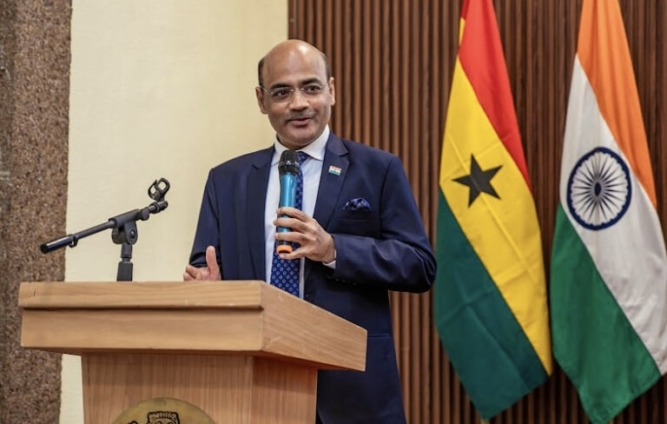
The Indian High Commissioner to Ghana, Shri Manish Gupta, has identified the Volta Region as his favourite destination in the country, citing its remarkable eco-tourism potential and urging Ghana to strategically harness its natural assets for sustainable economic and environmental gains.
In an interview with Diplomatic Times journalist Richmond Fordjour Ampofo ahead of the conclusion of his tenure, the envoy described the region’s serene, mountainous landscape as a refreshing contrast to the hustle and bustle of major cities, noting that its tranquil environment makes it his preferred location in Ghana.
A highlight of his time in the country, he said, was climbing Mount Afadjato, Ghana’s highest peak, which rises approximately 885 metres above sea level. Situated within the Agumatsa Range near the communities of Gbledi and Liati Wote, the mountain offers sweeping panoramic views that stretch into neighbouring Togo.
Ambassador Gupta recounted undertaking the hike on a rainy day, an experience he described as profoundly rewarding. Beyond the adventure itself, he said the journey deepened his appreciation of the environmental and economic potential embedded within Ghana’s landscapes.
“So, Volta is one of my really, I would say, one of the favorite places because I love the serene Volta, like the environment and the mountains.So, I have been to Mount Afajatot.” he said.
The Volta Region is recognised as Ghana’s most topographically diverse area and boasts the country’s highest concentration of community-based ecotourism sites. Visitors can enjoy a wide range of activities, including hiking, mountain biking, forest exploration and waterfall excursions. Iconic attractions such as Tagbo Falls, reached via forest trails rich in biodiversity, with over 300 recorded butterfly species, highlight the region’s strong ecotourism appeal.
Ambassador Gupta drew parallels between the Volta Region and the Indian state of Kerala, a globally recognised tourism hub known for its unique geography. Kerala combines serene beaches, tranquil backwaters in cities such as Alappuzha and Kollam, lush hill stations, protected wildlife sanctuaries, historic forts and a rich culinary heritage. The envoy suggested that with deliberate policy direction and sustained investment, Ghana’s eco-tourism landscapes could achieve comparable international recognition.
An avid hiker, he noted that he frequently engaged in outdoor expeditions during his previous diplomatic posting in Australia. He therefore encouraged Ghana’s tourism authorities to further professionalise and elevate structured hiking experiences, positioning them as premium tourism products capable of attracting both domestic and international visitors.
His observations align with ongoing efforts by the Ghana Tourism Authority to expand eco-tourism offerings. The Authority’s Chief Executive Officer, Maame Efua Houadjeto, has indicated that discussions with investors are under way to introduce paragliding activities and eco-lodges within the Volta Region, signalling growing interest in enhancing the region’s tourism infrastructure.
Within the Volta enclave, attractions such as the sacred monkeys of Tafi Atome, the waterfalls and forests around Amedzofe, Mount Afadjato and Wli Falls, the tallest waterfall in West Africa, collectively position the region as a cornerstone of Ghana’s eco-tourism portfolio.
Beyond the Volta Region, Ambassador Gupta also reflected on his visit to Nzulezu in the Western Region, describing the stilt community as a “natural wonder.” Built over Lake Tadane and accessible primarily by canoe, Nzulezu exemplifies a unique model of human settlement in harmony with the environment.
“ And then I have travelled to western region also because the coast is beautiful. Especially the coastal waters are beautiful as you go further. Dotted with monuments and history.Enzulazo was like, again is a natural wonder, you know. And you can see how the community can just live in perfect harmony with the surroundings. A few hundred people, almost self-sufficient, using canoes for their day-to-day things and then managing it.” he stated.
He further observed that Ghana’s extensive western coastline, when integrated with its historic forts and castles, presents considerable potential for a comprehensive tourism strategy that combines eco-tourism, coastal tourism and heritage tourism into a cohesive national brand.
“It’s so peaceful, so serene. It’s a different way of life. But if you see the entire western coast, you know, Ghana has such a huge potential for tourism.You know, eco-tourism, coastal tourism. And then it can be enmeshed with the history you have, especially with the forts and castles, you know” he said.
As Ghana seeks to reposition its tourism sector as a key pillar of economic diversification, voices such as Ambassador Gupta’s underscore the importance of preserving natural landscapes while leveraging them for inclusive growth. His reflections serve not only as a personal endorsement of the Volta Region’s appeal but also as a broader call for policy-driven transformation of Ghana’s tourism economy.
Latest Stories
-
Presidency reveals ‘impending reshuffle’ of SOE CEOs
57 seconds -
Gov’t to provide industrial crushers to support informal waste recyclers
4 minutes -
The Scroll That Rules the World: The unstoppable power of social media
5 minutes -
Treat Okuapeman-Mount Sinai violent clash as criminal matter – Akuapem North MP
6 minutes -
‘Leadership has failed’ – NDC executive raises concerns over development in Madina
9 minutes -
Vendors promise quality, discounts at Joy FM Back-to-School Fair
14 minutes -
Ghana leather manufacturers demand lower tariffs, threaten demonstration over high costs
18 minutes -
Roads Minister threatens to terminate Techiman–Nkonsia–Wenchi road contract
29 minutes -
Beyond compliance: Industrial resilience as a strategic component of national security
34 minutes -
What if “I’m fine” isn’t fine?
54 minutes -
Nigerian music lawyer Akinyemi Ayinoluwa reveals factors driving Nigeria’s music success
1 hour -
Boards’ dissolution: Mahama won’t tolerate indiscipline, poor performance – Secretary
1 hour -
Missing gospel musician Bernice Offei found
2 hours -
Chief Justice Baffoe-Bonnie explains why judges sit during Ghana’s legal vacation
2 hours -
‘Cases don’t go on leave’ – Chief Justice defends judges sitting during legal vacation
2 hours