

Audio By Carbonatix
Government cannot determine cocoa producer prices without factoring in the realities of the international market, a key presidential official has said, as authorities continue engagements with farmers over the recent reduction in farmgate prices.
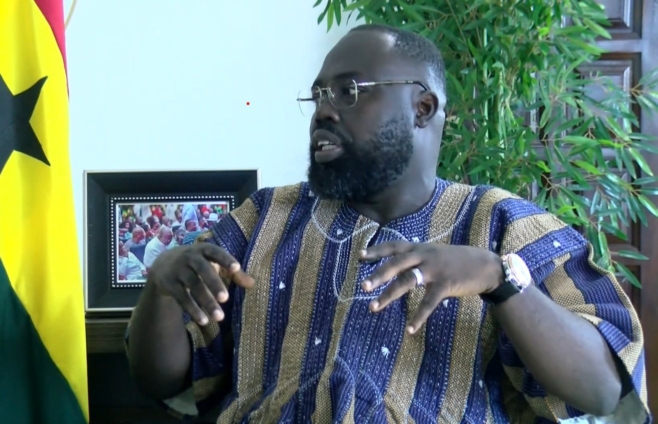
Dr Peter Boamah Otokunor, Director of Presidential Initiatives in Agriculture and Agribusiness at the Office of the President, said that although the government announces the producer price for cocoa, the final value of the commodity is ultimately determined by global market conditions.
Speaking in an interview with JoyNews’ Gemma Appiah after weeks of farm-level engagements in cocoa-growing communities in the Western Region, he explained that Ghana sells its cocoa on the international market and must therefore align its decisions with prevailing global prices.
“Even though the government sets the producer price, the government does not set the market price,” Dr Otokunor said.
“The product is sold on the international market, and any cocoa-growing country that brings cocoa there sells the cocoa at a particular price,” he added.
His comments come at a time when the cocoa sector is facing renewed pressure following the government's decision in February 2026 to reduce the producer price by 28.6%.
The farmgate price was cut from GH¢3,625 to GH¢2,587 per 64kg bag, a decision authorities say was driven by falling international cocoa prices.
The move has sparked concern among farmers, many of whom rely on cocoa as their primary source of income.
Dr Otokunor acknowledged the dissatisfaction among farmers, noting that declining commodity prices are never welcomed by producers.
“Nobody would be happy if you go to the market and you are trading a commodity and it appears as if the price of the commodity has fallen,” he said.
According to him, the Mahama administration has been engaging farmers directly to explain the rationale behind the pricing decision while outlining broader reforms being planned for the cocoa sector.
The issue has also been compounded by reports that some farmers have gone without payment for their produce since November 2025, worsening financial pressures on farming households.
Ghana’s cocoa industry remains one of the country’s most important economic sectors, supporting an estimated 800,000 farm families across 10 of the 16 regions.
The sector generates about $2 billion in foreign exchange annually and serves as the main source of livelihood for many rural communities.
Government officials say the ongoing engagements are aimed at providing clarity on pricing decisions while building consensus around reforms intended to stabilise and strengthen the industry in the long term.
Latest Stories
-
Chief Justice removal process open to political manipulation – IEA warns
19 seconds -
Bawumia’s presidency is not an Islamic project – Mustapha Hamid
4 minutes -
Takoradi goes ‘All Out’ as Guinness Ghana DJ Awards nationwide tour ignites Western region
4 minutes -
EU and Nato vow to step up pressure on Russia after ‘new escalation’ in Germany
5 minutes -
Mr David Boa Essilfie
10 minutes -
GoldBod, the microphone and the media’s duty beyond ‘He said’ and ‘She said’
11 minutes -
Shamima Muslim Writes: The honour and duty of representation
14 minutes -
Traders Advocacy Group calls for removal of Transport Minister over port charges, fares
16 minutes -
IEA opposes system allowing President to choose principal advisers on Council of State
20 minutes -
IEA backs lifestyle audits and reverse burden of proof for public officials
22 minutes -
Ghana Medical Trust Fund Administrator hails Health Minister’s support as Fund marks first year
23 minutes -
Societe Generale Ghana engages women business owners on financing and growth
36 minutes -
IEA backs proposal to bar MPs from serving simultaneously as ministers
37 minutes -
Health Minister engages Global Fund over commodity shortages and programme sustainability
39 minutes -
President Mahama dissolves Fred Awaah-led NSA board with immediate effect
45 minutes