

Audio By Carbonatix
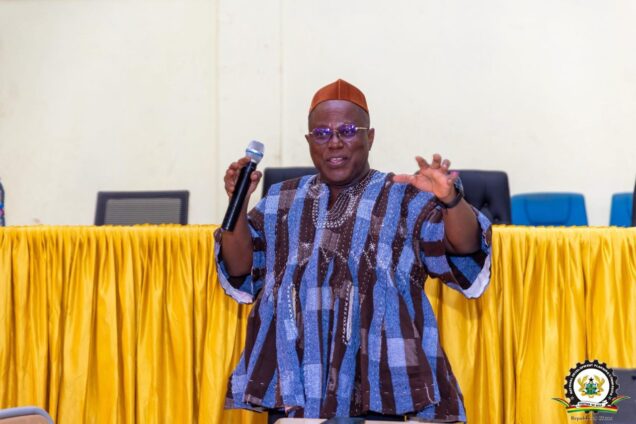
The Chairman of the National Development Planning Commission (NDPC), Dr Nii Moi Thompson, has called for a national shift in attitudes towards time management, stressing that discipline and efficiency are critical to driving Ghana’s development agenda.
Speaking at a regional consultative meeting in the Bono Region on the preparation of the Consolidated National Development Plan, Dr Thompson underscored that development must be intentional and well-managed.
He noted that while attention is often placed on financial and human resources, time remains an overlooked but crucial asset.
“We often speak about financial and human resources, but rarely about time. Yet it is the only resource that, once lost, cannot be recovered,” he stated, warning that habitual delays in public programmes carry significant long-term consequences.
He further illustrated the impact of poor time management, saying: “When a programme scheduled for 10:00 a.m. begins at 10:30 a.m., those 30 minutes are gone forever. If this becomes routine, we are not just losing time—we are losing development opportunities.”
He urged Metropolitan, Municipal and District Assemblies to embed time discipline into their institutional culture.
Beyond time management, Dr Thompson highlighted the importance of improving service standards, particularly within the tourism sector.
According to him, Ghana’s competitiveness depends not only on its attractions but also on the quality of experience offered to visitors. “Tourism is about experience. Customer care is not optional; it is an economic strategy,” he said.
On revenue mobilisation, he pointed to the dominance of the informal sector as a key structural challenge, noting that nearly 90 per cent of businesses operate outside the formal tax system.
“If we do not formalise our local economies, we will continue to rely heavily on central government transfers,” he cautioned, adding: “Development requires resources. Resources require systems. Systems require discipline.”
The Director-General of the Commission, Dr Audrey Smock Amoah, also emphasised the importance of credible planning in ensuring accountability and effective outcomes.
“Planning is not merely a procedural requirement; it is a strategic obligation. It is not about producing documents, but about delivering a credible roadmap for development,” she said.
Representing the Bono Regional Minister, Nar-Ire Puobenyere David reaffirmed the region’s commitment to the national planning process, stressing that development must translate into tangible improvements in people’s lives.
Certificates were later presented to districts whose Medium-Term Development Plans for 2026–2029 have received approval, marking a key milestone in the planning process.
Latest Stories
-
Reparatory justice: Mahama announces high-level UN side event in September
35 seconds -
Bosome Freho Assembly invests first tranche Common Fund in water and education projects for 19 rural communities
1 minute -
YIPs Ghana honours 5 outstanding students at 2026 Tertiary Achievers Awards
1 minute -
NSMQ 2026: TAMASCO triumphs over St. Hubert and Labone to clinch ticket to the semi-finals
1 minute -
US and Iran trade strikes for first time in weeks
3 minutes -
Non-interest banking will not replace conventional banking – Dr Johnson Asiama
5 minutes -
Non-interest banking products available to everyone, not just Muslims – Asiama
9 minutes -
Dolly Parton laid to rest alongside husband in Nashville
10 minutes -
Accra Mall celebrates Legends Reimagined with Weekend Vibes this September
11 minutes -
Tibule Advertising marks ‘Gong Gong Awards’ debut with a win for indomie
17 minutes -
Nurturing market-ready solutions that create jobs: KIC AgriTech Challenge Pro teams first pitch commenced
20 minutes -
Teacher unions to call off planned strike after engagement with Education Minister
26 minutes -
EPA more than triples accumulated fund to GH¢375m in a single year under Prof. Browne Klutse – SIGA
33 minutes -
Imaging professionals trained on Ghana’s first paediatric cancer imaging protocol
39 minutes -
‘Bawumia will become President whether NDC likes it or not’ – Amin Adam
40 minutes