

Audio By Carbonatix
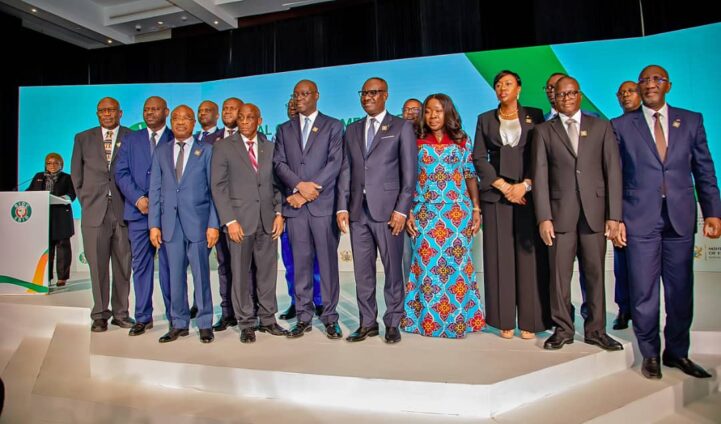
The President of the ECOWAS Bank for Investment and Development (EBID), Dr George A. N. Donkor, has underscored the importance of regional integration and structural reforms as West Africa navigates global economic uncertainty.
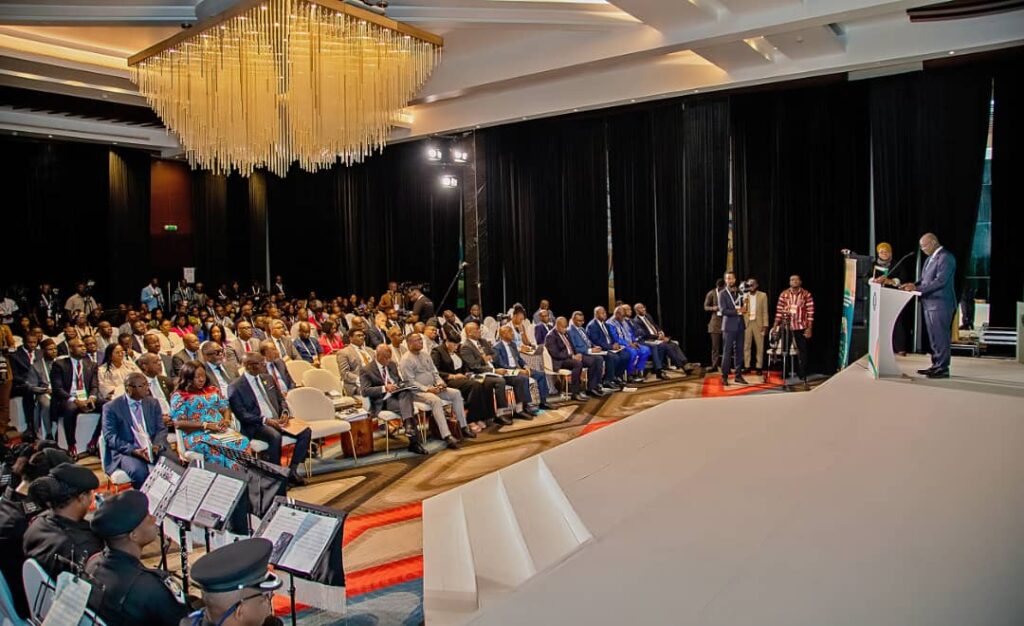
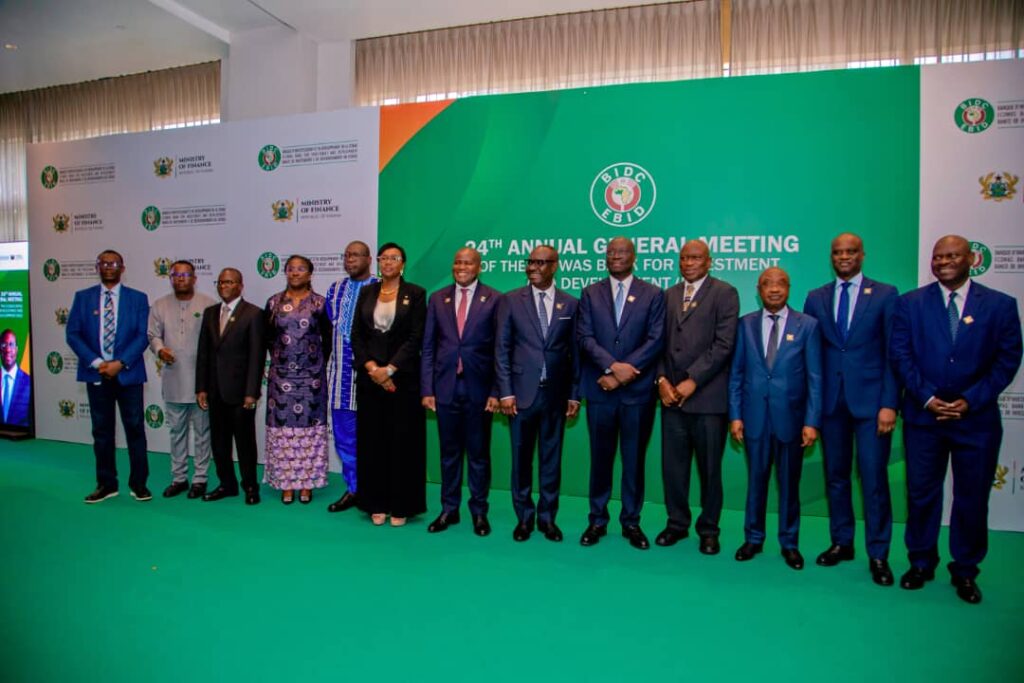
Addressing the 24th Ordinary Session of the Board of Governors in Accra, Dr Donkor said the global economy remained resilient but faced growing risks from geopolitical tensions and trade disruptions.
“The global economy in 2025 remained modest but resilient, with world output estimated at 3.3%, supported by robust activity in a few large advanced and emerging economies against a backdrop of elevated geopolitical tensions and trade policy uncertainty,” he said.
He noted that global inflation was expected to decline gradually, although risks remained.
“Global inflation continued its disinflationary trend… although the pace and timing of disinflation differ significantly across major economies,” he added.
Turning to regional developments, Dr Donkor revealed that ECOWAS economies recorded steady growth supported by commodity prices and macroeconomic reforms.
“The sub-region is estimated to record a GDP growth of 4.8% in 2025, with the entire West African region estimated to grow by 5.7%,” he said.
However, he cautioned that several structural challenges persist across the region, including rising public debt and limited per capita income growth.
“The region continues to face important challenges, including elevated public debt… and insufficient per capita income growth relative to rapid population and labour-force expansion,” he stated.
Despite these pressures, EBID continued to strengthen its institutional capacity and maintain investor confidence, with international credit agencies maintaining favourable ratings.
“Moody’s and Fitch maintained the Bank’s credit rating at B2-Stable and B-Stable, respectively, despite the challenges in the operating environment,” he said.
The Bank also secured accreditation from the Green Climate Fund and certification under the EU-9 Pillars framework, enabling it to manage international funds with greater autonomy.
“The Bank received accreditation from the Green Climate Fund… [and] certification for the EU-9 Pillars, meaning the Bank can manage European Union funds with reduced oversight,” he added.
Dr Donkor concluded by expressing confidence in the Bank’s ability to navigate emerging challenges through sustained cooperation among member states.
“As we set our sights on the horizon… we will collectively transform the challenges of today into the enduring prosperity of tomorrow,” he said.
Latest Stories
-
‘Cockroach’ group leaders among hundreds detained in Delhi protest
3 minutes -
Don’t let speed of information become your judgement – CJ tells new lawyers
41 minutes -
World Cup visa scandal: People have leveraged public office to facilitate fraud – Senyo Hosi
46 minutes -
Glut! Farmers count losses as prices crash, customers happy
1 hour -
GSA postpones auction of unserviceable vehicles
1 hour -
Man charged with attempted murder after stabbing
1 hour -
World Cup visa scandal: Senyo Hosi says issue goes beyond calls for Sports Minister’s resignation
1 hour -
Yaw Ampofo Ankrah hasn’t taken or received any money to facilitate visas – Lawyer insists
2 hours -
World Cup visa scandal: Senyo Hosi urges focus on constitutional accountability
2 hours -
La Beach demolition: Senyo Hosi condemns lack of consultation
2 hours -
Russian glide bomb attack on Zaporizhzhia kills at least 15 people
2 hours -
Jinapor warns underperforming energy sector CEOs of consequences, says no protection for failure
2 hours -
Fire destroys head of tipper truck on Lower Volta Bridge
2 hours -
Palmer signs new Chelsea contract until 2034
2 hours -
World Cup visa scandal: Mahama will act on corruption allegations – Abass Nurudeen
2 hours