

Audio By Carbonatix
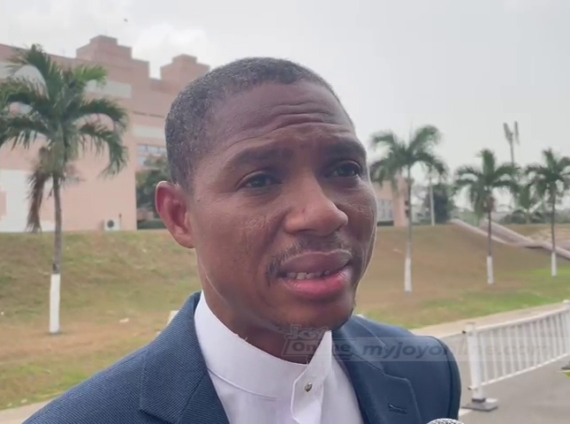
The Member of Parliament for Madina, Francis-Xavier Sosu, has criticised a recent High Court directive requiring the Office of the Special Prosecutor (OSP) to transfer all ongoing prosecutions to the Attorney-General’s Department.
The directive, which forms part of a legal challenge concerning the prosecutorial authority of the OSP, has sparked renewed debate over its potential implications for Ghana’s anti-corruption framework.
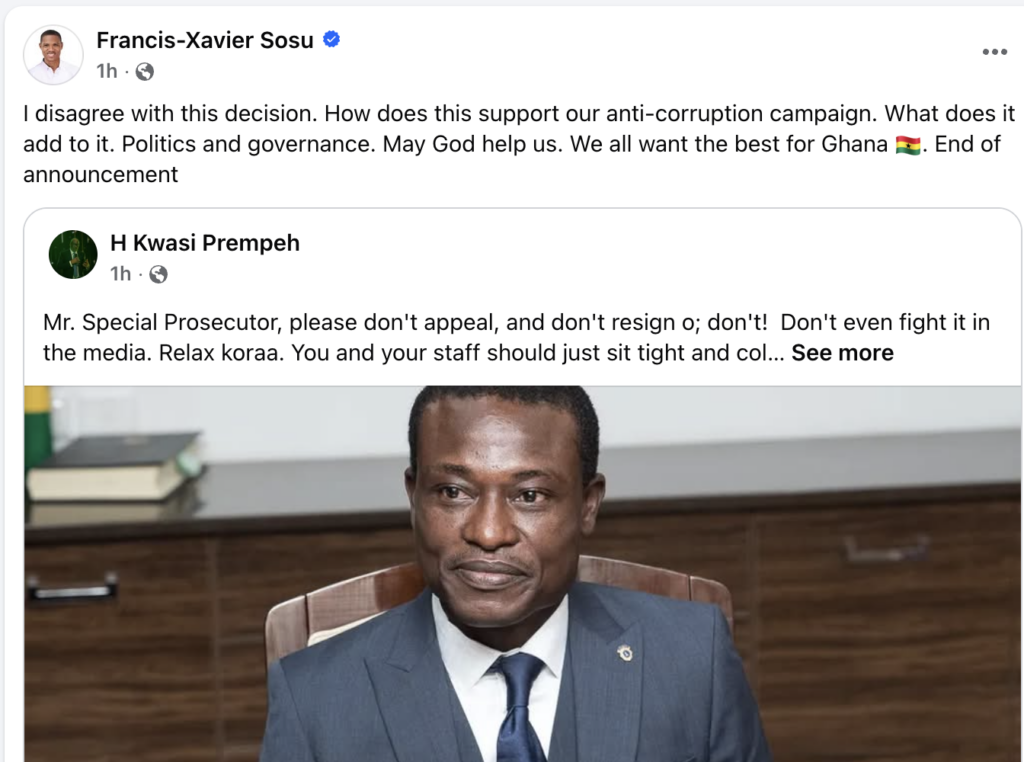
Reacting in a social media post, Mr Sosu, a lawyer, raised concerns about the likely impact of the ruling on efforts to combat corruption, suggesting that the decision could undermine progress made so far.
“I disagree with this decision. How does this support our anti-corruption campaign? What does it add to it? Politics and governance. May God help us. We all want the best for Ghana,” he wrote.
Background to the High Court ruling
The directive follows a ruling by a High Court, which held that the OSP does not have the constitutional authority to independently prosecute criminal cases.
Presiding judge, Justice John Eugene Nyadu Nyante, ruled that while the OSP is empowered to investigate corruption-related offences, prosecutorial authority under Article 88 of the 1992 Constitution is vested solely in the Attorney-General.
The ruling arose from an application for quo warranto filed by private citizen Peter Achibold Hyde, who challenged the legality of the OSP’s authority to undertake prosecutions without recourse to the Attorney-General.
The court consequently directed that all ongoing prosecutions initiated by the OSP be referred to the Attorney-General’s Department, creating uncertainty over several active corruption cases.
Pending Supreme Court suit deepens legal uncertainty
The High Court ruling comes amid a separate constitutional case already pending before the Supreme Court of Ghana, which is challenging the legality of the OSP’s independent prosecutorial powers.
The suit, filed by private citizen Noah Ephraem Tetteh Adamtey, argues that Parliament exceeded its constitutional mandate by creating an independent prosecutorial body outside the authority of the Attorney-General.
In filings before the Supreme Court, the Attorney-General has reportedly aligned with the plaintiff’s central argument, maintaining that provisions in the OSP Act allowing the office to initiate prosecutions without authorisation from the Attorney-General may be unconstitutional under Article 88 of the Constitution.
Legal analysts say the outcome of the Supreme Court case could have far-reaching implications, potentially redefining the mandate of the OSP and determining the future structure of anti-corruption prosecutions in Ghana.
Mr Sosu’s reaction adds to the growing public and legal debate over the independence of the OSP and the broader implications of the High Court ruling for Ghana’s fight against corruption.
Latest Stories
-
DVLA to end third-party number plates; begins local production
50 minutes -
Shatta Wale: ‘I don’t have any best-performing Mahama appointee’
1 hour -
John Dumelo joins corporate Ghana at upcoming JoySports Invitational Tournament 2026
2 hours -
Preview: JoySports Invitational Tournament 2026 promises a day of sport, fitness and big prizes
2 hours -
Shatta Wale endorses Mahama’s vision, questions appointees
2 hours -
“Gov’t owes me GH¢5m” — Shatta Wale fumes over “total disrespect”
2 hours -
NSMQ 2026: Accra Academy books quarter-final spot, sends Holy Child packing after fierce battle
3 hours -
NSMQ 2026: University Practice stages late comeback to retain seed as Presby SHS, Adeiso suffer one-point heartbreak
3 hours -
The Luckiest CEO Adutwum eyes back-to-back CEO shootout crown at JoySports Invitational
3 hours -
NSMQ 2026: Tie-break agony as Bishop Herman steals quarter-final spot from Asanteman SHS
3 hours -
Ahmadiyya elders urged to lead moral crusade in digital age, warns against rising religious tensions
3 hours -
Baptist Church equips youth to navigate AI and digital era with Biblical values
4 hours -
When giving life becomes a matter of life and death: Ghana’s maternal mortality crisis
4 hours -
SankofaFresh uses technology to cut post-harvest losses and connect farmers to markets
4 hours -
Democracy Is Not For Sale: EC Deputy Director warns against money, bribery in elections
4 hours