

Audio By Carbonatix
The Ghana Academy of Nutrition and Dietetics (GAND) has welcomed recent remarks by President John Dramani Mahama discouraging late-night consumption of heavy meals, describing them as a timely reminder of the role of diet in preventing non-communicable diseases.
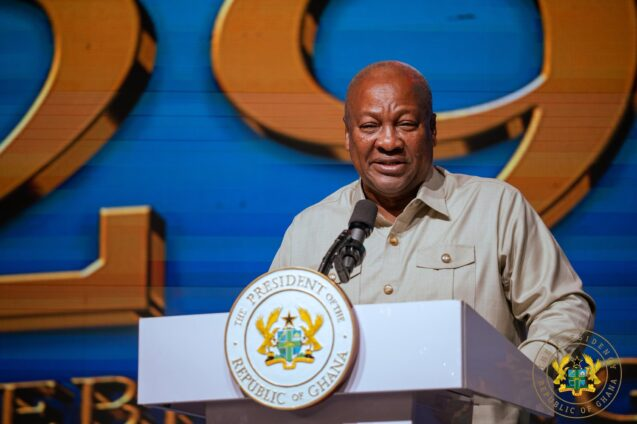
President Mahama, speaking at the launch of the Free Primary Health Care Initiative on April 15, cautioned Ghanaians against eating late in the evening, linking changing dietary patterns and sedentary lifestyles to the rising burden of non-communicable diseases such as diabetes and hypertension.
In a statement by Madam Pearl Exornam Selormey, Public Relations Officer for GAND, said the comments had helped to refocus national attention on preventive health and healthier lifestyle practices, particularly around meal timing.
“Meal timing significantly influences metabolic, digestive and sleep health,” the academy said, adding that consuming earlier and lighter evening meals supports long‑term wellbeing and productivity.
However, GAND stressed that public awareness alone would not be enough to achieve sustained behaviour change. It called for the deliberate integration of dietitians and nutritionists into primary healthcare facilities nationwide.
“Access to qualified nutrition professionals at the primary care level is essential to translate awareness into practical and sustained lifestyle change,” the statement said.
As Ghana rolls out the Free Primary Health Care initiative, the academy urged the government to prioritise the recruitment, posting and retention of nutrition professionals as a core component of preventive health services.
It also called for nutrition care to be formally recognised as a key pillar of non‑communicable disease prevention, alongside screening, physical activity promotion and health education.
GAND said strengthening nutrition services within primary care would help reduce the burden of diet‑related diseases, lower long‑term healthcare costs and improve population health and national productivity.
“Nutrition is prevention. Prevention requires professionals,” the academy said, reaffirming its commitment to supporting evidence‑based policies that promote healthier lifestyles and sustainable health outcomes for all Ghanaians.
Latest Stories
-
Sentuo offers fuel supply reassurance as NPA sees steady output through December
21 minutes -
Ghanaian smock showcased at Lesotho Tourism Summit
47 minutes -
Four pupils to one desk: The painful plight of schools in New Juaben North
1 hour -
Ipswich launch investigation into racist abuse of Abdul Fatawu
1 hour -
Arrest of Techiman nurse is purely political persecution – ‘Ghana Jollof’
2 hours -
Isak nets winner as Liverpool edge Bournemouth
2 hours -
I dare gov’t of Ghana to extradite me; they can never do it – ‘Ghana Jollof’ speaks
2 hours -
Semenyo scores twice as Manchester City beat Sunderland 5-3 in eight-goal thriller
2 hours -
Parliament calls for government-private sector collaboration to improve waste management
2 hours -
Volta Region described as cleanest so far in Parliament’s nationwide sanitation monitoring
3 hours -
Parliament urges MMDAs to enforce sanitation bylaws to curb indiscriminate waste disposal
3 hours -
Mohammed Kudus drops out of Ghana squad for AFCON 2027 qualifiers against Côte d’Ivoire and Gambia
3 hours -
Africa World Airlines unveils first Embraer E190 as part of 10-aircraft fleet expansion
4 hours -
Civilian hospitalised after alleged machete attack by prison officers, inmates
5 hours -
Toobu rejects calls to recall Parliament over 3.9-tonne cocaine shipment
5 hours