

Audio By Carbonatix
For many residents of Old Tafo in the Ashanti region, access to clean and safe drinking water remains a daily struggle.
In some communities, families wake up before dawn in search of water, while schools and health facilities continue to battle with unreliable access to potable water. But the Old Tafo Municipal Assembly says that is about to change.
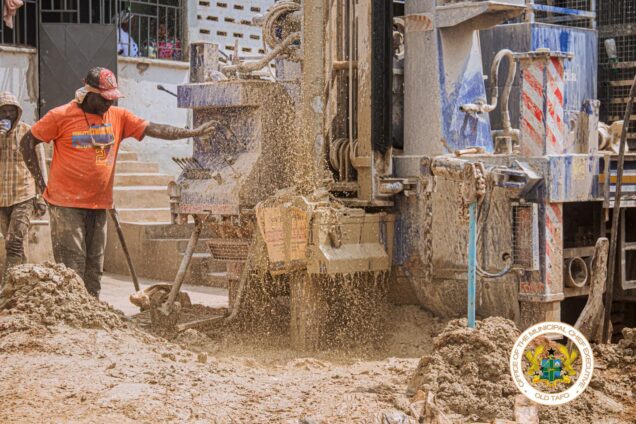
Speaking to JoyNews during the Municipal Assembly Town Hall Meeting on Public Financial Management, Municipal Chief Executive Abubakar Sadik announced the start of 15 mechanised boreholes across the municipality as part of a larger plan to construct 54 boreholes in total.
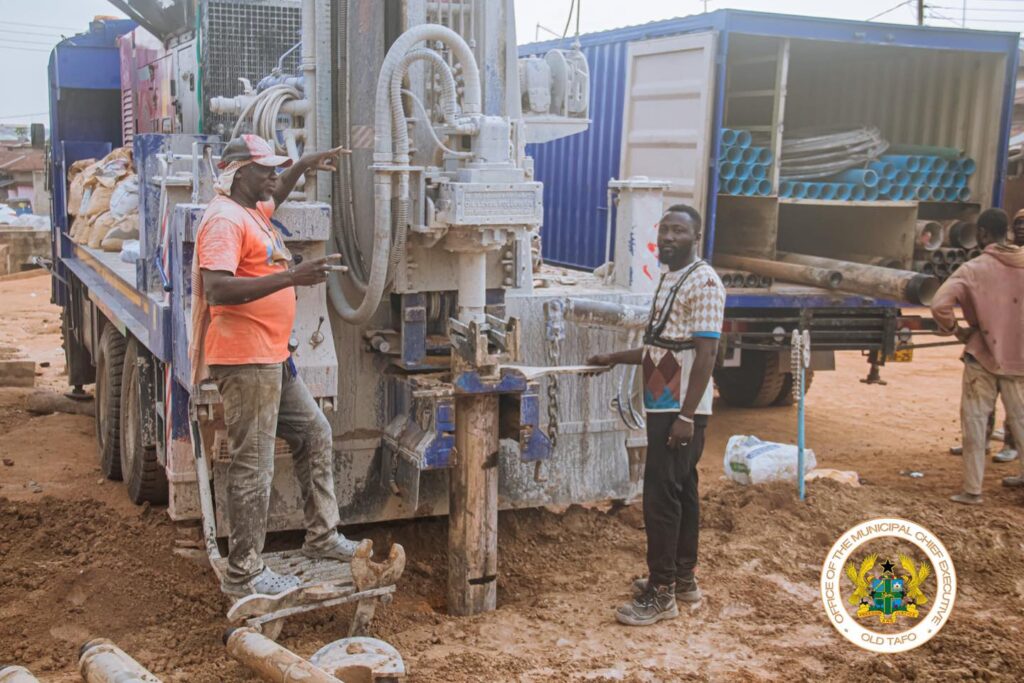
According to him, the project is a direct response to growing concerns over future global water shortages and the urgent need to improve local access to potable water.
“Research shows that by 2030, the world could face a serious water crisis. As an Assembly, we took that seriously, and that informed our decision to begin the construction of mechanised boreholes across the municipality,” he explained.
The first phase covers 15 boreholes spread across various electoral areas, while the remaining 39 will be completed in the coming months. The goal, he said, is simple: ensure that every community has access to safe drinking water.
Currently, Old Tafo stands at about 80 per cent water coverage, but the Assembly is aiming for full universal access. Some of the boreholes are also being extended to institutions where water shortages affect daily operations, including senior high schools, Tafo Government Hospital, and other public facilities.
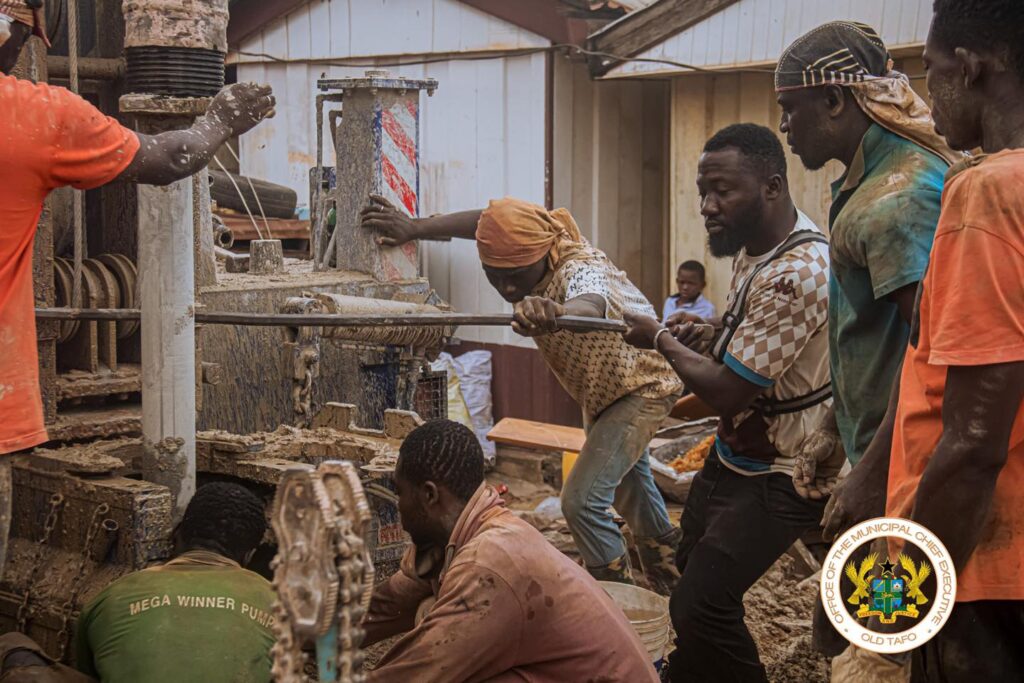
For residents like Assembly Member for Boanwene Electoral Area, Mustapha Usman, the project is more than just infrastructure; it is relief from years of hardship.
According to him, Boanwene has already benefited from one of the mechanised boreholes currently under construction.
He explained that for years, residents had to walk long distances, cross bridges, and rely on unsafe water sources just to meet their daily needs.
“The people have been going through a lot when it comes to water. Some have to travel long distances before getting water, and some even cross bridges. The area is large, and although we had some wells, the water quality was not good,” he said.
He described the new project as historic, noting that it is the first mechanized borehole in the area.
“This is the first mechanised borehole in the history of the area. It is going to provide the people with potable water far better than what they used to experience. Those who were moving far to get water can now have it right at their doorsteps. It will help us a lot,” he added.
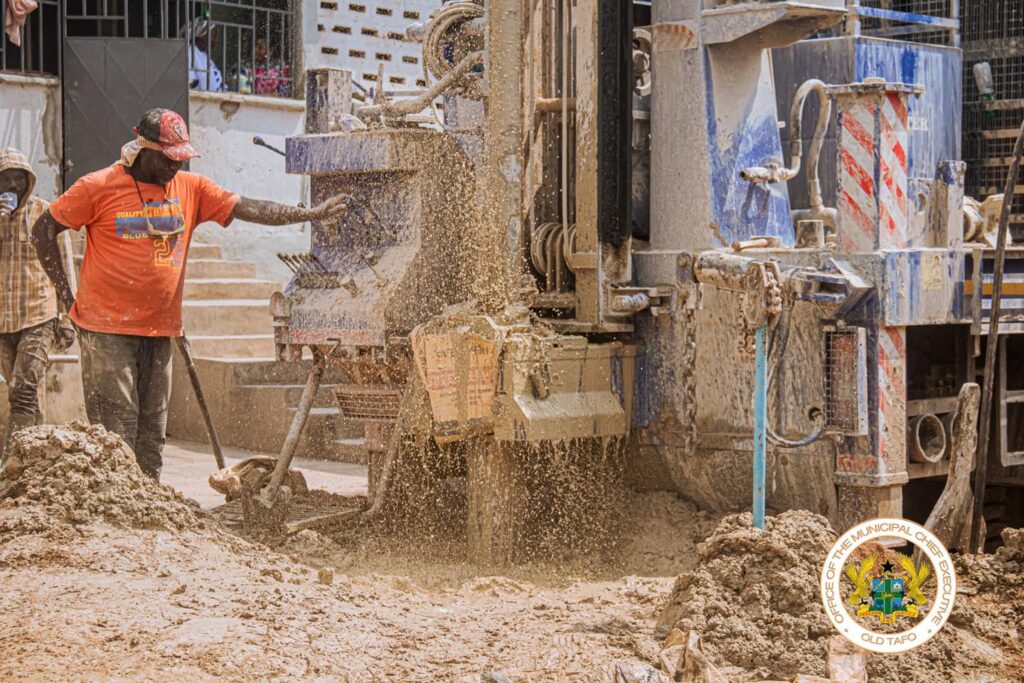
At Adabraka Electoral Area, residents are sharing similar excitement. Assembly Member for Area, Awudu Malik, said his community at Pankrono Zongo has also received its share of the mechanised borehole project.
He noted that access to reliable water had been a major challenge for residents, especially because supply from Ghana Water was often unstable.
“Available water was a major problem in the area. At first, people depended on Ghana Water, but it was not stable; it was on and off. This mechanised borehole will really help the people,” he said.
He praised MCE Abubakar Sadiq for introducing the initiative and appealed for more such projects across the municipality.
“We want to thank our MCE for bringing this to us. The community is pleased with it, and we hope for more because it has really benefited us,” he stated.
Beyond water, the Assembly is also tackling healthcare challenges. At the moment, Tafo Government Hospital remains the municipality’s only referral government hospital, serving not only Old Tafo but also nearby communities. With just 59 beds, pressure on the facility continues to rise.
To reduce that burden, new CHPS compounds are under construction at Ahenbronum and Adabraka.
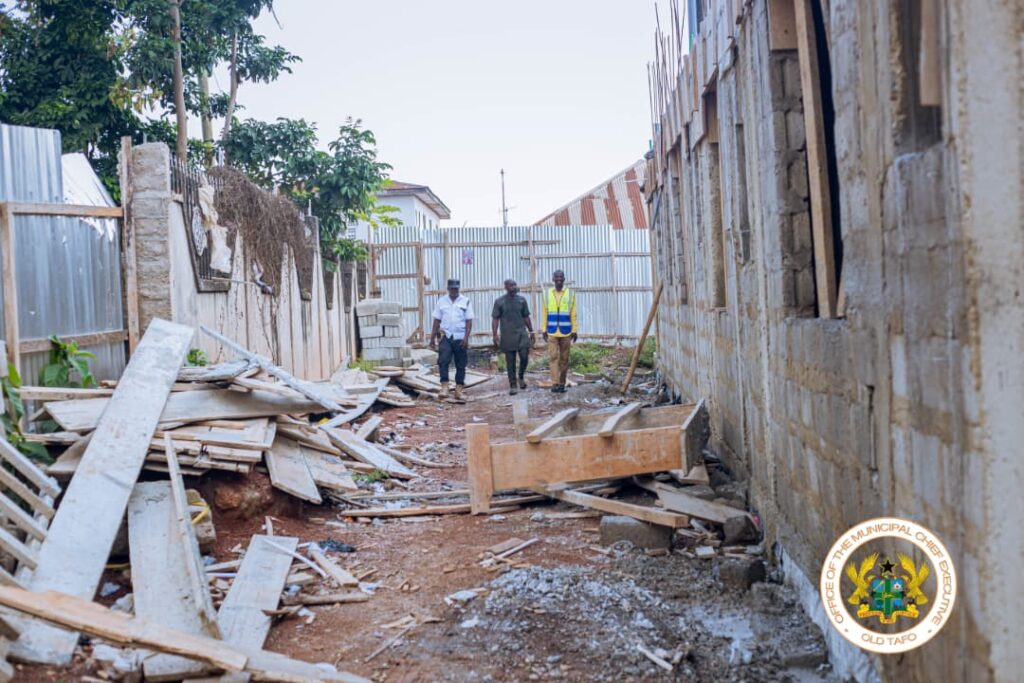
The Ahenbronum facility is expected to ease congestion at Tafo Government Hospital, while the Adabraka project will serve residents in areas where no government health facility currently exists.
Education infrastructure is also receiving attention. The municipality currently has only 17 basic schools, a number many believe is inadequate for its growing population.
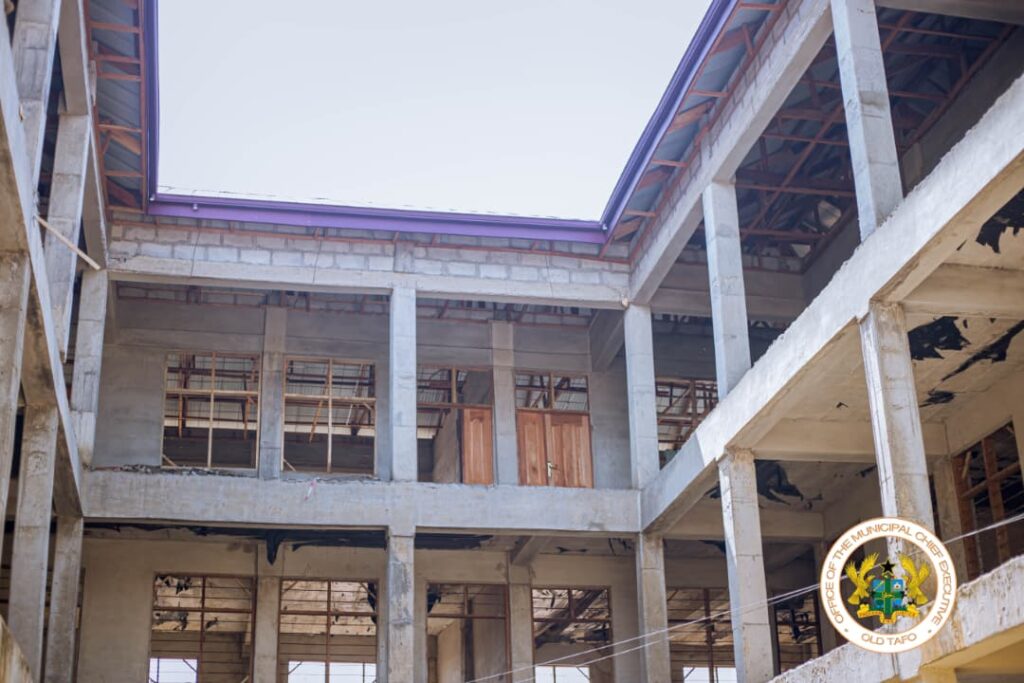
To improve learning conditions, the Assembly is constructing classroom blocks in several schools, including Rockanjie Presbyterian Primary and JHS, Uthmaniya Islamic JHS, Badariya Islamic JHS, and RC Nursery and KG.
Roads, too, are part of the development push. In December 2025, the Assembly cut sod for the rehabilitation of about 3.0 kilometres of roads within the Moro Market enclave, Boanwene, Benkumhene, and Assemblies of God Road.
The roads are expected to improve movement for commuters and transport operators while helping to reduce traffic congestion within the municipality.
Latest Stories
-
Conflicts among care providers linked to maternal, neonatal deaths – Expert
9 minutes -
GIS marks 10th TIME conference, champions improved teaching practices
16 minutes -
BRICS Or Balance? What Ghana’s bid really means
42 minutes -
GPRTU wants full TRAFFITECH-GH implementation to start in 2027
1 hour -
Mahama announces plans to import electric wheelchairs for PWDs
1 hour -
KGL U17 Colts 2026: Western beat Prempeh Elite Academy to set up final final with Greater Accra Region
1 hour -
Late Solanke strike salvages 10-man Spurs draw at Man United
2 hours -
Gender Ministry to monitor welfare of Nana Akua Addo’s children amid domestic violence case
2 hours -
Benedict Okyere Yeboah: Ghana’s football problem goes beyond sacking a coach
2 hours -
GPL 2026/27: Darkwah Wiafe’s winner sees All Blacks beat Kotoko
2 hours -
ITF World Tour : Patel Wins Boys’ Singles Final at J100 Accra
2 hours -
Ghana must pursue BRICS partnership if it brings economic benefits – Kpebu
2 hours -
Success and Wright Claims J100 Accra Girls’ Doubles Championship
2 hours -
ITF J100: America’s Wright wins J100 Accra Girls’ Singles Title
2 hours -
Expedition hopes to find aviator Amelia Earhart’s plane on remote island
2 hours