

Audio By Carbonatix
The Chief Executive Officer of Ghana Exim Bank, Sylvester Adinam Mensah, has called for greater investment in women-led businesses and stronger support systems for female entrepreneurs across the continent, stressing that Africa’s development cannot be achieved without fully empowering women.
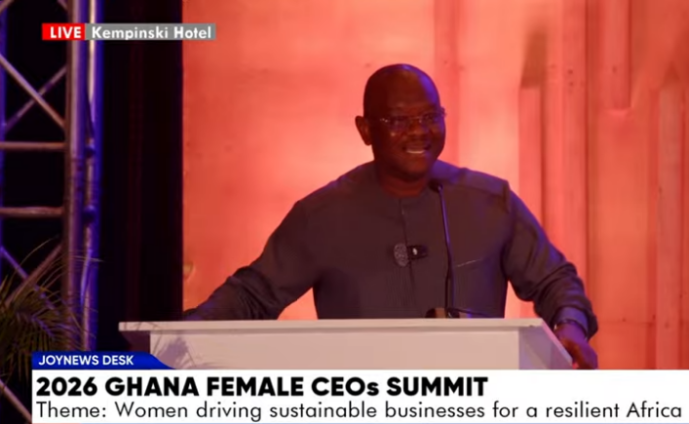
Speaking at the 2026 Ghana Female CEOs Summit held at the Kempinski Hotel Gold Coast City on Thursday, May 7, Mr. Mensah said women remain central to Africa’s economic transformation and sustainable development agenda.
Delivering his address under the theme "Women Driving Sustainable Businesses for a Resilient Africa,” Mr. Mensah said Africa’s growth and resilience would depend largely on how well the continent empowers and supports its women, describing the summit as a strong declaration of the growing influence of African women in shaping the continent’s future.
“Africa will not rise without the full power of its women because when women rise, economies rise; when women lead, communities thrive; and when women build, nations become resilient,” he stated.
According to him, African women are no longer waiting to be included in leadership and economic conversations but are increasingly taking the lead in driving innovation, entrepreneurship, and transformation across multiple sectors.
Mr. Mensah further noted that women across Africa were not merely asking for representation in existing systems but were actively creating new opportunities, industries, and business models capable of transforming the continent’s economic fortunes.
“A declaration that women are not asking for a seat at the table; they are building new tables,” he remarked.
He added that women should no longer be viewed only as future contributors to Africa’s growth because they are already playing a significant role in shaping the continent’s economic and social progress.
“And a declaration that women are not only the future of Africa, but they are shaping Africa now,” he stated.
The Ghana Exim Bank CEO highlighted the growing impact of female entrepreneurship across the continent, indicating that women continue to build businesses, lead industries, and transform economies despite numerous barriers confronting them.
He pointed out that Africa currently records one of the highest rates of female entrepreneurship globally, with women owning or leading a significant proportion of businesses across the continent.
“Africa has the highest rate of female entrepreneurs, and nearly one in four businesses on this continent is owned or led by a woman. This is not a coincidence; this is capacity, this is resilience, this is leadership,” Mr. Mensah emphasised.
Despite the progress made by women entrepreneurs, he expressed concern over the persistent inequalities that continue to affect women-owned businesses, particularly in relation to access to finance, markets, networks, and economic opportunities.
According to him, many women-led enterprises continue to receive significantly lower levels of funding and institutional support compared to businesses owned by men, even when women have demonstrated competence, innovation, and resilience.
He stressed that the challenge facing women entrepreneurs is not a lack of potential or capability, but rather systemic barriers that continue to limit access to critical resources needed for growth and expansion.
“This is not an issue of potential; it is an issue of access,” he said.
Mr. Mensah observed that despite these constraints, African women continue to rise and excel in business and leadership, demonstrating extraordinary determination and perseverance.
He noted that empowering women must be seen as a strategic investment in national and continental development rather than merely a social intervention.
According to him, supporting women entrepreneurs has a direct impact on economic growth, job creation, poverty reduction, and community development.
“When we empower a woman, we do not just build a business, we build a nation,” he stressed.
He called on governments, financial institutions, development organisations, and private sector actors to create inclusive systems that provide women with equal access to funding, mentorship, training, markets, and leadership opportunities.
Latest Stories
-
Premature to call for Sports Minister’s removal while CID probe is ongoing – Ernest Norgbey
2 minutes -
NPP mourns Samuel Arthur Odoi-Sykes
19 minutes -
Stay out of World Cup visa probe to avoid interfering with CID investigations – Ernest Norgbey to politicians
30 minutes -
Bono East Minister inspects ‘Big Push’ roads; contractor on Tankor-Fiema-Busunya road ahead of schedule
33 minutes -
Scrutiny is not disloyalty – Chief of Staff defends serious journalism at 30th GJA Awards launch
34 minutes -
Abuse case: Nana Akua’s husband Harold unable to appear in court after hospital admission – Police
53 minutes -
Mahmud Kabore picks NDC Ashanti Regional Communication Officer nomination forms
60 minutes -
KNUST Career Services pioneer Selina Doe Angmor named among 2026 40 Under 40 honourees
1 hour -
Nana Akua domestic abuse case: Police to arraign husband after hospital discharge
1 hour -
NHIS coverage rises to 70% after government uncaps levy – Health Minister
1 hour -
World Cup visa scandal: I’ll go after anyone who dents Mahama’s gov’t – Ernest Norgbey
1 hour -
GCNM calls for a permanent office complex, more funding for specialist nursing training
1 hour -
Salomey Awiti Baffoe reunites with family after GH¢100k bail
2 hours -
We’ll modernise Accra without losing its heritage – Roads Minister assures Ga Mantse
2 hours -
Rent Control urges Parliament to expedite amendment of outdated rent laws
2 hours