

Audio By Carbonatix
Introduction
Section 208 of the Criminal Offences Act, 1960 (Act 29) criminalises the publication of false news “likely to cause fear and alarm.” For decades, this provision has been invoked to arrest, detain, and prosecute journalists, activists, and commentators. It is a colonial‑era relic that should have been buried alongside criminal and seditious libel in 2001. Its continued existence undermines Ghana’s democratic credentials and the constitutional guarantee of free expression under Article 21 of the 1992 Constitution.
The Misinformation, Disinformation, Hate Speech and Publication of Other Information Bill (2025) proposes repeal of Section 208 and the amendment of Section 76 of the Electronic Communications Act, 2008 (Act 775). I am Samson Lardy ANYENINI. I am eternally opposed to the abusive resort to these provisions to repress free speech. This brief sets out aspects of the case for complete repeal, explains why education about the correct application has failed, and cautions against re‑entrenching criminal liability under new labels.
Abuse in Practice
Section 208 has become the most abused speech‑related provision in Ghana’s criminal law. In the last 17 months alone, I have counted 16 cases of its misuse, often paired with Section 207 on “offensive conduct conducive to breach of the peace.” This represents a sharp escalation compared with roughly a dozen such cases over the eight‑year period preceding January 2025.
Despite repeated caution and education of law enforcement officers, police and prosecutors continue to invoke Section 208 indiscriminately against critical voices. The provision has become a convenient weapon to silence dissent, leading to arbitrary arrests, prolonged detentions, and prosecutions that chill legitimate speech.
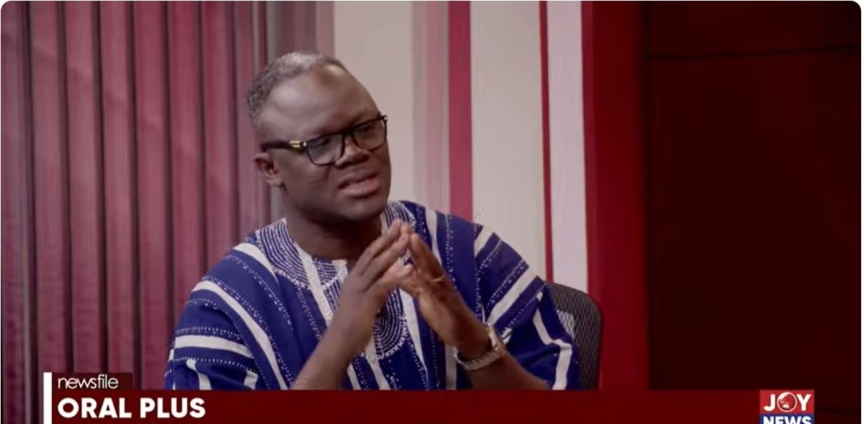
I have spent years engaging experts, including on my weekly news analysis Newsfile and legal clinic The Law platforms, to teach sound interpretation and application. Yet these efforts to provide guidance have failed. The culture of abuse has proven resistant to correction. Education is no longer viable; repeal is the only remedy.
The Abronye Charge Sheet
The prosecution’s amended charge sheet in its case in the Circuit Court, Accra (2026), illustrates the problem - misuse in plain sight. The accused, Kwame Baffoe @ Abronye, is charged under Section 207 for “offensive conduct” and under Section 208 for “publication of false news.” The alleged words, “You are not a Judge but rather a politician and you have covered your hair with a sack and claim you are a Judge”, are plainly insulting and defamatory, but certainly not “false news likely to cause fear and alarm.”
They may offend or ridicule, but they do not threaten public peace or safety in the sense contemplated by Section 208. The proper classification, if any offence arises, would be under the tort of civil defamation, not Section 208. Invoking Section 208 for such speech extends the provision beyond its constitutional limits and revives the spirit of criminal and seditious libel, which Ghana abolished in 2001.
Recklessness vs. Rights
It is undeniable that reckless speech, vitriolic insults, and partisan abuse on social media are growing threats to civility. I have personally been a victim of false allegations, including those made by Abronye.
Yet the proper path is civil litigation, however slow, not criminal detention under Section 208. I have chosen the courts to vindicate my rights because the cure must not be worse than the disease.
Criminalizing speech broadly punishes legitimate commentary alongside irresponsible conduct. Section 208’s vague language and reverse burden of proof make it a blunt instrument that undermines democratic debate and critical journalism.
Executive Silence as Endorsement
The executive may not directly direct prosecutions under Section 208, but its silence in the face of repeated abuse functions as tacit endorsement. In fact, this is pronounced where the attack is directed at an individual who is in government or a politically exposed person.
Each time Section 208 is invoked against journalists or activists and the Executive fails to speak against it, the abuse is legitimized. Silence emboldens police and prosecutors to continue using the provision as a weapon against dissent. That’s where it is not politically exposed persons who instigated or commanded a pliant police officer to effect the arrest.
The recent Gambaga case exemplifies this dynamic. The likelihood of Section 208 being invoked there would have been far lower if the Executive had publicly condemned its misuse. Leadership signals matter: silence is not neutral - it is permissive. How on earth does a citizen questioning whether an MCE is competent to be his local leader qualify under these provisions to attract police invitation?
Repeal is therefore not only a legal necessity but a democratic imperative to break this cycle of silence and suppression. The executive’s voice must affirm constitutionalism, not enable its erosion through quiet acquiescence.
President John Mahama and influential voices in the NDC joined us in condemning similar abuses and accused President Akufo‑Addo of complicity. It must not matter only when your assigns and affiliates are at the receiving end. The NPP, loudest today in condemning these arrests, may have helped the cause if they had spoken not only when in opposition and victims of the continuing abuse of Section 208.
Sister Provisions - Section 76 of Act 775
Section 76 of the Electronic Communications Act, 2008 (Act 775) also criminalises false electronic communications. Like Section 208, it has been used to target social‑media users and dissenters.
Both provisions belong to an era of suppression, not constitutional democracy. Their repeal is necessary to prevent continued abuse under digital conditions.
The MDHI Bill proposes to amend Section 76 by limiting its sanctions to fines only, and no longer prison terms, when there is misinformation or disinformation likely to endanger safety or life‑saving services.
The Path Forward - MDHI Bill 2025
The Bill rightly proposes repeal of Section 208 and amendment of Section 76. This is the correct direction, provided the Bill does not reintroduce vague offences that fetter free speech undemocratically.
Regulation of the internet and social‑media abuse must be precise, proportionate, and consistent with constitutional and international standards. Civil remedies, correction orders, and narrowly tailored criminal provisions for intentional harm are sufficient. International standards, especially Article 19 of the ICCPR, require restrictions on speech to be necessary, proportionate, and narrowly tailored. The provisions under discussion fail every one of these tests. Sweeping offences are disproportionate and unconstitutional.
We have offered constructive reviews and trust that Parliament will diligently ensure that the MDHI Bill does not replicate the defects of these repressive provisions under a new guise.
Conclusion
Repeal of Section 208 is not about excusing recklessness; it is about protecting democracy. The law has been abused beyond repair. The executive’s silence has legitimized its misuse, and education about the proper application has failed. Ghana must act quickly to modernize its legal framework, regulate social media responsibly, and bury colonial‑era speech offences once and for all.
Repeal is not merely a legal reform; it is a democratic imperative. It signals Ghana’s commitment to free expression, constitutionalism, and the rule of law. The time to act is now.
And that’s My Take, just a bit about my advocacy for repeal of section 208 of Act 29 and related provisions.
Latest Stories
-
GNFS contains fire outbreak at Teshie Lekma Road near Lekma Hospital
6 hours -
Samia Nkrumah rejects the narrative that Ghanaians were happy after Nkrumah’s overthrow
7 hours -
A Mother’s pain: Tribute by Ivan Baidoo’s mother
7 hours -
‘Forgive us for staying away’ — Samia Nkrumah leads family back to Nkroful, pledges to preserve Nkrumah’s legacy
8 hours -
Ernest Nuamah scores twice as Lyon beat Rennes
8 hours -
‘My dear Ivan’ – A father’s tribute to a son tragically killed
8 hours -
GNPC Explorco advances Voltaian Basin drilling preparations with 13.5km access road
8 hours -
Cabinet approves facility manager for Borteyman Sports Complex – Kofi Adams
9 hours -
Sanitation is improving; critics may be ‘living in another world’ – Salaga South MP replies Bekwai MP
9 hours -
Government must do more to tackle sanitation crisis – Bekwai MP
9 hours -
World Cleanup Day: GFF begins sanitation education in local communities
9 hours -
EU Ambassador, IGP discuss stronger cooperation on policing and security
9 hours -
Africa Nations Volleyball Championship: Ghana set up quarterfinal clash with Cameroon after beating Chad
9 hours -
Meet Dr Benjamin Appiah Osei — Ghana’s three-time tourism awards winner
10 hours -
UEFA & CONCACAF demand Fifa pays $10m to all 211 members
10 hours