

Audio By Carbonatix
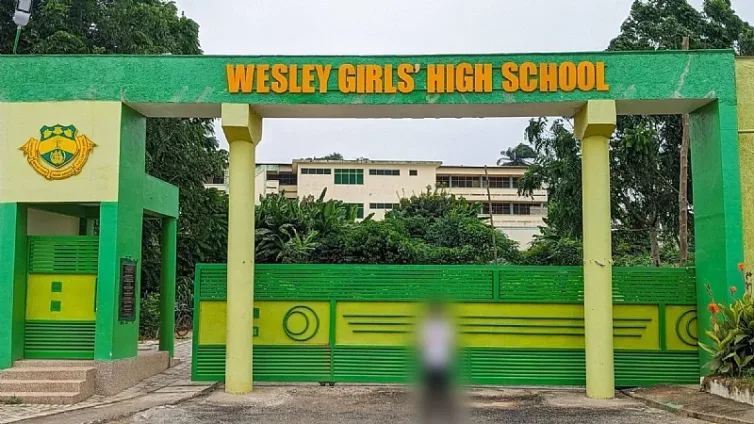
The Supreme Court has granted an application by the Trustees of the Methodist Church Ghana to be joined as defendants in the ongoing legal challenge over the religious policies of the Wesley Girls’ High School in Cape Coast.
JoyNews' Fatawu Bayaga reported on Tuesday, May 19, that the decision by the apex court is expected to broaden the scope of the case, which has generated significant national debate over religious freedoms, students’ rights and the management of mission schools in Ghana.
The suit was filed by private legal practitioner Shaffic Osman, who is seeking constitutional interpretation and enforcement in relation to certain religious practices and regulations at the prestigious Methodist institution.
The plaintiff is challenging policies enforced by the school, which allegedly prohibit Muslim students from wearing the hijab, observing fasting during Ramadan and undertaking Islamic prayers on campus while requiring all students to participate in Christian worship activities.
Counsel for the Trustees of the Methodist Church Ghana argued before the court that although the church does not directly administer the day-to-day affairs of the school, any judicial determination against Wesley Girls’ High School would ultimately affect the Methodist Church as the founding body of the institution.
The Trustees therefore maintained that their inclusion in the proceedings was necessary to ensure that all matters arising from the dispute would be comprehensively addressed and conclusively determined.
Lead counsel for the plaintiff, Abdul Aziz Gomda, opposed the application, contending that the Board of Governors of the school was already a party to the case and capable of adequately representing the interests of the institution before the court.
He argued that joining the Trustees of the Methodist Church would be unnecessary and would not materially assist the adjudication of the matter.
However, the Deputy Attorney-General and Minister of Justice, Justice Srem-Sai, who represented the Attorney-General’s Department, did not oppose the application.
He submitted that the request by the Trustees was understandable in view of the Methodist Church’s ownership and historical relationship with the school, despite the institution being publicly funded and supervised by the state through the Ghana Education Service (GES).
Delivering its ruling, the seven-member panel of the Supreme Court, presided over by the Chief Justice, Justice Paul Baffoe-Bonnie, held that the participation of the Methodist Church Trustees would help bring finality to the dispute.
Following the ruling, the parties to the suit are now the Board of Governors of Wesley Girls’ High School as the first defendant, the Ghana Education Service as the second defendant, the Attorney-General as the third defendant, and the Trustees of the Methodist Church Ghana as the fourth defendant.
The court subsequently adjourned the matter sine die.
The case is the latest development in a long-running national controversy surrounding religious accommodation in mission schools.
The debate first gained national prominence in 2021 after reports emerged that a Muslim student at Wesley Girls’ High School had allegedly been prevented from observing Ramadan fasting on health and institutional grounds.
The development triggered widespread public discourse involving religious leaders, educationists, civil society organisations and policymakers over the balance between religious freedoms guaranteed under the Constitution and the traditional ethos of mission-founded schools.
At the height of the controversy, the Ghana Education Service directed schools to respect the religious rights of students, including the right of Muslim students to fast.
However, the matter has continued to generate legal and constitutional questions regarding the extent to which mission schools can enforce institutional religious practices while operating within Ghana’s public education system.
s.
Latest Stories
-
Sentuo offers fuel supply reassurance as NPA sees steady output through December
9 minutes -
Ghanaian smock showcased at Lesotho Tourism Summit
35 minutes -
Four pupils to one desk: The painful plight of schools in New Juaben North
1 hour -
Ipswich launch investigation into racist abuse of Abdul Fatawu
1 hour -
Arrest of Techiman nurse is purely political persecution – ‘Ghana Jollof’
1 hour -
Isak nets winner as Liverpool edge Bournemouth
2 hours -
I dare gov’t of Ghana to extradite me; they can never do it – ‘Ghana Jollof’ speaks
2 hours -
Semenyo scores twice as Manchester City beat Sunderland 5-3 in eight-goal thriller
2 hours -
Parliament calls for government-private sector collaboration to improve waste management
2 hours -
Volta Region described as cleanest so far in Parliament’s nationwide sanitation monitoring
2 hours -
Parliament urges MMDAs to enforce sanitation bylaws to curb indiscriminate waste disposal
2 hours -
Mohammed Kudus drops out of Ghana squad for AFCON 2027 qualifiers against Côte d’Ivoire and Gambia
3 hours -
Africa World Airlines unveils first Embraer E190 as part of 10-aircraft fleet expansion
4 hours -
Civilian hospitalised after alleged machete attack by prison officers, inmates
4 hours -
Toobu rejects calls to recall Parliament over 3.9-tonne cocaine shipment
5 hours