

Audio By Carbonatix
African climate and policy experts are calling for reforms to regulations and funding to climate issues. They warned that current frameworks could slow investment, weaken industrialisation, and reduce Africa’s global competitiveness in the climate financing space.
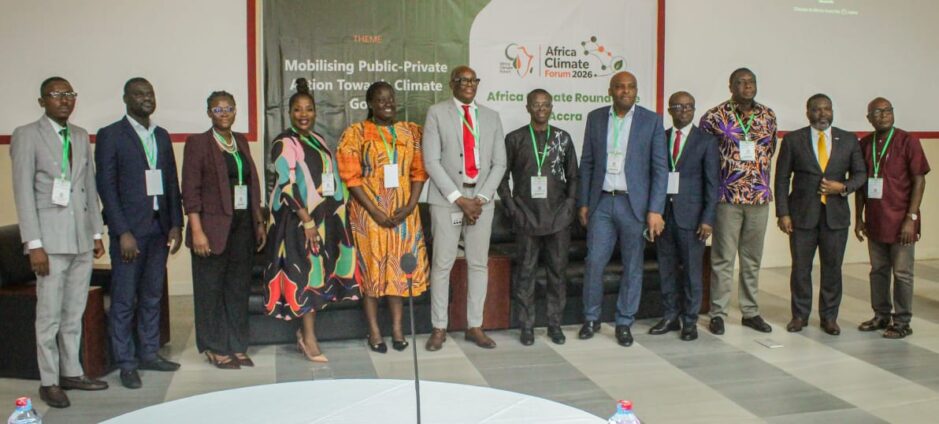
Speaking at the Africa Climate Roundtable, Convener of the Africa Climate Forum, Prof. George Nwangwu, said regulation must be designed not only to attract investment but also to protect domestic industries and ensure fair economic outcomes for African countries. He explained that as global competition for capital intensifies, African countries must move toward more enabling and strategic regulatory frameworks.
“Regulation is always very important. It can either catalyse investment and trade, or it can be a barrier to trade and investments. There are more enabling regulations now, but the competition for investment is heating up across the world. Africa really needs to have the type of regulations that encourage investment within Africa,” he said.
Prof. Nwangwu stressed that investment attraction should not come at the expense of local economic protection, warning that weak policy frameworks could deepen dependency on external value chains. On Africa’s trade structure, he criticised the continent’s continued reliance on raw commodity exports, arguing that it limits value creation and industrial expansion. He further stressed the need for stronger local processing capacity across African economies.
“We must ensure that regulations also protect our own industries. As much as we want investment, we want good investments and fair deals that protect our jobs and protect our economies. Ghana exports its cocoa to Switzerland; they turn it into chocolate and then we buy it back. What we’ve done is we’ve actually exported the capital to them. We should be able to create those finished products here so that we can grow our economies a lot better,” he noted.
Meanwhile, CEO of TSA Sustainability, Dr. Ing. Shelter Lotsu, said African businesses must urgently position themselves to benefit from emerging climate finance opportunities, particularly as governments roll out new policy frameworks such as Ghana’s Green Taxonomy. He noted that Africa currently receives only a small fraction of global climate funding and urged stronger engagement between businesses, policymakers, and financial institutions.
“The government of Ghana has made climate issues very topical. It is said that Africa has only just one percent of the multi-billion dollars funding available,” he said.
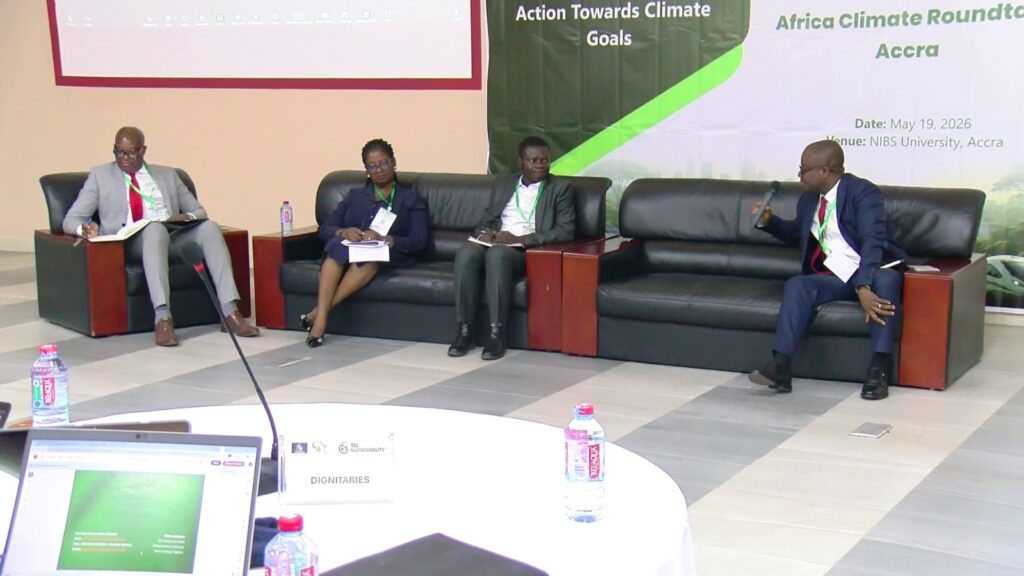
Dr. Lotsu also emphasised the growing importance of sustainability compliance, warning that environmental reporting is becoming increasingly mandatory for companies. He added that firms must adapt to new emissions reporting standards and transition toward cleaner energy systems.
“If you are emitting a lot of carbon into the atmosphere, it is your responsibility to take action. Next year, it is going to be mandatory for companies to report in accordance with international standards on Scope 1 and Scope 2 emissions,” he said.
The Accra roundtable is expected to feed into a larger continental forum scheduled for Abuja in October 2026, where stakeholders will consolidate discussions into actionable policy and financing frameworks for Africa’s climate and economic transformation agenda.
Latest Stories
-
When market traders want to lose weight: What are they doing and who are they listening to?
16 minutes -
‘I made the decision for him’ – Adebayor on Senaya representing Ghana
41 minutes -
Livestream: Ecobank-Joynews financial dialogue series
48 minutes -
AFCON 2027Q: Ghana face ‘difficult’ Ivory Coast clash without Kudus – Adebayor
1 hour -
Daily Insight for CEOs: Understanding the Competitive Landscape
1 hour -
IFC partners with Absa Bank Ghana and Complete Farmer to expand agricultural finance in Ghana
1 hour -
The thing that transforms An Image into Art is The Point of View
2 hours -
Mahama: Ghana’s health reset will prioritise local drug production
2 hours -
Mahama lists maternal and child health as first test of Accra Reset
2 hours -
Beyond the GH¢500b Target: A legislative blueprint to protect Ghana’s workforce (Part 2)
2 hours -
Alan Kyerematen explains why he contested 2024 election under Movement for Change
2 hours -
+233 to host Pat Thomas’ 80th birthday concert
2 hours -
EPA warns climate resilience plans face $22.6bn financing demand
2 hours -
Today’s front pages: Tuesday, September 22, 2026
2 hours -
Alan: ‘NPP has abandoned values of UP tradition, but I believe in those values’
2 hours