

Audio By Carbonatix
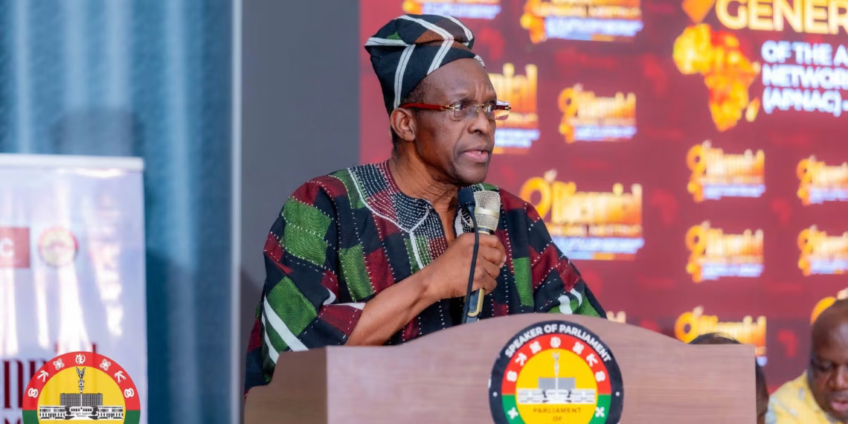
The Speaker of Parliament, Rt. Hon. Alban Sumana Kingsford Bagbin, has cleared the air regarding the limits of parliamentary immunity, stating categorically that national security agencies are under no legal obligation to seek his prior permission before arresting or inviting a Member of Parliament for criminal questioning.
Addressing lawmakers during a plenary sitting of the Second Meeting of the Second Session of Parliament on Thursday, 21 May 2026, the Speaker strongly dismantled a growing, widespread misconception that the head of the legislature must grant a clearance certificate before a Member of Parliament can face law enforcement actions.
Mr Bagbin explained that the relationship between the police, state intelligence agencies, and the legislature is governed by transparent constitutional protocols rooted in notification, not permission.
The Speaker clarified that his office’s real role is strictly to be formally and immediately notified of any criminal processing involving an MP. This official communication must detail the structural circumstances and specific criminal allegations that informed the state's intervention.
Once that notification is received, it allows the leadership of the house to properly assess whether parliamentary privilege or specific constitutional immunity applies to the specific situation—such as whether the lawmaker was intercepted while en route to or returning from official parliamentary duties.
The Speaker’s high-profile clarification comes at a time when public and media discussions have intensified regarding how much protection the 1992 Constitution gives to sitting legislators faced with criminal investigations.
Putting the legal argument to rest on the floor of the house, Rt. Hon. Alban Bagbin stated unequivocally:
“It’s not for the security agents to seek my permission before arresting or inviting a member of parliament for questioning. It’s not. It’s for them to inform me and include the circumstances or the allegations that have created the suspicion.”
By setting this clear boundary, the Speaker reminded both state prosecutors and members of the house that the rule of law applies to all citizens equally.
Parliamentary immunity, he indicated, was never designed to turn legislators into a class of untouchables or to create an obstacle course for the police administration when dealing with reasonable suspicion of crime.
The declaration is expected to streamline current and future law enforcement operations involving politically exposed persons, ensuring that while the dignity and independence of Parliament are maintained through formal institutional communication, the course of criminal justice is not delayed by administrative bottlenecks.
Latest Stories
-
FIFA, CAF halt Nigeria football elections over governance crisis
7 minutes -
13-year-old Prince George set for first day at Eton College
13 minutes -
NPP national election: ‘Something shocking is about to happen in Kumasi’ – Sylvester Tetteh
21 minutes -
‘Judge me on my commitment, not whom I supported during presidential primary’ – Sylvester Tetteh to NPP
23 minutes -
Family demands answers after dialysis patient dies at TTH during power outage
47 minutes -
Foreign Ministry repatriates nearly 7,000 distressed Ghanaians since 2025 – Ablakwa
1 hour -
Gender Ministry steps up community campaign against social vices
2 hours -
Police bust armed robbery gang targeting gold dealers, mining sites in Ashanti and Western regions
2 hours -
Galamsey causes 1 in 4 fibre cuts in Ghana – Sam George
2 hours -
Police link Labone bank robbery suspects to earlier attacks on customers
2 hours -
Accra-Kumasi Expressway will be Mahama’s major road legacy – Agbodza
2 hours -
Ghana spends over US$20m repairing fibre cuts – Sam George
2 hours -
GACL wins two awards at ACI World Airport Experience Summit
2 hours -
Tomato prices to drop sharply in coming weeks – John Dumelo
2 hours -
Ashanti Region crowned 2026 MTN Elite U-19 champions after seven-goal thriller
2 hours