

Audio By Carbonatix
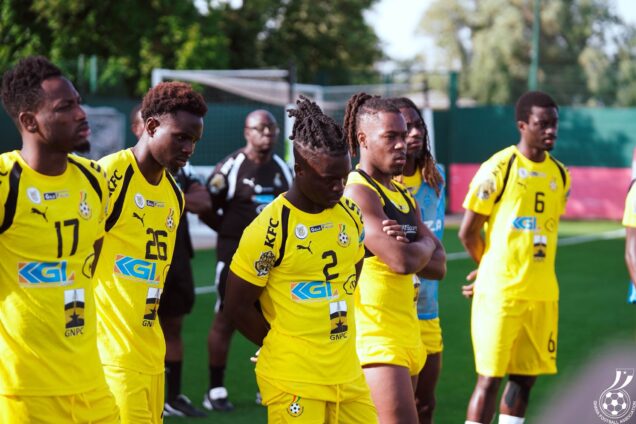
The Ghana Football Association finally announced the Black Stars' 26-man squad just before the midnight deadline ahead of the FIFA World Cup.
There were virtually no surprises in Carlos Queiroz's final selection.
The Portuguese coach omitted goalkeepers Paul Reverson and Solomon Agbasi from the provisional squad named for the pre-World Cup friendlies against Wales and Jamaica [yet to be confirmed by GFA], while retaining the remaining players.
"Trust that this 26/27 players, under this specific circumstances, are the ones I do believe are ready as a team to perform better for the national team," Queiroz said after unveiling his final squad.
He added: "I can't put 12 wingers, we have to create the balance and harmony in the team."
But has Queiroz struck the right balance between form, experience and squad depth? And more importantly, is this the strongest Black Stars squad available for the World Cup?
Goalkeepers - Benjamin Asare, Lawrence Ati-Zigi, Joseph Anang
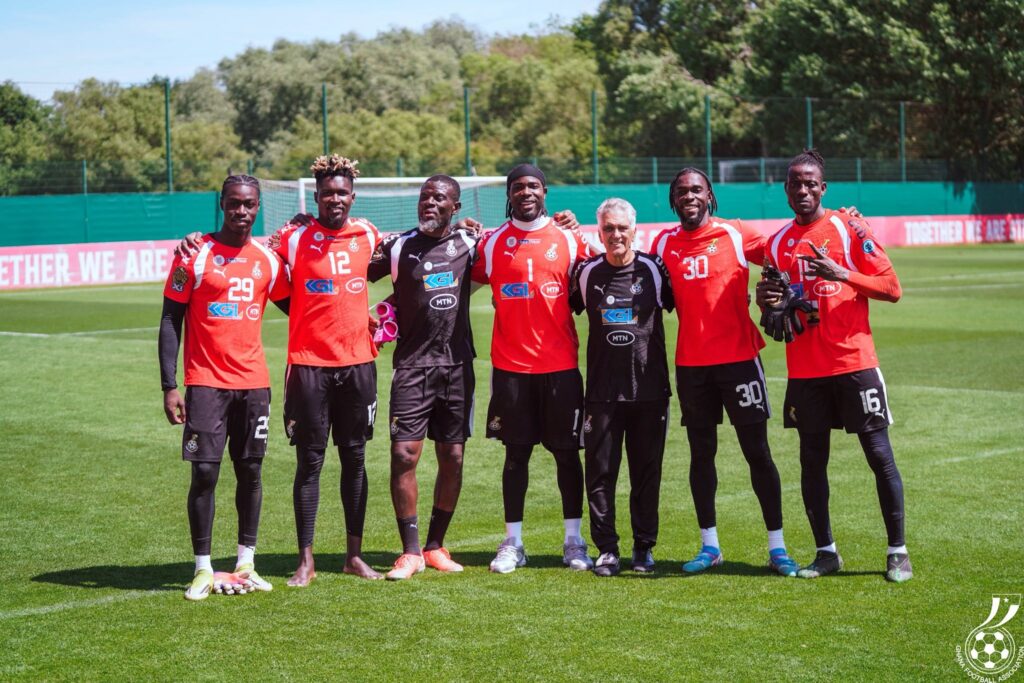
Hearts of Oak goalkeeper Benjamin Asare, the only home-based player in the squad, has quietly grown into one of the Black Stars’ most reliable options between the posts. Trusted during the World Cup qualifiers under former coach Otto Addo, his inclusion suggests that confidence in his abilities has not faded.
He finished as the third goalkeeper with the most clean sheets (14) in the Ghana Premier League, a record that strengthens his case.
Lawrence Ati-Zigi, Ghana’s starter at the 2022 World Cup in Qatar, also retains his place. The FC St. Gallen shot-stopper has rediscovered strong form, winning the Swiss Cup and being named the club’s Player of the Month for April.
Joseph Anang’s inclusion adds another layer of intrigue, as he becomes the first player from Irish club St Patrick’s Athletic to be selected for a FIFA World Cup squad.
Defenders – Baba Abdul Rahman, Gideon Mensah, Marvin Senaya, Alidu Seidu, Abdul Mumin, Jerome Opoku, Jonas Adjetey, Kojo Oppong Peprah, Derrick Luckassen
Baba Abdul Rahman’s return after a three-year absence is one of the most talked-about decisions in the squad, coming after a period of heavy criticism from supporters. His recall has divided opinion, but also adds experience to the defensive line.
Gideon Mensah is set for a second World Cup appearance, continuing his eight-year journey with the national team. Alidu Seidu returns at a crucial time after recovering from injury, offering versatility and energy.
Elsewhere, Jonas Adjetey, Kojo Oppong Peprah, Derrick Luckassen, Jerome Opoku and Abdul Mumin are all set for their maiden appearance on football’s biggest stage.
Midfielders – Elisha Owusu, Thomas Partey, Kwasi Sibo, Augustine Boakye, Caleb Yirenkyi, Abdul Fatawu Issahaku, Kamal Deen Sulemana
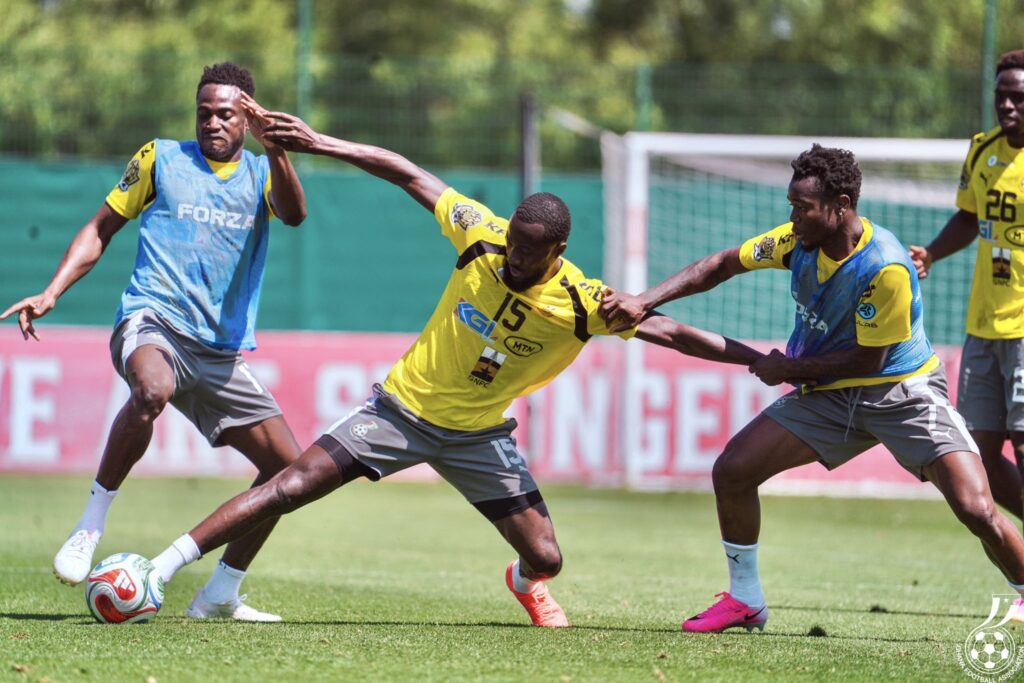
The midfield remains a blend of continuity and evolution.
Elisha Owusu, Thomas Partey, Kamal Deen Sulemana and Abdul Fatawu Issahaku all keep their places from the 2022 World Cup squad, providing Ghana with experience and proven international pedigree.
Caleb Yirenkyi earns his place after consistent recent performances - even featuring at right-back - in recent matches.
Augustine Boakye also earned his maiden call-up after impressing for Saint Etienne.
Forwards – Christopher Bonsu Baah, Ernest Nuamah, Antoine Semenyo, Brandon Thomas-Asante, Prince Kwabena Adu, Inaki Williams, Jordan Ayew
Christopher Bonsu Baah is set for his first World Cup, alongside Brandon Thomas-Asante, Prince Kwabena Adu and Ernest Nuamah, a group representing the next wave of Ghana’s attacking options on the global stage.
Antoine Semenyo is expected to lead the line after an impressive season at Bournemouth and Manchester City, where his directness, work rate and goals have stood out in the Premier League.
Experience is also heavily relied upon, with Inaki Williams and captain Jordan Ayew providing leadership in the final third.
Major absentees
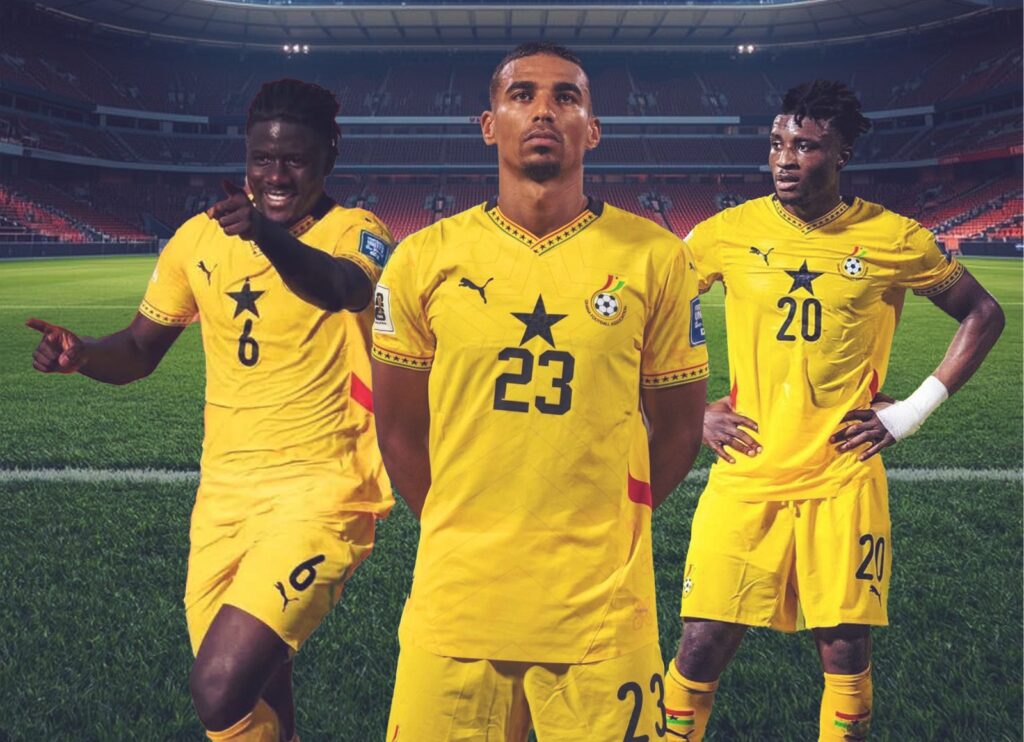
Mohammed Kudus [hamstring injury], Alexander Djiku [hamstring injury], Mohammed Salisu [anterior Cruciate Ligament (ACL) injury], Abu Francis [fractured bones], Joseph Paintsil, Majeed Ashimeru, Ibrahim Osman, Ibrahim Sulemana, Andre Ayew, Tariq Lamptey, Manaf Nurudeen, Prince Owusu, Razak Simpson.
Analysis
The goalkeeping department has the right balance of form and experience and is arguably the most stable area of the squad. Led by Asare, who was crucial during the qualifiers with five clean sheets in six matches, Ghana appear to have their safest pair of hands between the posts despite concerns over how he might fare against higher-rated opponents on the grand stage.
The actual problem could be in defence.
Following the absence of Mohammed Salisu and Alexander Djiku, coach Queiroz could be forced to start a back four that has never played together at the grand stage of football in the opener against Panama.
Djiku's replacement, Derrick Luckassen, could also be a concern given his disciplinary record of more than 70 yellow cards and 12 red cards during his career.
It is also unclear whether Thomas Partey can be at his very best for Ghana given the legal cloud hovering over his head. The middle of the park also lacks the brain of a midfield progressor like Majeed Ashimeru.
Augustine Boakye could slot into the number 10 role left vacant by Mohammed Kudus, but it remains to be seen whether the 25-year-old can storm the tournament on what would be his first major international competition.
The top end of the pitch is equally problematic, with only Jordan Ayew standing head and shoulders above the rest in terms of numbers and experience in the national shirt. However, the captain will need help from those around him, many of whom have yet to truly shine for Ghana.
Semenyo, despite enjoying an outstanding season at club level with 21 goals, has yet to fully blossom for the Black Stars with three goals in 32 caps. Inaki Williams has also struggled to replicate his club form in Ghana colours with two goals in 25 matches. However, there could be an opportunity for Prince Kwabena Adu, Brandon Thomas-Asante, Christopher Bonsu Baah and Ernest Nuamah, all of whom are heading to a global showpiece for the first time.
On paper, Queiroz appears to have assembled a squad with a fair blend of youth and experience.
Whether it is the best Black Stars team available, however, will ultimately be judged by what happens in North America.
Latest Stories
-
I do not see myself as better than anyone – NPP’s 1st Vice Chair Kojo Bamba
27 minutes -
Police blur the line between invitations and arrests – Reindorf Twumasi Ankrah
1 hour -
Turning invitations into arrests is making citizens reluctant to assist police – Twumasi Ankrah
2 hours -
The Traffitech-GH SMS spot-fine system: The good, the sad, and the funny – Bright Simons writes
2 hours -
Hawa Koomson pledges experienced and mature leadership of NPP women’s wing
3 hours -
Young woman found dead at Kasoa Peace Town
3 hours -
Playback: The Law examined lawful arrest in Ghana
4 hours -
Mahama urges African governments to treat healthcare as an investment, not budget cost
4 hours -
Bawumia congratulates John Boadu and new NPP executives, pledges support ahead of 2028
4 hours -
Aksa Energy delegation pays courtesy call on GRA Commissioner-General
4 hours -
‘No talent should be left out’ – Bawumia pledges inclusive NPP campaign for 2028
5 hours -
Prof. Mike Oquaye recounts how he blocked the Special Prosecutor’s attempt to arrest Bawku Central MP
5 hours -
Make health sovereignty a priority for Africa – Mahama
5 hours -
Dorimon Naa, Wa West DCE lead massive clean-up exercise; threaten sanctions against recalcitrant residents
5 hours -
Photos from Adom FM Y2K Jam
5 hours