

Audio By Carbonatix
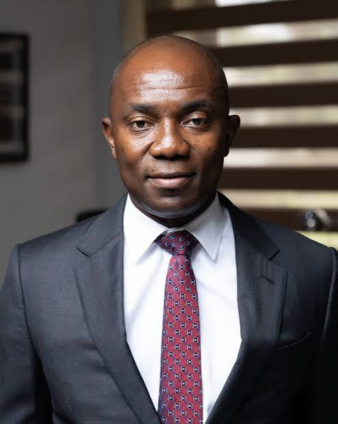
The Chief Executive Officer of the Ghana Chamber of Bulk Oil Distributors (CBOD), Dr Patrick Kwaku Ofori, has called for stable policies, greater innovation, and sustained investment to strengthen Ghana's downstream petroleum industry and position the country as the leading petroleum and logistics hub in West Africa.
Speaking at the opening of the 7th Ghana International Petroleum Conference (GhIPCon 2026) in Accra, Dr Ofori said the country's downstream petroleum sector remains a critical pillar of economic growth, providing the energy that powers industries, agriculture, healthcare, transportation, and commerce.
Addressing participants under the theme "Building a Resilient Downstream: Policy, Innovation, and Investment for Growth," he said the sector must adapt to an increasingly complex global environment characterised by geopolitical tensions, supply chain disruptions, exchange rate volatility, and rapidly evolving energy markets.
"The downstream petroleum sector does far more than distribute fuel. It keeps our economy moving. It powers our industries, supports our farmers, enables healthcare, facilitates trade, and connects communities across the country. Every day, millions of Ghanaians depend on a downstream sector that is reliable, efficient, and responsive," he said.
According to him, recent global developments have reinforced the need for resilience across the petroleum value chain.
"Resilience is no longer simply about responding to crises. It is about anticipating them, preparing for them, adapting to them, and emerging stronger because of them. Resilience is not measured by how we perform when conditions are favourable; it is measured by how prepared we are when they are not."
Dr Ofori identified policy certainty, technological innovation, and infrastructure investment as the three critical pillars needed to build a resilient downstream industry.
On policy, he stressed that predictable regulations and consistent government policies remain essential to attracting both local and foreign investment.
"Investors value certainty. Businesses thrive where policies are consistent, regulations are transparent, and institutions are predictable. A stable policy environment encourages investment, promotes healthy competition, protects consumers, and gives businesses the confidence to plan for the future."
He noted that good policy should go beyond regulation by creating an environment that enables businesses to innovate, expand, and remain competitive.
Touching on innovation, Dr Ofori said digital transformation is rapidly reshaping the petroleum industry and urged companies to embrace emerging technologies.
"From digital systems and smarter logistics to automation, predictive analytics, artificial intelligence, and cleaner technologies, innovation is helping us improve efficiency, strengthen safety, reduce costs and make better decisions. It is no longer a competitive advantage; it is a business necessity."
He further called for strategic investments in petroleum infrastructure to enhance energy security and improve operational efficiency.
"We must continue investing in modern storage facilities, strategic petroleum reserves, local refining capacity, transport corridors, and the road networks that connect our ports, depots and markets. These investments will improve supply reliability, lower logistics costs, create jobs, stimulate industrialisation and strengthen Ghana's energy security."
Beyond meeting domestic demand, Dr. Ofori said Ghana should pursue a broader ambition of becoming the preferred downstream petroleum and logistics hub for West Africa.
"Our goal should not simply be to keep pace with change. Our goal should be to position Ghana as the downstream petroleum and logistics hub for West Africa, a country recognised for reliability, efficiency, innovation, and investment. That ambition is achievable if the government and the private sector continue to work together with a shared sense of purpose."
He also underscored the importance of balancing economic growth with environmental sustainability, arguing that cleaner fuels and responsible investments are essential to Ghana's long-term energy transition.
"Economic growth and environmental responsibility are not competing priorities; they are mutually reinforcing. Through cleaner fuels, improved operational practices, lower-emission technologies, and responsible investments, the downstream sector can make a meaningful contribution to Ghana's energy transition while continuing to power economic development."
Dr. Ofori reaffirmed CBOD's commitment to collaborating with government, regulators, development partners and industry stakeholders to build a stronger and more resilient petroleum sector.
"Building resilience is not the responsibility of any one institution. It is a shared responsibility that demands collaboration, trust, innovation, and sustained commitment from all of us."
He urged participants to ensure that discussions at the two-day conference translate into practical actions capable of strengthening the industry and enhancing Ghana's competitiveness.
"The future of Ghana's downstream petroleum industry will not be shaped by circumstance. It will be shaped by the decisions we make, the partnerships we build, and the investments we choose to make today."
The 7th Ghana International Petroleum Conference brought together policymakers, regulators, oil marketing companies, bulk oil distributors, investors, and development partners to deliberate on strategies for building a more resilient, competitive, and sustainable downstream petroleum sector capable of supporting Ghana's long-term economic transformation.
Latest Stories
-
Côte d’Ivoire 2-0 Ghana: Sibo earns lowest mark as Boakye takes opportunity – Black Stars ratings
6 minutes -
Stance considering autonomy under Moroccan sovereignty ‘could constitute most feasible solution’
27 minutes -
AFCON 2027Q: Black Stars open campaign with defeat to Ivory Coast in Bouaké
59 minutes -
From construction site to top of class: Daniel Doe emerges Legon’s best Computer Engineering student
1 hour -
Mahama: Peaceful political transitions prove democracy can work in Africa
1 hour -
“The law must work” – NDC rejects claims Salomey Baffoe’s bail denial is diversion from cocaine scandal
1 hour -
Police arrest two suspects over murder of Senegalese goalkeeper
1 hour -
TVET Service, Bank of Ghana explore partnership to boost skills development
2 hours -
Ghana TVET Service, OR Foundation partner to promote sustainable fashion
2 hours -
Achimota, Accra Academy, PRESEC Osu qualify for next stage of National Public Speaking Event
3 hours -
NCPTA challenges GES directive on PTA dues, cites High Court injunction
3 hours -
Majority opposes parliamentary probe into cocaine busts while investigations continue
3 hours -
Salomey Baffoe detention is a facade to divert attention from cocaine scandal – Weija-Gbawe MP
3 hours -
Francis-Xavier Sosu is doing well after GIMPA incident – Office
3 hours -
Deputy Minority Leader appeals to First Lady, Vice President over Salomey Baffoe’s detention
3 hours