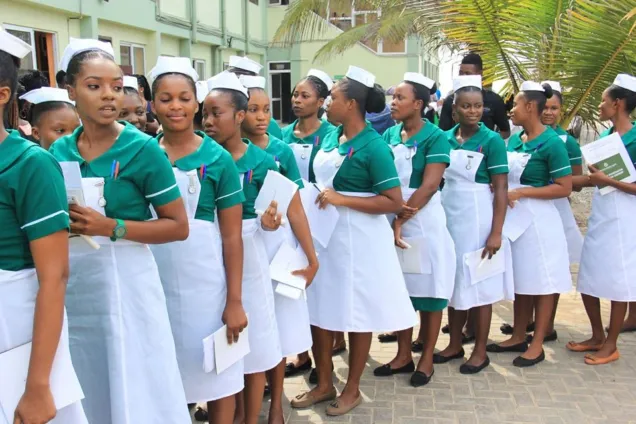
The Nursing and Midwifery Council (NMC) has dismissed claims that Ghana has produced more nurses and midwives than the health sector requires, insisting that the country's unemployment challenge among health professionals stems from slow recruitment rather than an oversupply of graduates.
According to the Council, Ghana still requires more than 100,000 nurses to improve its nurse-to-patient ratio, but limited financial clearance and inadequate health infrastructure have constrained the government's ability to employ qualified professionals.
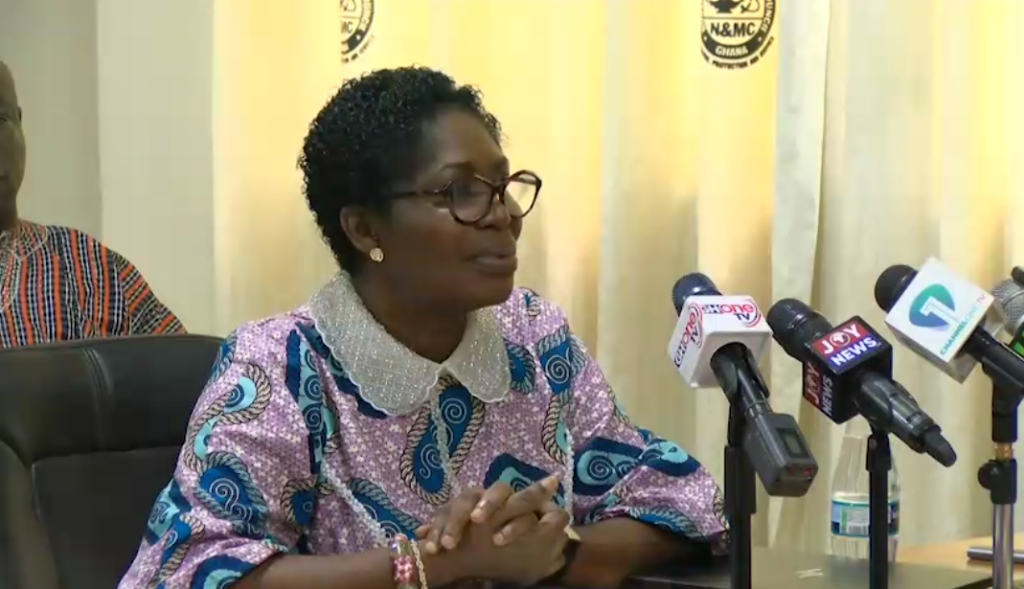
The Registrar of the Nursing and Midwifery Council, Philomena Woolley, made the remarks when the Council hosted Parliament's Health Committee during a meeting to discuss challenges facing the nursing and midwifery profession.
"I wouldn't say that we are having overproduction because when you look at the numbers, professional nurses are not that many. And also, it is the financial clearance that we do not have. Most of the hospitals when you go, they are empty and the nurses are not there."
She said many trained nurses remain unemployed despite staffing shortages in health facilities across the country.
"Most of them are in the homes and therefore if we are able to engage all of them and also distribute them well, we wouldn't have to say that we have overproduced."
Mrs. Woolley noted that Ghana's nurse-to-patient ratio remains far from ideal, particularly in specialised areas such as critical care, where staffing demands are even higher.
"And because when you look at the requirements, I think it's one nurse up to 830 which is even too high for us and look it depends on the condition because if you look at the critical care, sometimes it's one to one patients and therefore we need the nurses."
She maintained that increasing recruitment and expanding healthcare infrastructure would address the unemployment situation.
"If we have the financial clearance and we have the infrastructure, I would not say that nurses and midwives have been over produced."
Meanwhile, the Nursing and Midwifery Council says it is strengthening efforts to improve the attitudes and professional conduct of nurses and midwives through emotional intelligence training.
Mrs. Woolley acknowledged concerns about the behaviour of some health professionals and said the Council has introduced modules on attitude and communication into the nursing curriculum while expanding continuous professional development programmes.
"The attitude of nurses and midwives currently in here and there. That is why we have put attitude in the curriculum. And so now how to speak to the patients, how to speak to your own colleague."
She said nurses and midwives must develop stronger interpersonal skills to improve patient care and workplace relationships.
"You should have emotional intelligence to do that. So we continue to bring out CPDs that speaks to attitude for nurses and midwives to change their attitude. And so we continue to do that."
DISCLAIMER: The Views, Comments, Opinions, Contributions and Statements made by Readers and Contributors on this platform do not necessarily represent the views or policy of Multimedia Group Limited.
DISCLAIMER: The Views, Comments, Opinions, Contributions and Statements made by Readers and Contributors on this platform do not necessarily represent the views or policy of Multimedia Group Limited.