

Audio By Carbonatix
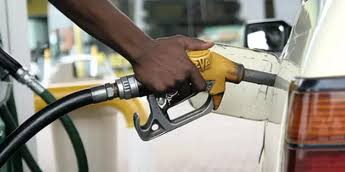
The New Patriotic Party (NPP) has challenged the government over its GH¢2 per litre diesel reduction, demanding answers on how the intervention is being financed and questioning the broader impact of energy sector levies on Ghanaians.
At a press conference in Accra on Tuesday, August 4, Kojo Oppong Nkrumah, Chairman of the NPP Policy Coordination Committee, said the relief must not be assessed in isolation from the Energy Sector Levies (Amendment) Bill passed by Parliament on Friday, July 31, 2026.
"We have called this press conference to speak to three connected developments: the Government's announced GH¢2.00 per litre reduction in diesel prices; the Energy Sector Levies (Amendment) Bill, 2026, passed by Parliament on Friday 31 July; and the World Bank's downgrade of Ghana's Energy Sector Recovery Program," he said.
Oppong Nkrumah acknowledged the hardship that high fuel prices continue to impose on commercial drivers, market women, farmers, fishermen, and ordinary commuters, but cautioned that the facts about the intervention must be clearly understood.
"Let us be accurate about what this intervention is. It cushions part of the increase that has already happened. It does not reverse it, and it does not return households and businesses to where they stood eighteen months ago," he stated.
According to the NPP, petrol prices in January 2025 stood at approximately GH¢15.13 per litre, while diesel sold at around GH¢15.49. By August 3, 2026, GOIL posted petrol at GH¢15.99 per litre and diesel at GH¢19.26 per litre.
Oppong Nkrumah noted that even if the full GH¢2.00 reduction is passed through to the pump, diesel would still stand about 11.4 per cent above its January 2025 level.
He also raised concerns about the Energy Sector Levies (Amendment) Bill, which he said was passed using a certificate of urgency at ten minutes past eleven at night on June 3, 2025, imposing an additional GH¢1.00 on every litre of petroleum products.
"Consider the plain arithmetic. A consumer who has paid GH¢1.00 extra on every litre of petrol and diesel for more than a year now receives, at best, GH¢2.00 back on diesel for a single month, and nothing at all on petrol. The GH¢2.00 reduction is not generosity. It is a partial, temporary return of money already taken from consumers at midnight, while the levy that takes it continues to run," he argued.
The NPP also questioned the cost of the intervention, estimating that the one-month diesel relief would cost approximately GH¢400 million in foregone revenue.
"That GH¢400 million in a single month is money that cannot simultaneously service energy sector debt, maintain roads or reduce the deficit. If the intervention is unbudgeted, it widens the financing gap. If margins owed to industry are deferred, it creates arrears in the petroleum supply chain. There is no free relief. The only question is who pays, and when," Oppong Nkrumah stated.
The party also raised concerns about the Energy Sector Levies (Amendment) Bill passed on Friday, which raised the Energy Sector Shortfall and Debt Repayment Levy on fuel oil by GH¢1.69 per litre and extended the Road Fund Levy to fuel oil.
Oppong Nkrumah said the anti-evasion objective is legitimate, but questioned the implementation framework, including how refunds will be administered and financed.
"Companies must pay upfront and wait. That is a working capital burden on industry, and industry will pass it on," he said.
He posed a direct question to the government: "Will costs previously transferred to consumers be refunded to them, and through what mechanism? If the answer is no, then the refund regime compensates firms while ordinary Ghanaians quietly absorb costs the Minister promised would never reach them."
The NPP also highlighted the World Bank's downgrade of Ghana's Energy Sector Recovery Program from Moderately Satisfactory to Unsatisfactory in June 2026.
"The combined losses of ECG and NEDCo have risen from 1.257 billion dollars in 2022 to 1.517 billion dollars by May 2026, against a target of 525 million dollars for 2027. The reasons cited include stalled reforms, delayed procurement and weak governance. Ghana cannot solve a debt and arrears crisis by creating new hidden revenue losses," Oppong Nkrumah stated.
Demands and Proposals
The NPP put forward a series of demands to the government, including:
- Publication of the full petroleum price build-up and the financing source before implementation
- Capping of the intervention at a disclosed fiscal amount with weekly reporting on litres subsidised and revenue foregone
- Targeted relief for public transport, food distribution, agriculture, and fishing rather than an indefinite universal subsidy
- Application of automatic sunset clauses with objective crude price and exchange rate triggers
- Prompt payment of industry claims to prevent the relief from becoming the next generation of arrears
The party also outlined a four-front strategy, including filing urgent parliamentary questions, tracking and publishing energy sector levy collections, engaging transport unions and consumer groups, and proposing a transparent, rules-based shock-response framework.
"The question we will keep asking, with the Government's own figures in hand, is a simple one: stability for whom? Until Ghanaians get answers, we will not relent," Oppong Nkrumah concluded.
Latest Stories
-
FTBLRLIFE targets Ghana in expansion of global grassroots football network
2 hours -
Former ‘American Idol’ contestant sentenced to life without parole for wife’s murder
3 hours -
Education Ministry commends Ghanaian teachers on World Teachers’ Day 2026
4 hours -
NPP can reconcile with aggrieved members who want to return – Nana Akomea
4 hours -
Tamale Child Deaths: Vehicle owner arrested as IGP deploys homicide team
4 hours -
From ShattaFest to MoMo Fest: Entertainment takes centre stage in youth engagement
4 hours -
Nigerian military aircraft crashes, killing 32
4 hours -
MTN encourages Ghanaians to use MoMo for saving, investing and financial planning
4 hours -
Absa Bank Ghana names Stephen Ato Frimpong as Board Chair
4 hours -
Pickford ‘almost caused crash’ with careless driving
4 hours -
Author and former politician Jeffrey Archer dies aged 86
5 hours -
No education reform can succeed without teachers – Education Ministry
5 hours -
Gauff condemns racist abuse after China Open win
5 hours -
Medvedev disqualified for hitting spectator with ball
5 hours -
Oliseh scores twice in late comeback win for France
5 hours