

Audio By Carbonatix
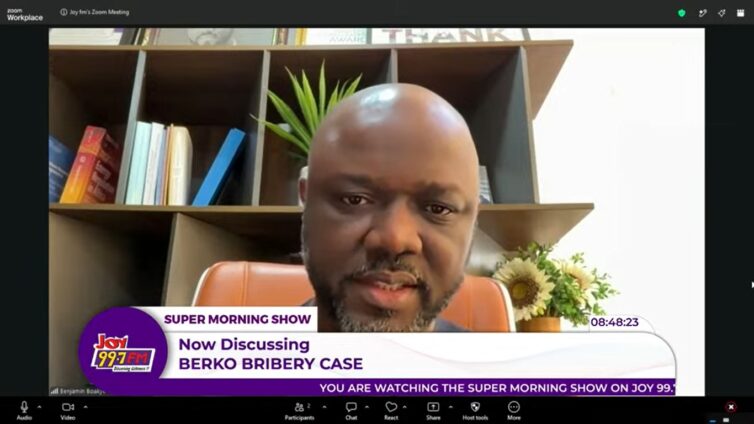
Executive Director of the Africa Centre for Energy Policy (ACEP), Benjamin Boakye, has raised concerns about Parliament’s role in reviewing and approving major contracts, following the corruption case involving former Goldman Sachs banker Timis Berko.
Mr Boakye said the case had exposed weaknesses in the way parliamentary committees scrutinise contracts before they are approved, calling for greater attention to the process to safeguard Ghana’s public institutions.
According to him, he has identified problems with how parliamentary committees handle contracts, particularly the manner in which some agreements are reviewed and subsequently approved.
"When you look at the constitution, 1992, one of the safeguards you have is the approval of parliament, that is to ensure that after it has gone through all the technical details, they (parliament) can assemble the evidence and be able to look into it. We may need to ask whether there is enough capacity in parliament to do it, and also make sure that all the technical work can be properly checked to safeguard the public interest.
My experience over the years is that that part is more problematic because not much technical work goes into it. You have a few people who sit on the committee, and they hijack the whole committee and become more or less the technical people who may just compromise just 30,000 dollars and the entire country is shortchanged," he said on JoyFM's Super Morning Show on Monday, August 10, while discussing the case.
He said strengthening parliamentary scrutiny could help identify potential risks, irregularities and weaknesses in contracts before they progress further.
His comments come amid renewed scrutiny of the Ghanaian dimension of the case involving Mr Berko, who was convicted in the United States over a bribery scheme linked to a Ghanaian power project.
The case has triggered calls for investigations into the roles played by individuals and institutions involved in the transaction.
For Mr Boakye, the focus should not be limited to individual conduct but should also examine the institutional processes that allowed the contract to move through the system.
He said improving parliamentary contract reviews was essential to closing gaps in Ghana’s governance architecture and preventing similar cases in the future.
Latest Stories
-
Conflicts among care providers linked to maternal, neonatal deaths – Expert
9 minutes -
GIS marks 10th TIME conference, champions improved teaching practices
16 minutes -
BRICS Or Balance? What Ghana’s bid really means
42 minutes -
GPRTU wants full TRAFFITECH-GH implementation to start in 2027
1 hour -
Mahama announces plans to import electric wheelchairs for PWDs
1 hour -
KGL U17 Colts 2026: Western beat Prempeh Elite Academy to set up final final with Greater Accra Region
1 hour -
Late Solanke strike salvages 10-man Spurs draw at Man United
2 hours -
Gender Ministry to monitor welfare of Nana Akua Addo’s children amid domestic violence case
2 hours -
Benedict Okyere Yeboah: Ghana’s football problem goes beyond sacking a coach
2 hours -
GPL 2026/27: Darkwah Wiafe’s winner sees All Blacks beat Kotoko
2 hours -
ITF World Tour : Patel Wins Boys’ Singles Final at J100 Accra
2 hours -
Ghana must pursue BRICS partnership if it brings economic benefits – Kpebu
2 hours -
Success and Wright Claims J100 Accra Girls’ Doubles Championship
2 hours -
ITF J100: America’s Wright wins J100 Accra Girls’ Singles Title
2 hours -
Expedition hopes to find aviator Amelia Earhart’s plane on remote island
2 hours