

Audio By Carbonatix
The Association of Ghana Industries (AGI) has raised concerns over rising electricity costs facing businesses, warning that some companies have been hit with electricity tariff adjustments of more than 40%.
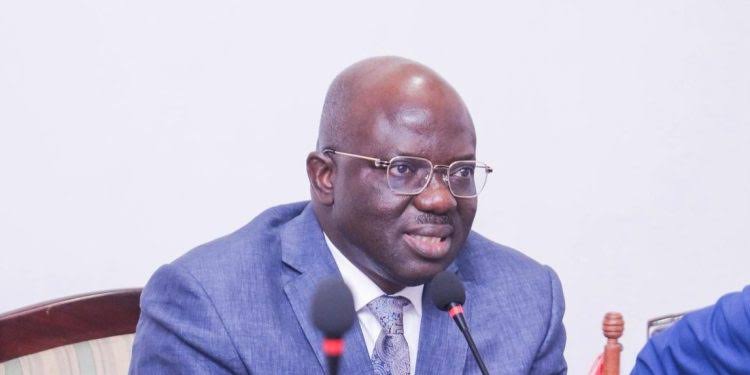
Speaking at the AGI 2nd Quarter Business Barometer presentation and Corporate Forum on Thursday, August 13, 2026, AGI President Kofi Nsiah-Poku said the development was adding to the cost pressures confronting businesses despite recent improvements in Ghana’s macroeconomic conditions.
He said the Electricity Company of Ghana (ECG) had withdrawn a previously negotiated tariff arrangement that provided discounted end-user rates to some electricity bulk customers.
According to him, the withdrawal exposed affected companies to upward tariff adjustments in excess of 40%, applied with immediate effect.
“The rising cost of electricity and water is a major setback,” Kofi Nsiah-Poku said.
He explained that the increase was coming on top of other tariff adjustments already experienced by businesses this year, putting additional pressure on their operating costs.
The AGI President said Ghana’s relatively stable exchange rate and declining inflation had, on the other hand, improved the ability of businesses to forecast input costs with greater confidence.
“That planning certainty is itself a form of value creation. It changes how businesses budget, price, and commit to expansion,” he said.
Kofi Nsiah-Poku commended government for the progress made in moving Ghana from a period of acute fiscal distress towards fiscal consolidation.
He also pointed to the high level of business confidence reflected in the AGI’s 2nd Quarter 2026 Business Barometer, saying it indicated continued confidence in the government’s economic stewardship and reform agenda.
However, he cautioned that the gains recorded during the first half of the year could become fragile if the necessary measures to consolidate them are not sustained.
Among the risks identified by the AGI are the ongoing Middle East conflict, Ghana’s heavy dependence on gold, cocoa and oil as major exports, as well as rising utility costs.
The AGI President also welcomed government’s decision not to seek a supplementary budget despite outperforming some of its targets.
He further commended the strengthening of Ghana’s foreign exchange reserves to roughly five months of import cover.
Kofi Nsiah-Poku said the next priority should be to transform Ghana’s improved macroeconomic stability into structural transformation that would support businesses and create more jobs.
“The task before us, government and businesses together, is to convert the macroeconomic stability into structural transformation,” he said.
He called for a more competitive industrial sector, increased formal employment and an economic growth path that is less dependent on the prices of a few commodities. The AGI said it is ready to work with the Ministry of Finance, the Bank of Ghana and government to ensure that the gains from the 2026 Mid-Year Budget Review translate into an operating environment where Ghanaian businesses can invest, compete and grow with confidence
Latest Stories
-
Today’s front pages: Tuesday, October 13, 2026
31 minutes -
Wealth Over Water: How Galamsey Is Threatening Ghana’s Water Security
1 hour -
LA 2028: Black Queens pumped up for second leg of Mauritius tie
1 hour -
LA 2028: Black Queens hold final training session ahead of second leg against Mauritius
2 hours -
Standards are not Seasonal: What the EC appointments teach both sides
2 hours -
King Mohammed VI urges private sector to create youth jobs and spread benefits of growth
2 hours -
KGL U17 Colts 2026: Greater Accra win title after penalties win over Western Region
2 hours -
UK Investment Roadshow opens in London to advance UK-Ghana growth partnership
2 hours -
Assemblies of God requires pastors to resign before entering partisan politics – Rev. Wengam
2 hours -
Ghana targets 20% annual reduction in maternal deaths – Health Minister
2 hours -
Cyber attacks in Africa grow faster than global rate, report finds
3 hours -
Ghana signs UAE deal to create 5,000 overseas jobs
3 hours -
One Million Coders Programme targets 100,000 digital jobs in two years – Sam George
3 hours -
John Jinapor, Italian Ambassador explore opportunities for energy sector investment
3 hours -
NHIA seeks legal reforms to support Free Primary Healthcare
3 hours