

Audio By Carbonatix
A member of the Council of State representing the Volta Region, Gabriel Tanko Kwamigah-Atokple, has raised concerns about gaps in Ghana’s cancer-treatment infrastructure, including a reported lack of linear accelerator (LINAC) equipment for modern radiotherapy.
He said the situation highlighted the need for Ghana to invest not only in health facilities but also in advanced medical equipment, skilled professionals, research capacity and effective institutional management.
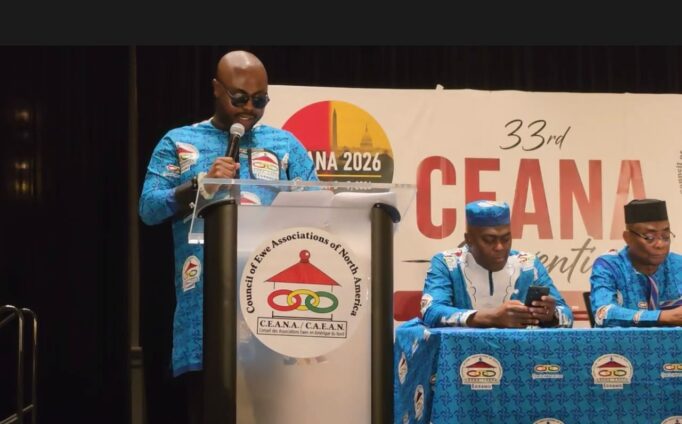
Mr Kwamigah-Atokple made the remarks while addressing the 2026 conference of the Council of Ewe Associations of North America (CEANA) in Maryland, United States.
He said the issue emerged during a recent discussion with CEANA President William Edem Kumah about a possible partnership with the University of Health and Allied Sciences (UHAS) in Ho to establish a research centre focused on cancer and other diseases affecting Ghana and the wider West African sub-region.
According to Mr Kwamigah-Atokple, Mr Kumah expressed concern that Ghana did not have a linear accelerator, a machine used to deliver high-energy radiation in the treatment of cancer.
“Mr Kumah expressed his surprise that Ghana currently does not have a LINAC machine, a technology used in modern radiotherapy,” he said.
Mr Kwamigah-Atokple said the reported situation should prompt a broader assessment of gaps in Ghana’s healthcare system and accelerate efforts to strengthen cancer diagnosis, treatment and research.
“Cancer is not an abstract issue. This is why I believe that our development conversation must increasingly include knowledge, research and institutional capacity,” he said.
Infrastructure alone not enough
The Council of State member argued that constructing more health facilities without investing in the systems and resources needed to operate them would not deliver the modern healthcare system Ghanaians require.
“We cannot build a modern healthcare system simply by constructing more buildings. We need trained professionals, modern equipment, research capacity, strong management and partnerships with institutions that can help us improve what we have,” he said.
He expressed his willingness to support further discussions on the proposed research centre and help bring relevant state institutions, corporate Ghana and international partners into the initiative.
Mr Kwamigah-Atokple acknowledged that establishing the centre would require extensive consultation, proper planning and significant resources, but said the proposal deserved serious consideration because of its potential long-term impact.
Call for stronger international partnerships
He also urged Ghanaian professionals in North America to leverage their expertise and relationships with universities, hospitals, investors and development organisations to strengthen institutions in Ghana.
He said the contribution of the Ghanaian diaspora to national development should extend beyond remittances to include knowledge transfer, institutional partnerships, mentorship, technology and investment.
Mr Kwamigah-Atokple called for stronger collaboration between UHAS and institutions in North America to enhance health education, scientific research and specialised cancer treatment in Ghana, particularly in the Volta Region.
Latest Stories
-
Government negotiations secure more data and cheaper broadband – Sam George
31 seconds -
Big Push road works linked to half of Ghana’s fibre cuts – Sam George
7 minutes -
Ghana to begin 5G deployment by December 2026 – Sam George
9 minutes -
Accra to host 15th Africa Internet Governance Forum in November – Sam George
9 minutes -
Ghana secures African Telecommunications Union Council seat for 2027–2030 – Sam George
10 minutes -
Improved DStv packages still in force nearly a year on – Sam George
12 minutes -
Ghana opens continental market for local vaccine and drug manufacturers
13 minutes -
Fiifi Coleman to repackage ‘I Told You So’ for new movie
13 minutes -
Gov’t signs MoUs with 11 universities to embed digital certifications in degree programmes
16 minutes -
Sam George to chair AU ICT committee for two-years
19 minutes -
Ghana Post delivers 85,638 passports to homes in seven months – Sam George
31 minutes -
Government begins digitisation of 3.5 million public records – Sam George
32 minutes -
SIM registration biometric verification to begin before end of 2026 – Sam George
34 minutes -
Full Text: Sam George’s speech at Government Accountability Series
36 minutes -
One million coders programme records 141,954 registrations, 27,782 active learners
42 minutes