

Audio By Carbonatix
Ghana champions!
Read that again.
Pay attention to the phrase.
It sounds grand. It carries history. It carries expectations. It carries the weight of a football-mad nation that once produced clubs capable of frightening the best on the continent.
But these days, there is another question hidden inside those two words:
What happens when the Ghana champions meet Africa?
For the 2025/26 Ghana Premier League season, Medeama emerged champions. They had earned the right to carry Ghana's flag in the CAF Champions League. They had earned the applause, the celebrations, and, eventually, a presidential handshake at Jubilee House.
President John Mahama stretched out his hand. There was $30,000 accompanying it.
It was more than a cash gift. It was a statement of confidence. A statement of responsibility. A reminder that when Medeama left Ghana for Africa, they were not travelling merely as a football club from Tarkwa.
They were travelling as Ghana champions.
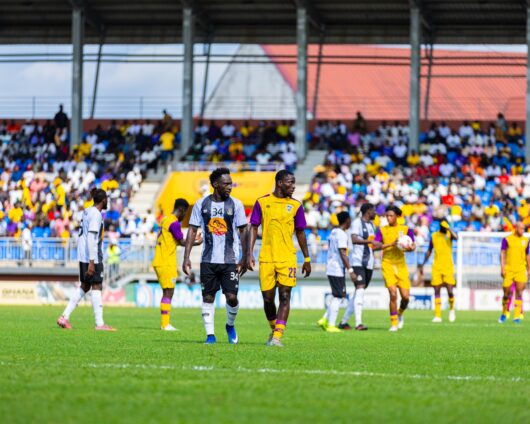
And that is precisely why what happened next should concern Ghanaian football. Medeama lost 1-0 at home to TP Mazembe in the first leg. The deficit was small enough to inspire hope.
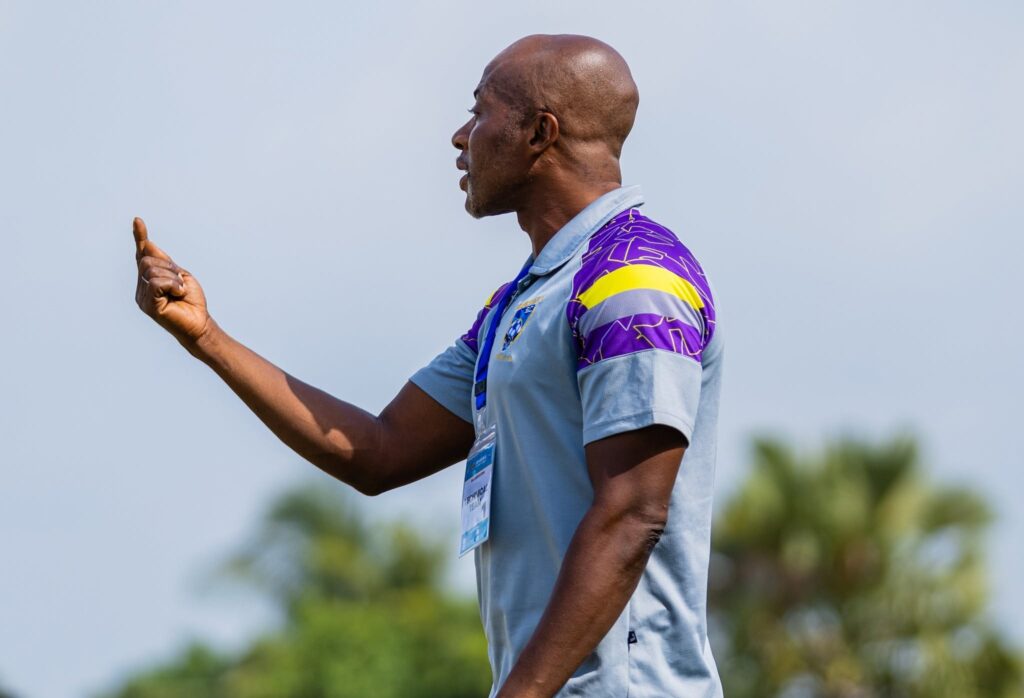
One goal. One good performance in Lubumbashi. One afternoon or evening to turn the tie around. Ibrahim Tanko, the technical leader of this team believed so.
But the trip to the Democratic Republic of Congo was about much more than overturning a 1-0 scoreline.
Medeama were carrying the hopes of a country that has spent years asking the same uncomfortable question:
Why are Ghanaian clubs struggling to compete with Africa's best?
The answer is becoming increasingly difficult to avoid. Medeama lost 3-1 in Lubumbashi on Saturday, going out 4-1 on aggregate.
A day later, Nations FC suffered a similar fate.
The MTN FA Cup holders, making their maiden appearance in the CAF Confederation Cup, needed to overturn a 1-0 first-leg defeat to Mali's FC Diarra.

Instead, they drew 1-1 at the Accra Sports Stadium. Aggregate score: 2-1 to FC Diarra.
Another Ghanaian club gone. Another continental campaign over before the group stage. And so, before the real business of the CAF inter-club competitions had even begun, Ghana had lost both representatives.
This is not merely a bad year. It is a pattern.
And the pattern has lasted long enough for us to stop calling it bad luck. Ghana's president John Mahama did not miss the opportunity to remind managers of the sport in Ghana that the performance of clubs from his home country in Africa has declined.
The steep is so deep that the casual question often asked is "when did getting to Africa become the achievement?" This is where the conversation becomes uncomfortable.
There was a time when Ghanaian clubs did not merely enter Africa. They expected to matter in Africa.
Hearts of Oak won the CAF Champions League in 2000 and the Super Cup a year later. Asante Kotoko reached the Confederation Cup final in 2004.
Ghanaian clubs were regular participants in the latter stages of continental competitions. Today, reaching the group stage can feel like winning a trophy.
That is the clearest measurement of how far the standard has fallen.
Medeama's 2023/24 Champions League campaign was celebrated because they reached the group stage for the first time in 11 years.
That was a significant achievement. But it was also revealing. For a country with Ghana's football history, 11 years without a Champions League group-stage representative should have been treated as a crisis, not merely a statistic.
Medeama eventually became the first Ghanaian club since Berekum Chelsea in 2012 to reach that stage.
The Mauve and Yellows deserved the applause. But the applause should have been accompanied by a harder question:
How did Ghana get to a point where qualifying for the group stage had become exceptional?
The numbers tell a story that emotions sometimes hide. In 2016, AshantiGold were eliminated by Algeria's MO Béjaïa 3-2 on aggregate.
In 2017, Wa All Stars lost 5-1 on aggregate to Al-Ahli Tripoli. Aduana Stars produced a spirited campaign in 2018, overcoming Al Tahaddy before running into ES Sétif. The Algerians won the return leg 4-0.
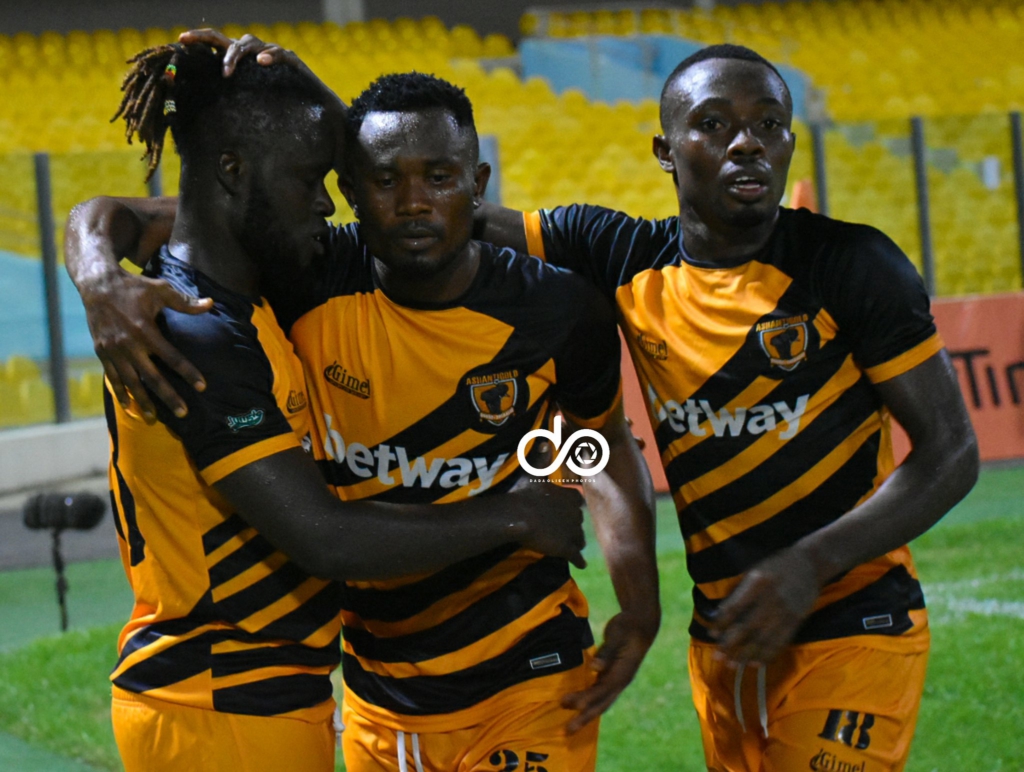
In 2019, Asante Kotoko appeared to have done the difficult part against Étoile du Sahel.
They won the first leg 2-0 in Kumasi.
Two goals.
A clean sheet. A comfortable advantage.
Then came Tunisia. Kotoko lost 3-0.
The aggregate score was 3-2.
Eliminated. The story repeated itself in different forms.
In 2021, Hearts of Oak beat Wydad Casablanca 1-0 in Accra and appeared to have one foot in the group stage.
Then Casablanca happened.
Wydad won 6-1.
In 2022, Kotoko won 1-0 away against Rail Club du Kadiogo before losing the return leg by the same scoreline and eventually going out on penalties.
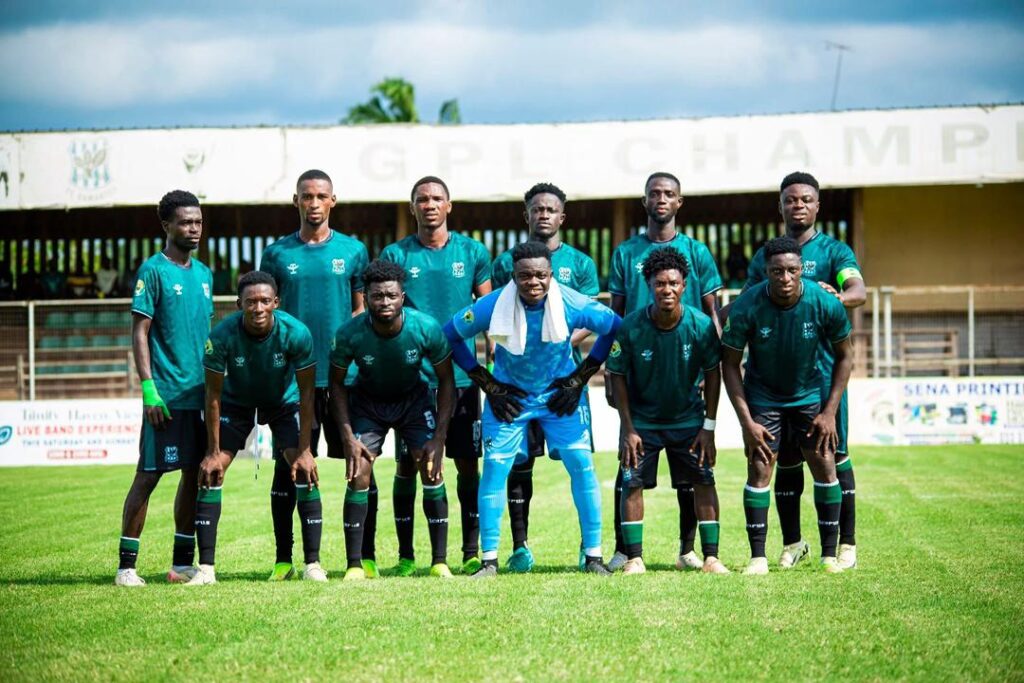
Samartex gave Ghana another glimpse of hope in 2023/24, beating Victoria United over two legs before drawing 2-2 with Raja Casablanca in Accra.
But Raja won the return leg 2-0. The names have changed. The opponents have changed. The coaches have changed. The players have changed. But the ending has been remarkably familiar.
And then Dreams FC gave us something to believe in. If there was one campaign in recent years that challenged the narrative, it was Dreams FC's 2023/24 Confederation Cup run.
The Still Believe boys were appearing in continental competition for the first time.
They were not supposed to get this far. However, they kept going. They survived the preliminary rounds. They reached the group stage. They navigated the knockout rounds.
Then came Stade Malien. Dreams won 2-1 in Bamako and drew 1-1 in Kumasi to progress 3-2 on aggregate.
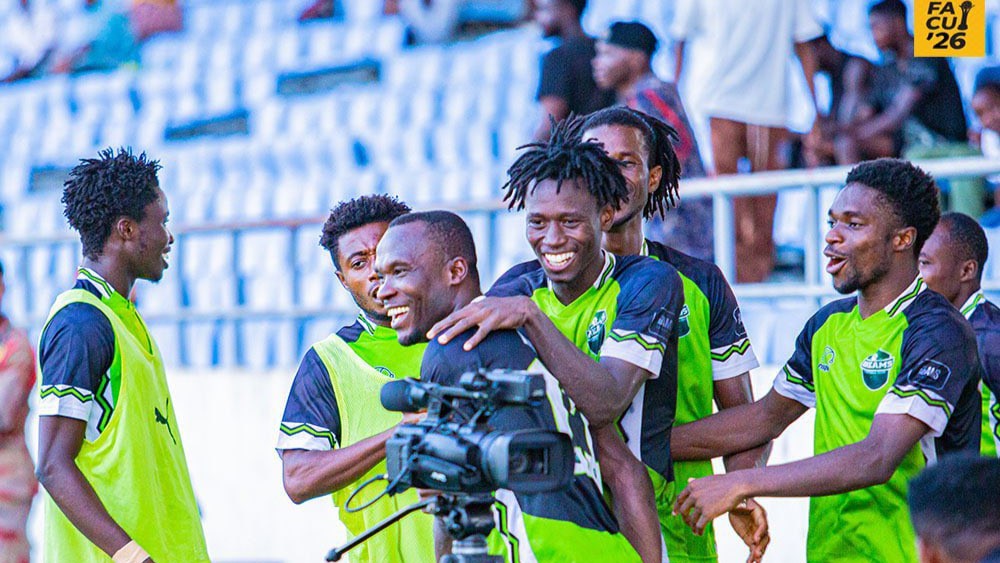
Suddenly, a club from Dawu was standing in the semi-finals of a CAF competition.
CAF described it as a historic achievement and noted that Dreams had become the first Ghanaian club in 20 years to reach the knockout stage of a CAF inter-club competition.
Think about that.
20 years.
20 years is not a football cycle.
It is a generation. A child who watched Asante Kotoko reach the Champions League final in 2004 could have become an adult before seeing another Ghanaian club reach the knockout stage of a major CAF competition.
Dreams eventually lost 3-0 to Zamalek in Kumasi after a goalless first leg in Cairo.
But they had already achieved something bigger than the result. They reminded Ghana that the door had not been permanently locked.
It could still be opened. The problem was that Ghana had forgotten how to keep it open.
The Ghanaian problem is not a lack of talent. This is important. Ghana does not lack football talent. We produce players. We produce coaches. We produce technically gifted footballers who are good enough to attract clubs in Europe, North Africa, and elsewhere on the continent.
So why do our clubs struggle?
Because club football is not simply about talent. It is about systems. It is about money. It is about planning. It is about squad depth. It is about sports science. It is about recruitment. It is about retaining your best players.
It is about playing 34 or 40 matches (if you happen to go far in the FA Cup) in a season without your standards collapsing.
And increasingly, it is about knowing how to win the small battles that decide continental football.
Domestic success.
Then:
Continental qualification.
Then:
Squad disruption.
Then:
Financial pressure.
Then:
Early elimination.
Then:
Rebuilding.
Then:
Another domestic campaign.
Then:
Another title race.
Then, the cycle begins again.
Until Ghana breaks that cycle, changing the club names will not change the story.
Today, it is Medeama.
Yesterday, it was Samartex.
Before that, it was Hearts, Kotoko, Aduana, Wa All Stars, or AshantiGold.
Tomorrow, it will be another Ghanaian champion.
And we will ask the same question again.
Then there's the money missing link.
It is fashionable to say money is not everything in football.
That is true.
But money is something.
In continental football, it matters enormously.
Ghanaian clubs are often competing against clubs with larger budgets, deeper commercial structures, stronger sponsorship arrangements, and better player-retention capacity.
A Ghanaian club may spend an entire season building a championship-winning squad.
Then Africa comes.
The best players become targets.
Agents become active.
Offers arrive.
Contracts are negotiated.
Players leave.
The club that won the league is no longer the same club entering the Champions League.
That is not necessarily bad management.
It is the economic reality of Ghanaian football. But pretending that reality does not exist is worse.
If Ghana wants its champions to compete in Africa, continental qualification must have economic value beyond the prestige of a trophy and a presidential handshake.
The club must be able to use the opportunity to strengthen itself.
Not merely survive it.
The $30,000 question
This brings us back to Medeama.
The presidential gesture was symbolic.
It said: you are representing us.
But what does Ghana do after the handshake?
What institutional support follows?
What financial model ensures that the country's champions are properly prepared?
What happens between the time the president hands over the money and the day the club boards the aircraft?
Who helps with scouting? Who supports sports science? Who ensures that the squad is deep enough? Who studies the opponent?
Who prepares the club for the climate, pitch, travel, and intensity of the away leg?
These are not glamorous questions. But continental football is won and lost on unglamorous details.
A presidential handshake can inspire a team. It cannot build an academy.
It cannot retain a midfielder. It cannot improve a pitch. It cannot pay for a sports scientist. It cannot organise a scouting department. It cannot turn a domestic champion into a continental powerhouse.
For years, we have spoken about home advantage as though geography alone creates it.
It does not. Playing in Accra or Kumasi does not automatically make a Ghanaian club stronger.
The modern African game has changed.
The best clubs arrive with tactical discipline, physical preparation, experienced players, and clear game plans.
They know how to suffer away from home.
They know how to manage a 1-0 lead.
They know how to kill a game.
They know when to slow it down and when to accelerate it. And sometimes, they simply have better players.
Ghanaian clubs must stop treating home advantage as something inherited from the address printed on the fixture.
Home advantage has to be created.
With the pitch. With preparation. With supporters. With intensity. With quality.
With confidence. Perhaps this is where the debate must ultimately end. The strength of a country's clubs cannot be completely separated from the strength of its domestic league.
If the Ghana Premier League is financially weak, commercially weak, and structurally fragile, its champions will eventually expose those weaknesses in Africa.
You cannot continuously produce continental giants from an ecosystem that struggles to sustain professional clubs.
The league needs:
Better pitches.
Better academies.
Better scouting.
Better sports science.
Better club administration.
Better commercial structures.
Better broadcasting revenue.
Better player contracts.
Better talent retention.
And, perhaps most importantly, better long-term planning.
A club should not begin thinking about the Champions League after winning the league.
It should have been thinking about it months earlier.
This is why the decline should not be accepted as destiny.
Ghana has done this before.
Hearts of Oak once ruled Africa.
Kotoko once travelled across the continent with the reputation of a giant.
The Porcupine Warriors reached the Champions League final in 2004.
Hearts had already conquered Africa four years earlier.
These clubs did not become continental giants because Ghana had more talented footballers than everybody else.
They became giants because they had structures, identities, strong domestic competition, experienced players, and the institutional confidence to compete.
The gap between Ghana and the rest of Africa was not always this wide.
That matters.
Because if something was built once, it can be built again.
And this is where the argument becomes bigger than the last decade.
Go back 20 years.
The story does not suddenly become beautiful.
Yes, there are the glorious memories.
Hearts of Oak.
Asante Kotoko.
Continental finals.
Trophies.
Great players.
Great nights.
But there is also a long period in which Ghanaian clubs have struggled to reproduce that success consistently.
CAF's own description of Dreams FC's 2024 achievement puts it bluntly: the club's run represented Ghana's first appearance in the knockout stages of a CAF inter-club competition in 20 years.
That sentence should haunt Ghanaian football.
Because it means the problem is not Medeama.
It is not Nations FC.
It is not Dreams FC.
It is not Hearts of Oak.
It is not Kotoko.
It is not one coach.
It is not one generation of players.
It is the system.
Perhaps the most painful irony is that Ghana continues to produce champions.
Medeama became champions.
Nations FC won the FA Cup.
Dreams FC won the FA Cup.
Samartex won the league.
Kotoko won the league.
Hearts continue to compete.
The trophies are still being lifted.
The medals are still being presented.
The presidential handshakes still happen.
The photographs still make the newspapers.
But Africa asks a different question.
Can you survive here?
And too often, the answer has been no.
Medeama's latest campaign ended after two matches against TP Mazembe. The Congolese side won both legs, including a 3-1 victory in Lubumbashi, to progress 4-1 on aggregate.
Nations FC's first continental adventure lasted the same length.
They lost 1-0 in Mali and drew 1-1 at home.
FC Diarra progressed.
Nations went home.
That is the brutal simplicity of continental football.
There are no points for potential.
No points for being Ghana champions.
No points for history.
No points for a presidential handshake.
Africa asks you to prove yourself on the pitch.
First, Ghana must stop treating continental football as a reward for domestic success.
It is not a holiday.
It is not an afterthought.
It is not something to "try".
It is a separate level of competition requiring a separate level of preparation.
Second, clubs must begin planning for Africa before they qualify.
Recruitment should consider continental football.
Squad depth should be built around continental football.
Budgets should be built around continental football.
Sports science should be built around continental football.
Scouting should be built around continental football.
Third, the GFA, clubs, sponsors, and government must have a broader conversation about how Ghanaian clubs can become commercially viable.
Government cannot run football clubs.
However, the government can help create an environment in which professional clubs can thrive.
Sponsors cannot be expected to rescue clubs every year.
But football must become commercially attractive enough for serious businesses to invest.
And clubs cannot continually blame a lack of money while doing little to develop sustainable revenue streams.
This may be the hardest part.
We need to change what we celebrate.
If a Ghanaian club reaches the group stage, celebrate it.
If a Ghanaian club reaches the quarter-finals, celebrate it.
If a Ghanaian club reaches a semi-final, celebrate it.
But then ask:
Why did it take us so long?
And more importantly:
How do we do it again next year?
Because the greatest achievement is not reaching the group stage once.
It is making the group stage normal.
It is reaching the knockout rounds regularly.
It is having two or three Ghanaian clubs capable of competing deep into Africa every season.
It is creating a domestic ecosystem in which a club does not collapse the moment its best player receives an offer from abroad.
That is what sustainable success looks like.
Somewhere in Ghana, another club is preparing to become champion.
Perhaps it will be Hearts.
Perhaps Kotoko.
Perhaps Medeama again.
Perhaps another club nobody currently expects.
They will celebrate.
There will be confetti.
There will be interviews.
There may be another visit to Jubilee House.
There may be another presidential handshake.
And then somebody will say:
"We are going to Africa."
That sentence should no longer be the end of the story.
It should be the beginning.
Because Ghanaian football has spent too long producing champions at home and tourists abroad.
The objective must be to produce African competitors.
Medeama and Nations FC have provided the latest evidence.
The results hurt, but they should also force a reckoning.
Ghana has not forgotten how to produce footballers.
Ghana has not forgotten how to produce champions.
Ghana has not forgotten how to produce clubs capable of surprising Africa.
What Ghana has struggled to produce is continuity.
That is the real crisis.
And if the research goes back 20 years, the story would not suddenly become different.
The names would change.
The competitions would change.
The opponents would change.
But the question would remain.
Why can Ghana still produce champions but no longer consistently produce continental giants?
Until we answer that, honestly, every new continental campaign will carry the same familiar script:
Hope.
Hype.
A presidential handshake.
A short trip into Africa.
And an early flight home.
The past can inspire us.
History can remind us of what is possible.
But history cannot play the next match.
The next Ghana champion must not merely inherit the crown. It must inherit a system capable of defending Ghana's place in Africa.
Latest Stories
-
2026 Women’s Super Cup set for September 23 to September 29 in Prampram
4 minutes -
Rennes register Ghana defender Alidu Seidu for Europa League amid Nice interest
9 minutes -
Deliberate VAT evasion will attract penalties — GRA
11 minutes -
If the Ghana Premier League is financially weak and structurally fragile, Africa will expose its weaknesses
23 minutes -
Accra-Kumasi Expressway: 48 Engineer Regiment can deliver if well resourced – Political Lecturer
37 minutes -
Businesses above GH¢750,000 turnover must register for VAT – GRA
41 minutes -
Kenya confirmed hosts of World Athletics Championships 2029
52 minutes -
No more pothole ambulance rides: Mahama’s roads will change lives – Agbodza tells Upper West farmers
1 hour -
‘Physically better’ Kudus can start against Liverpool – De Zerbi
1 hour -
Bonsu Baah sets up opener in Al Qadsiah win over Al Wasl
2 hours -
Ghana has now become a distribution hub for drugs
2 hours -
Africa Nations Volleyball Championship: Ghana’s Black Spikers leave for tournament in Tunisia
2 hours -
Today’s Front pages: Tuesday, September 15, 2026
2 hours -
Auditing the Auditor-General: How special audit understated a COVID-19 expenditure
3 hours -
A Partnership for Progress: Why the ProMark–KPMG collaboration matters for Africa’s digital assets future
3 hours